Guided Feature Gallery
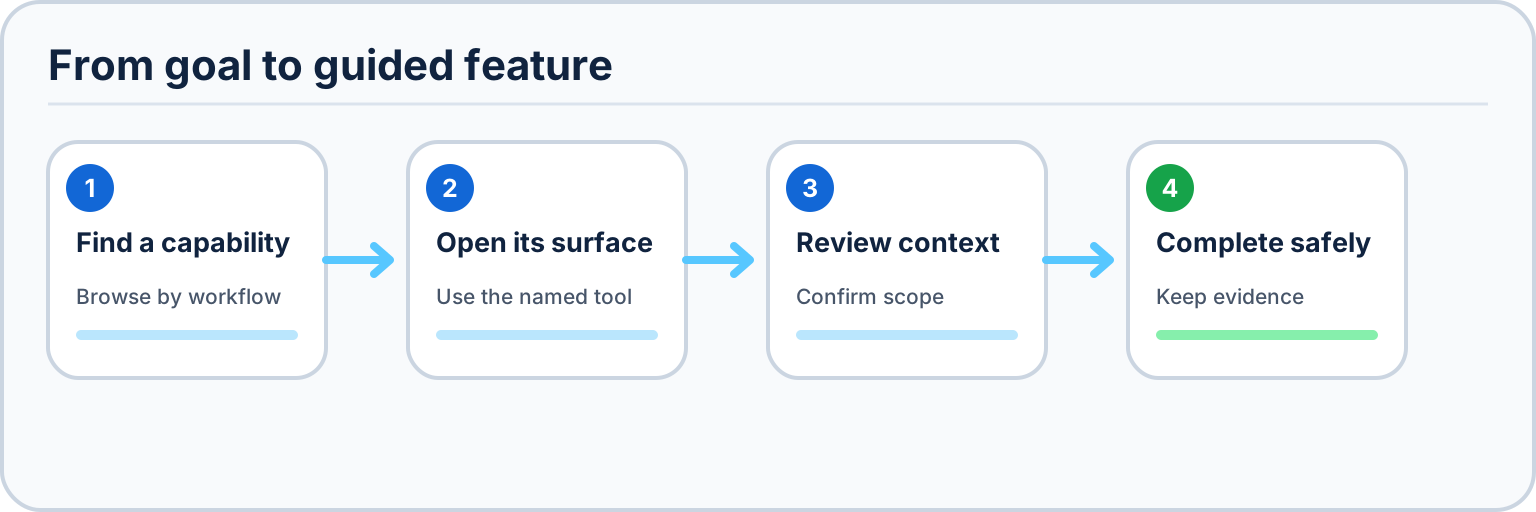
Treat every gallery entry as part of a workflow: find the capability, open its named surface, review the exact scope, and keep the resulting evidence.
This page maps 91 named, user-facing visual functions and states to a one-screenshot-per-function Windows acceptance target. Every view uses synthetic accounts, repositories, issues, pull requests, workflow runs, logs, and artifact metadata except the purpose-built live Cheap LFS acceptance repositories. No personal path, credential, email address, private file content, or unrelated account identifier belongs in the image set.
For this catalog, a function is a distinct visual workflow or result that a user can open or reach. Internal commands, background services, and transient safeguards are documented through their owning settings, progress, result, or recovery surface. Every current guided-gallery target is assigned to exactly one row below, every row must render exactly one distinct PNG, and the automated catalog contract rejects missing, duplicate, or unassigned current assets. Five retained Linux/Xvfb captures are enumerated separately as historical evidence and are deliberately outside this Windows target set.
Current refresh status — July 30, 2026: the contract declares 66 canonical and 20 specialist Windows targets. The repository sheet now has a dedicated dark bilingual specialist owner instead of inheriting the light-English canonical batch, and the History commit hover card is published as its own specialist scene. The searchable Publish organization owner picker is accepted and published, completing the 91-image Windows set. The real production bundle ran against an owned no-remote repository and deterministic three-organization provider on an isolated hidden Win32 desktop, with zero provider mutations. Its bilingual dialog passed the physical 390×844 auto-fit gate with a non-collapsing listbox, positive scroll travel, keyboard-reachable final and None options, long-label containment, and no horizontal overflow. The reviewed 1440×960 PNG is 133,919 bytes with SHA-256
7db03d5db789d19e1ad49de66bd79abb62e46c7909eda9de08878aac367033d8.July 29 updater acceptance (superseded snapshot): the contract declared 67 canonical and 17 specialist Windows targets. The distinct current-source updater target is now accepted and published, completing its separate slot in the 84-image Windows set. Runtime source
b069384ad7d8a65d1192ee06859a705fe484c9c8exercised the real Electron/Squirrel event path with a disclosed verifier-owned inert payload; promotione3967f1b81ec039624500797dca40a1ab6d98598records the inspected 960×660, 47,086-byte PNG with SHA-2560fc9caf5b13eb5b914121090f403c394545e02ea4303b11dd4598afcb3a2dfca. This is development current-source UI proof, not a claim that the inert payload was published. The immutable legacy-updater frame remains separate historical migration evidence.
Historical publication record: The gallery includes the July 14, 2026 Actions cache and headless pagination evidence, the Pages accessibility/clipping gate, the inspected July 16 adaptive customization set, the profile app-identity workspace, the clone-style Add Submodule release, the repository-contextual GitHub API Explorer, filtered notification bulk triage, and configurable bottom-right error notices, runtime tab search, History commit actions, and true-bottom Repository Tools scrolling. It now also includes the safe custom repository-logo studio, named API app functions, temporary submodule repository context, bounded repository folder discovery, explicit cheap-LFS preparation before the final branch commit, and the M21 local, pushed, and remote-only tag lifecycle workspace. The published July 22 continuation adds a restart-restored named tab-group chip, the command palette's fully visible rich-row appearance editor, and the inspected live raw Cheap LFS UI result. The cloud-compression continuation adds the accepted bilingual private-opt-in and compressed-pointer frame after live public automatic/private explicit Actions runs and local restores. The July 23 registry-storage, commit-progress, automatic push-batching, and compact Repository Releases continuation is published through corrective source
c22e29a03a. Its exact build, 100%/125%/150%/200% constant-960×660 headless gate, CI, CodeQL, Pages, and six-asset installer Release are complete. The 77th scene follows the real 14.8 GB public Bambu build exercise: four exact-SHA-proven UI batches after a durable HTTP 408 retry, 13/0/0 one-object-at-a-time cloud compression with raw fallback retained, a passing manifest verifier, and ten locally restored hashes from pointer-only Git history. The first automatic/manual restore overlap prompted repository-scoped serialization; its corrected UI rerun is the final acceptance gate recorded inHANDOFF.md. Exact build, interaction, and privacy receipts are retained inHANDOFF.md; each promoted release records its own main, CI, Pages, and wiki verification without implying that later maintenance work is complete.July 27 published acceptance (superseded snapshot): one repository-list sync-summary scene, the exact-90% restore, app-hosted authentication browser, and private-repository lock receipts brought the then-current Windows source catalog to 84. The three new Windows captures came from the real production build on an isolated hidden Win32 desktop and passed original-resolution accessibility, clipping, and privacy inspection. Their default-branch, Pages, and wiki publication and packaged Windows E2E are verified. The five earlier Linux TUI captures and their Debian/Xvfb receipts remain intact as historical evidence below, but they are not current gallery rows, Pages figures, or capture-plan outputs. That receipt does not prove the July 28 refresh or its distinct current-source updater target.
Cheap LFS Pages acceptance
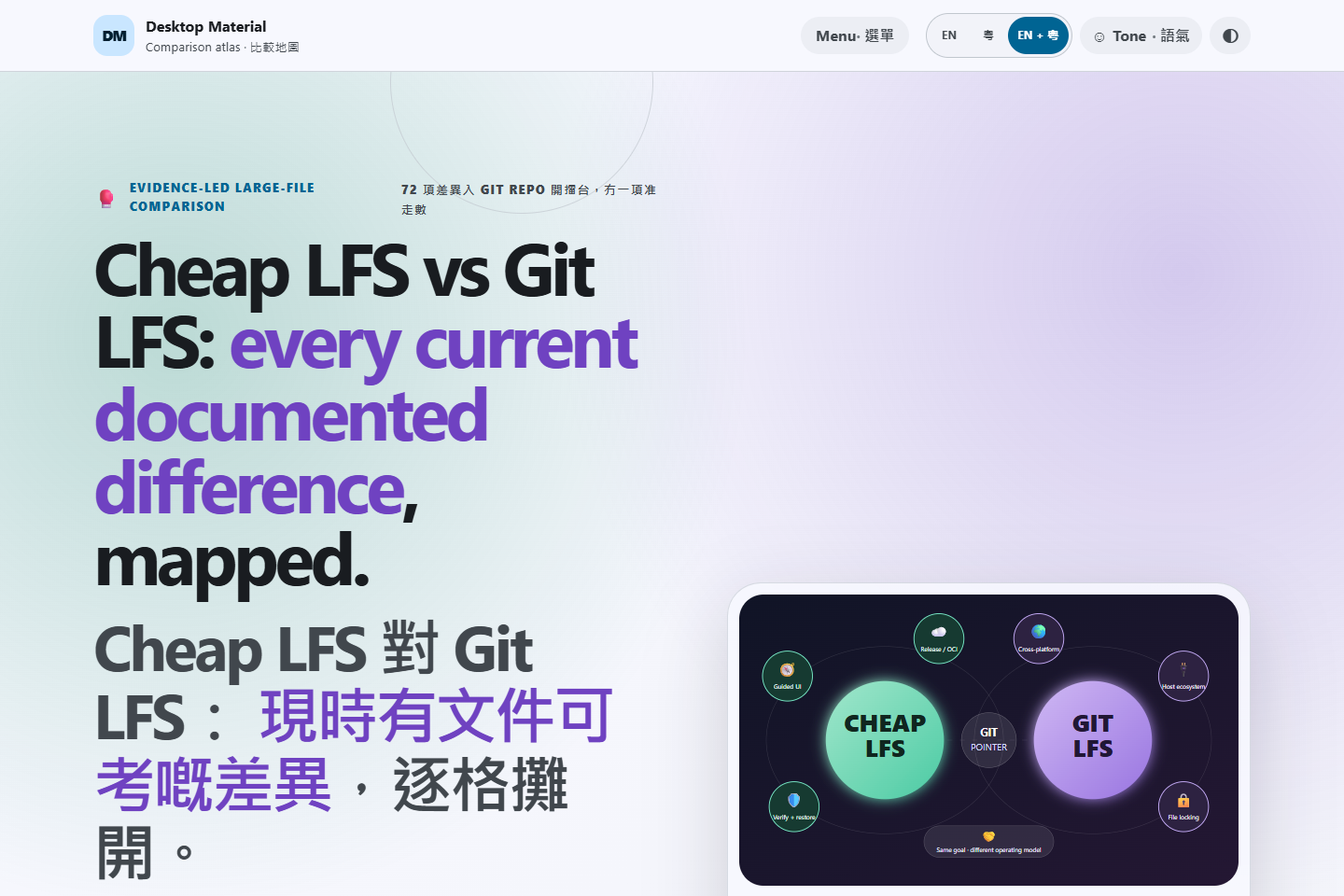
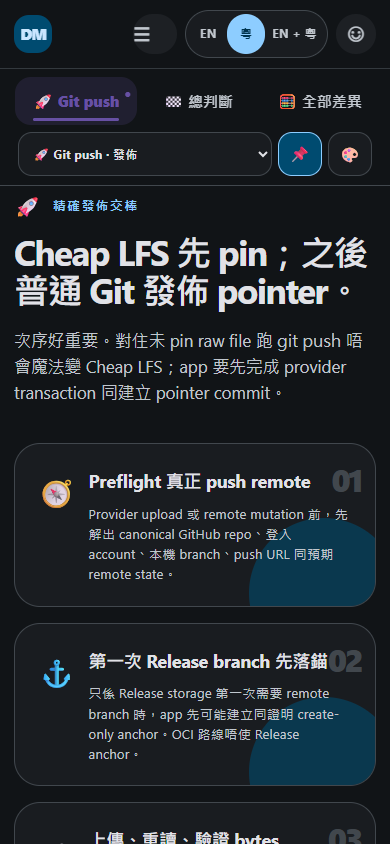
These are Pages-guide captures, not additional Desktop Material app-gallery scenes, so they do not change the 91-function catalog count below. The first pair documents the standalone 72-row Cheap LFS versus Git LFS atlas: a 1440×960 bilingual marketing overview with its code-native product-orbit graphic, then the 390×844 dark Cantonese publication handoff. The assembled route passed 35/35 installed-Chrome checks through Lowlevel MCP, including the 36-entry bibliography, composable filters, bounded regex worker, six ordered push stages, tab persistence, local assets, and zero document overflow. The standalone atlas receipt records the exact evidence boundary and hashes.
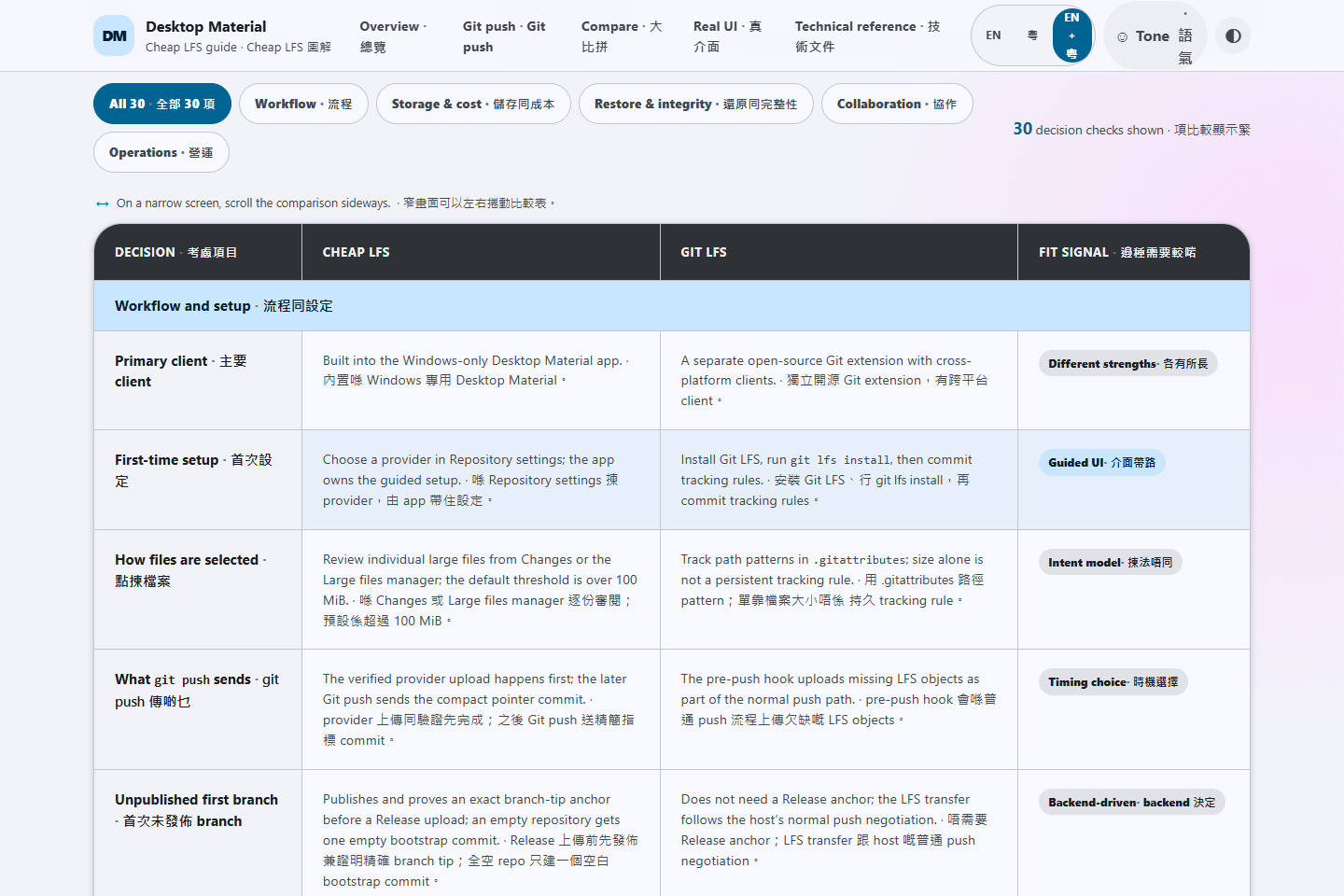
The older pair below shows the sourced bilingual comparison and category controls at 1440×960, followed by the safe branch-proof commands and first-branch distinction in a 390×844 dark layout. Both came from the locally assembled real site in installed headless Chrome through Lowlevel MCP; the dated receipt records the exact checks and hashes.
The July 18–19 temporary-submodule and refreshed six-image set passed
its local ten-pass off-screen inspection. A final 1440×960 post-build
regression reopened the child, verified its read-only boundary, and
returned to the root; a later fresh-bundle race regression synchronously
exercised duplicate Open and Back, preserved one persisted repository
and tab, restored the root once, and showed no error. The gallery assets
and owned headless-resource cleanup are complete. The six refreshed
assets were delivered byte-identically by Pages; initial remote CI
withheld a release after a macOS error-ordering failure, and correction
98d93ccc passed the full matrix and published
v3.6.3-beta3-b0000000165. Exact publication receipts are in
HANDOFF.md.
The verified adaptive customization maintenance release adds profile app identity, favorite/portable tabs, folder-drop opening, guarded tab close/arrange, Actions cancellation, reviewed rebase, repository-account propagation, bounded OAuth scopes, and compact Repository Tools, Remote Manager, and Regex Builder corrections. Its exact production source, safety checks, off-screen interaction review, and responsive geometry are recorded with the inspected captures below.
The GitHub API Explorer adds a complete searchable catalog of 1,206 REST operations, including exactly 10 operations discovered since the prior pinned 2026-03-10 catalog, alongside a REST/GraphQL request builder. Requests stay on the selected repository account and provider host, mutations require an explicit review, and response content is bounded and credential-redacted before display.
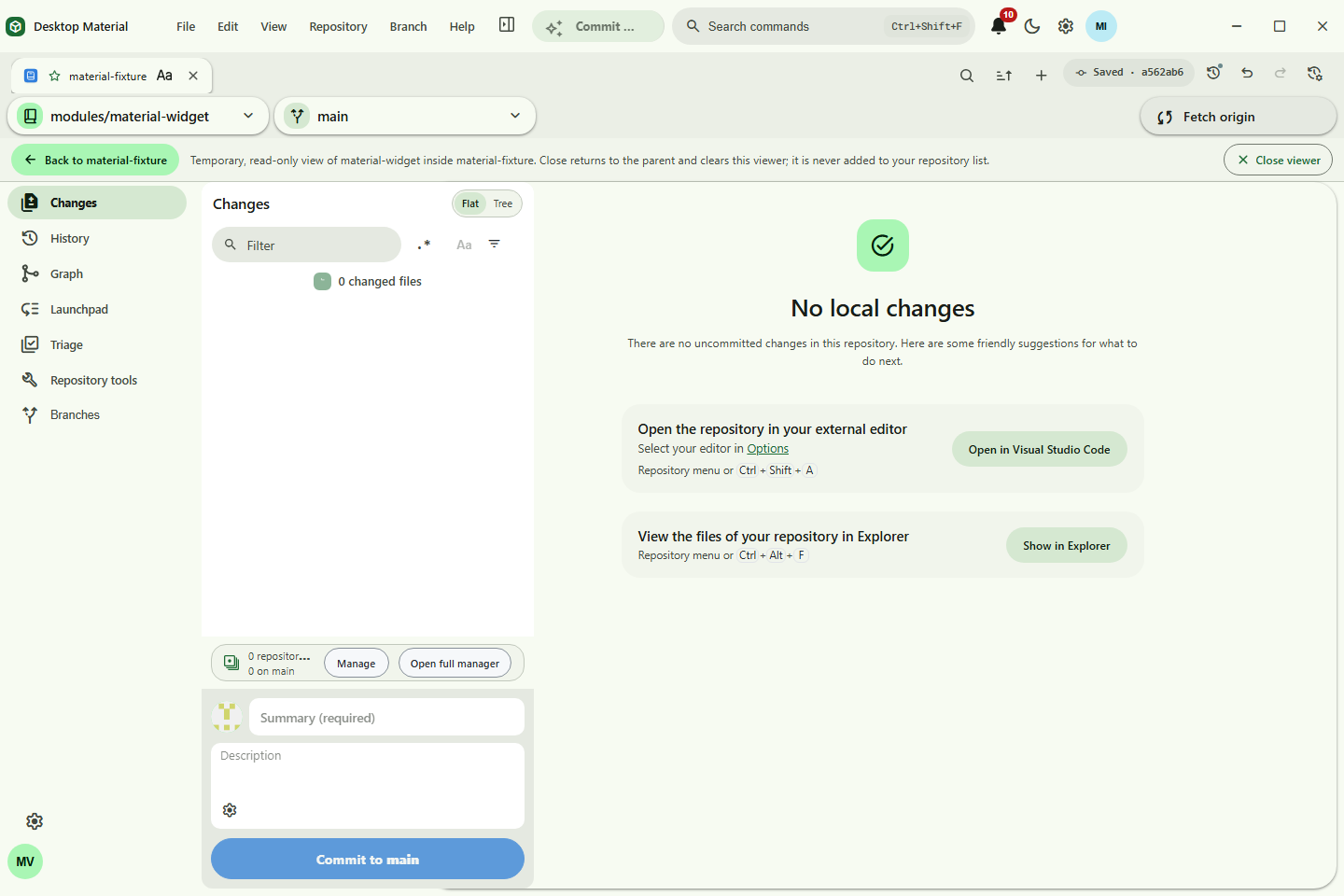
The temporary submodule context shows an initialized child in the normal workspace without adding it to the repository list, Recent, or persisted last selection. Its Back control returns to the persisted root and follows the active profile's style, label, and explicit language mode.
The August 11, 2026 packaged-application refresh used commit
eb894d4218670f0e9fd1516dff964edd76e1824c on an isolated
off-screen Windows desktop. Fifty-six scene-level frames rendered
successfully; twelve optional scenes remained gaps. The aggregate
canonical check did not pass because the current Settings surface no
longer exposes the Appearance tab expected by the older
driver. This gallery promotes only successful scene frames. Four
accurately named client-only captures of reachable packaged surfaces are
shown on the Screenshots
tab. Failed compact-Releases, command-appearance-editor, and
Cheap-LFS-progress specialist outputs were not promoted.
| Asset | Guided workflow shown |
|---|---|
material-app-identity-workspace.png |
Restart-restored profile app identity and favorite repository tab |
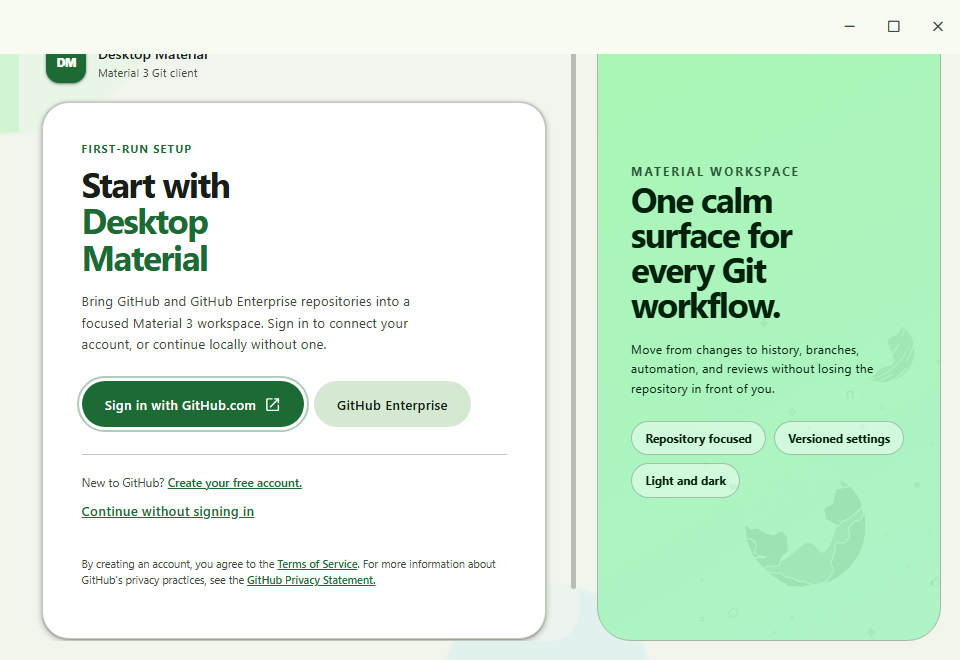
material-welcome.png |
Material first-run task card and responsive workspace preview |
material-customization.png |
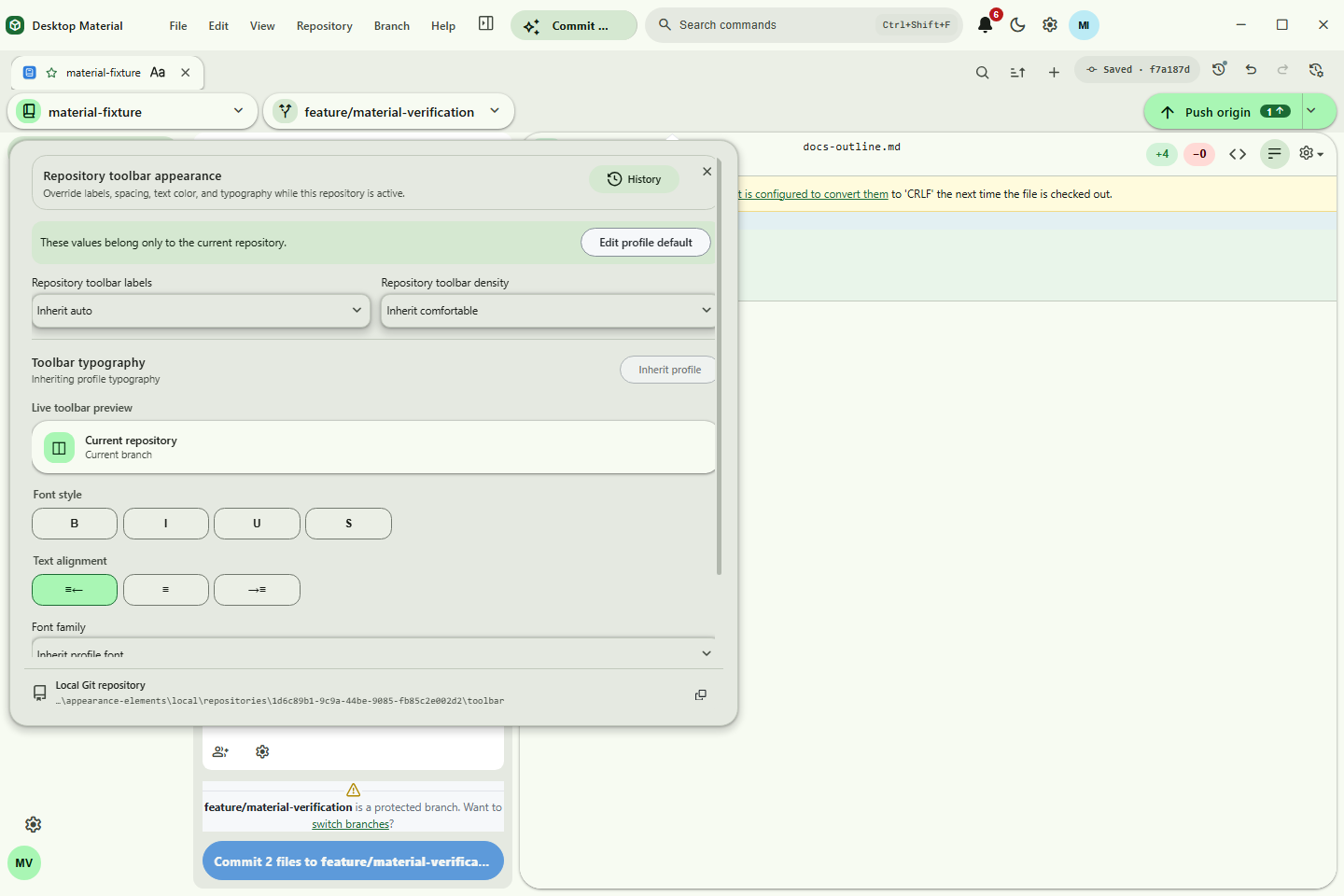
Editor anchored beside its actual visual owner with burst-coalesced persistence, dedicated Git history, and repository path |
material-repository-logo-studio.png |
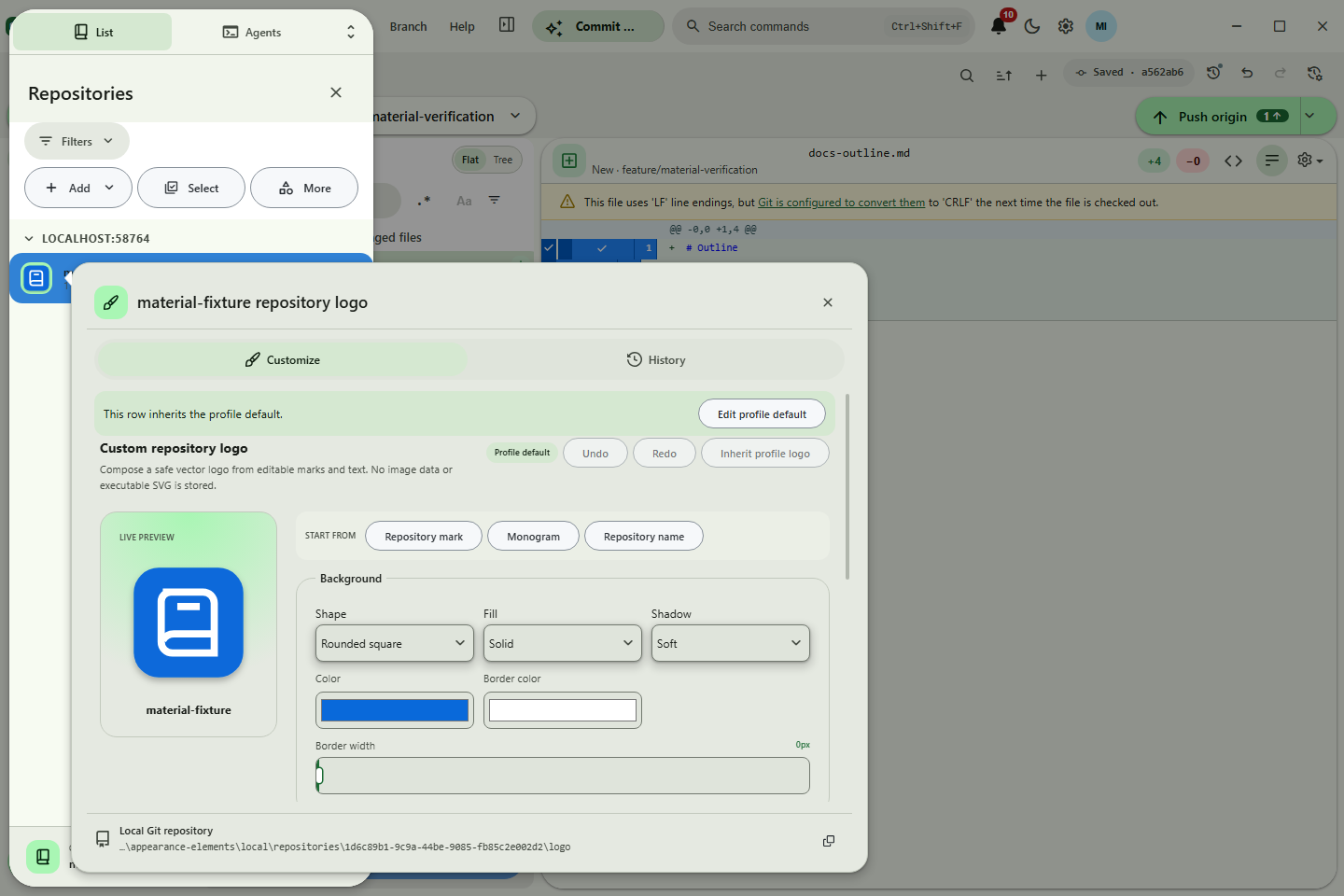
Layered custom repository-logo studio with live preview and safe transfer controls |
material-toolbar-overflow.png |
Measured narrow toolbar with Build & Run and Commit & Push in More |
material-tab-appearance-word.png |
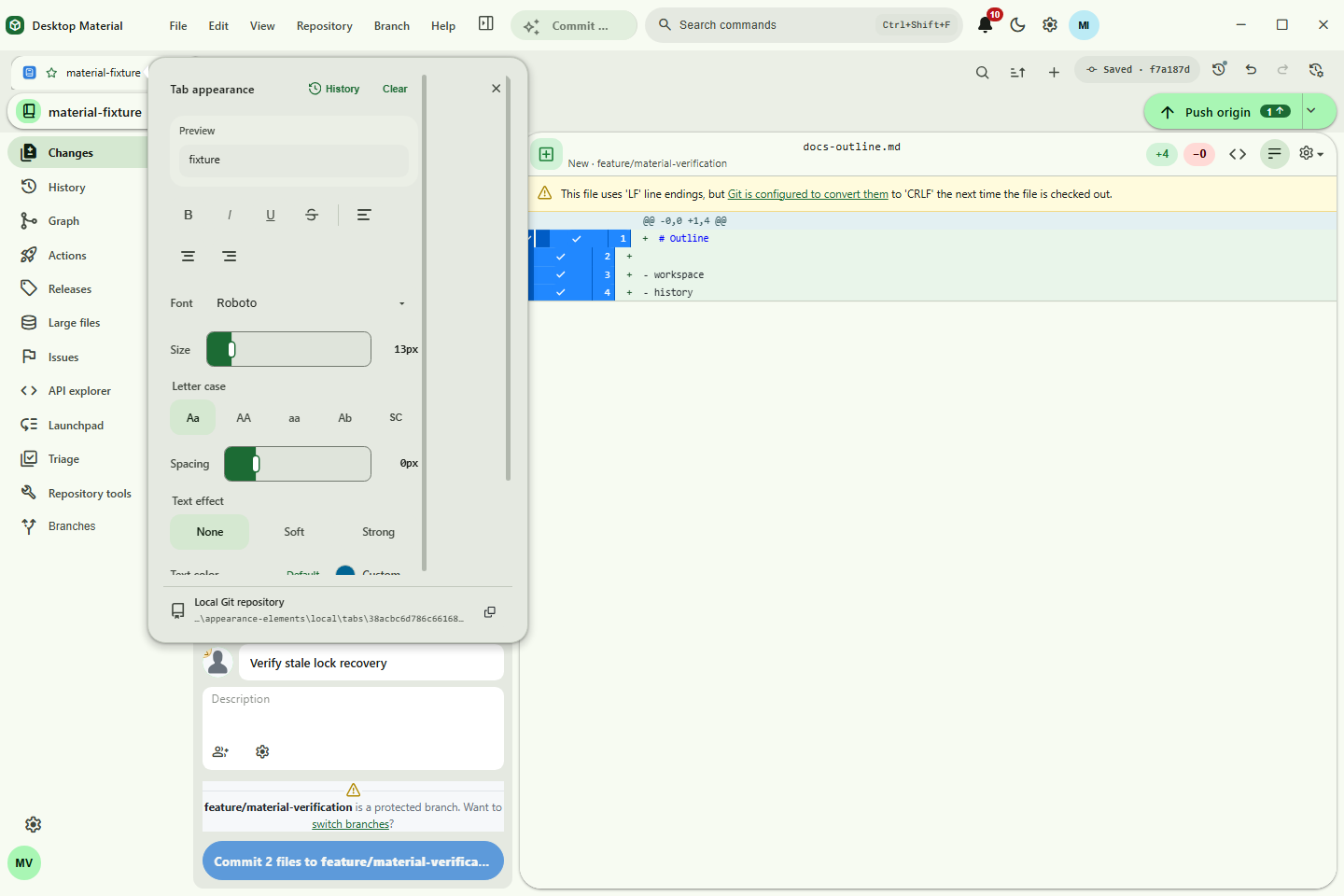
Word-style tab typography, alignment, and independent color palettes |
material-tab-arrange.png |
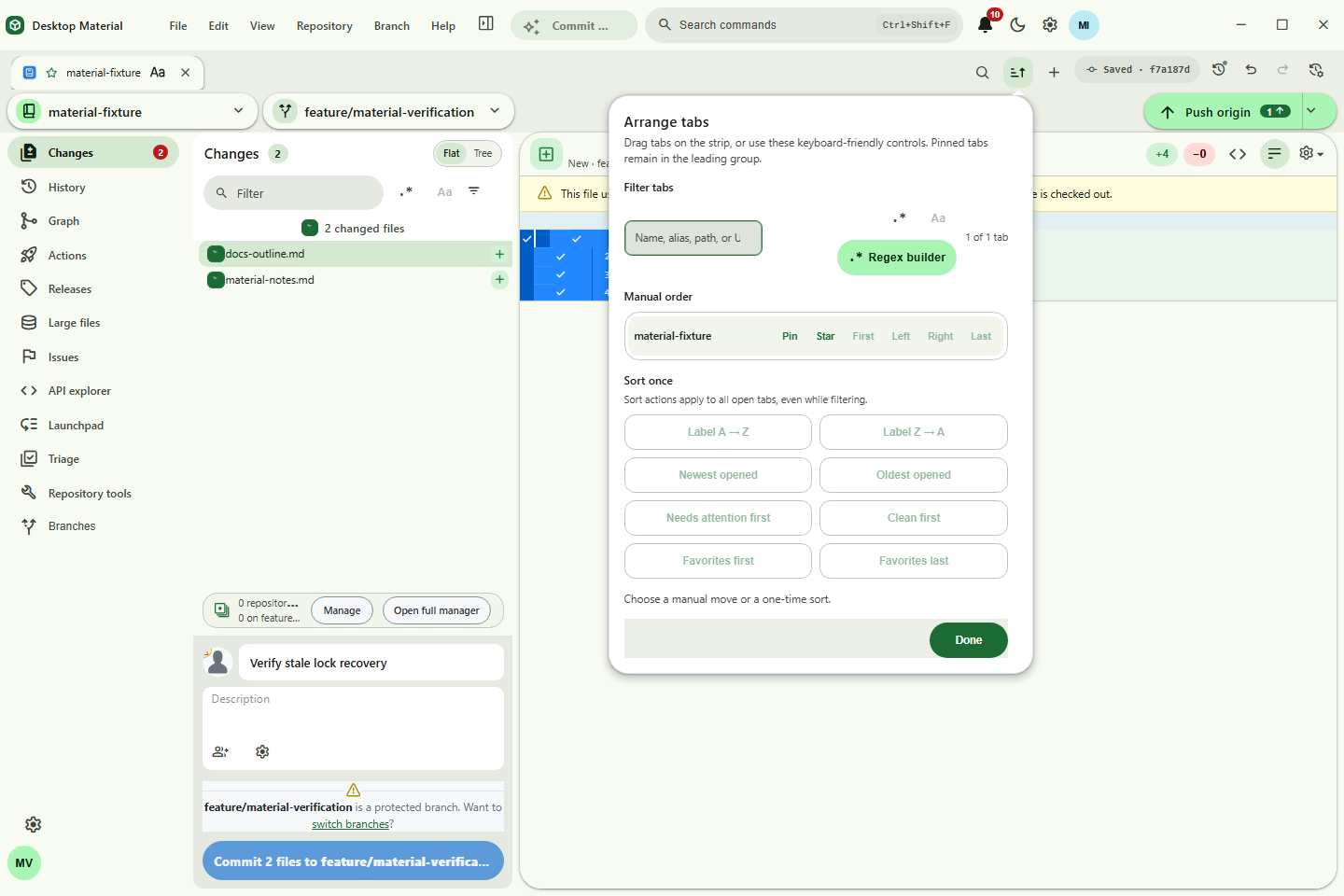
Pinned/manual movement and one-shot tab ordering controls |
material-tab-search.png |
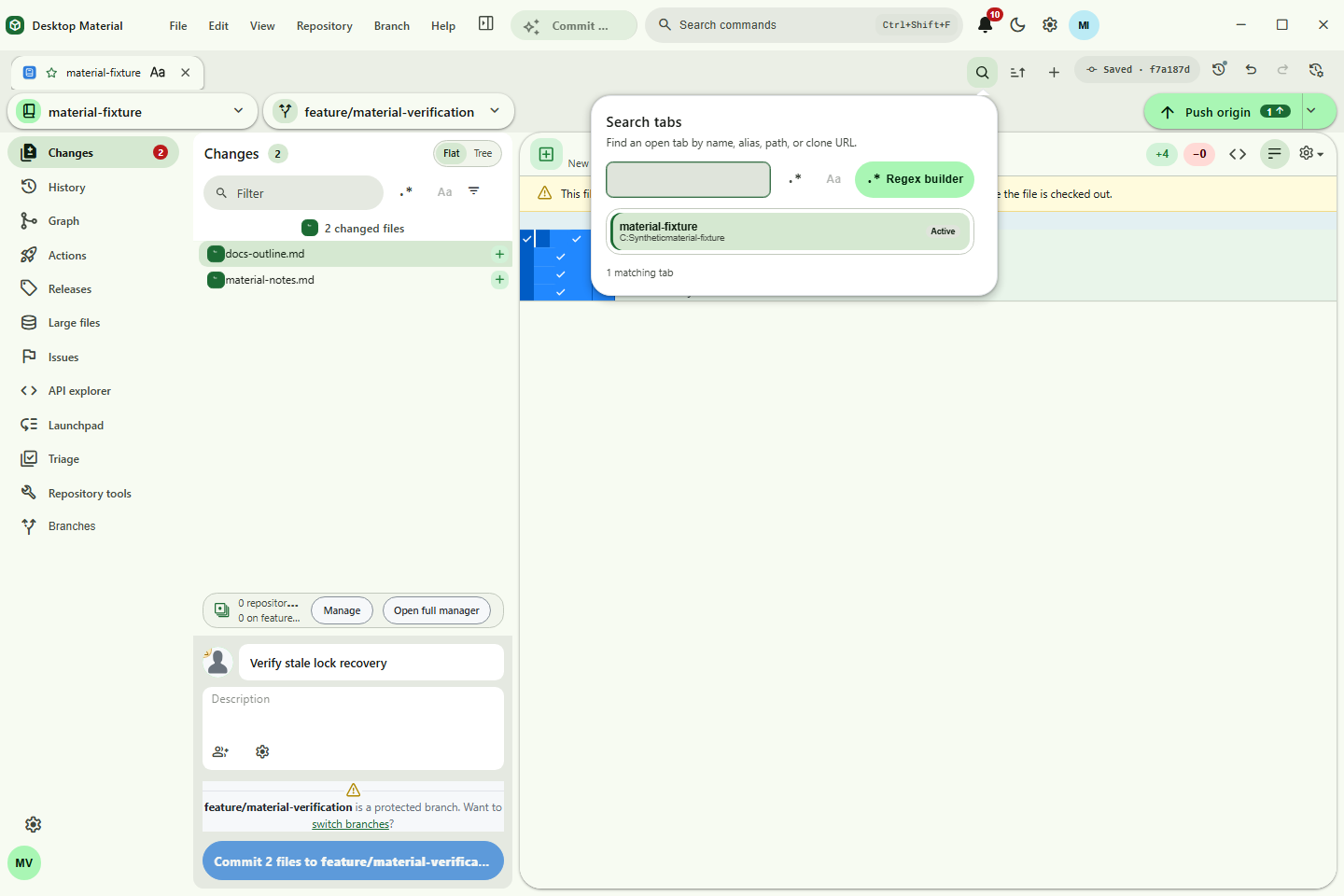
Runtime tab search across names, aliases, paths, and clone URLs |
material-tab-groups.png |
Restart-restored named group chip with visible repository membership and real collapse/expand behavior |
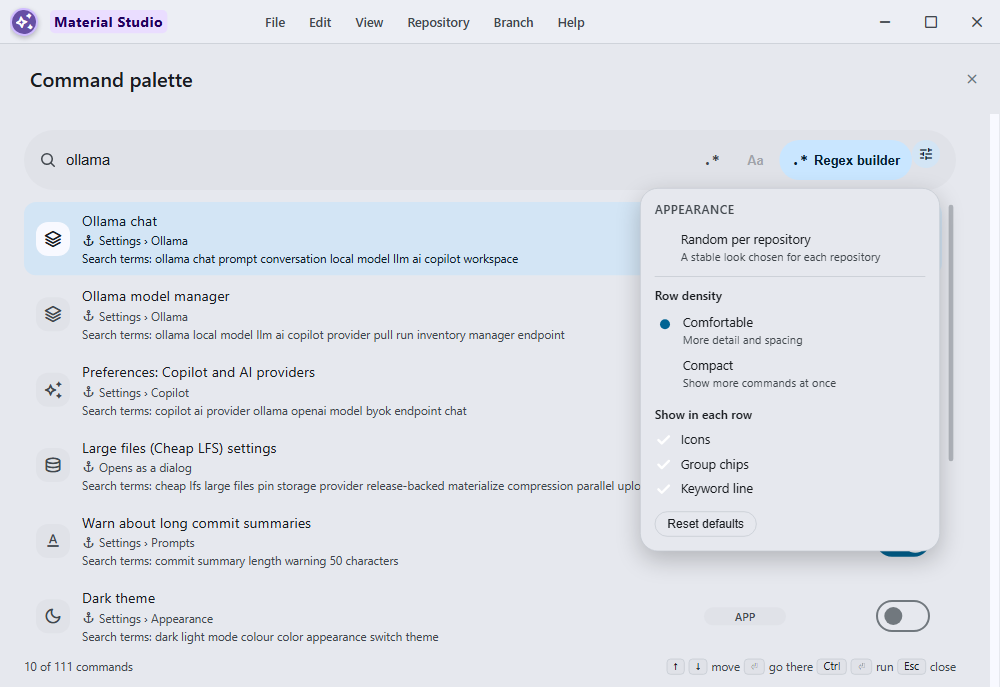
material-command-palette-appearance.png |
Rich command results beside the compact aligned appearance editor with stable random-per-repository mode |
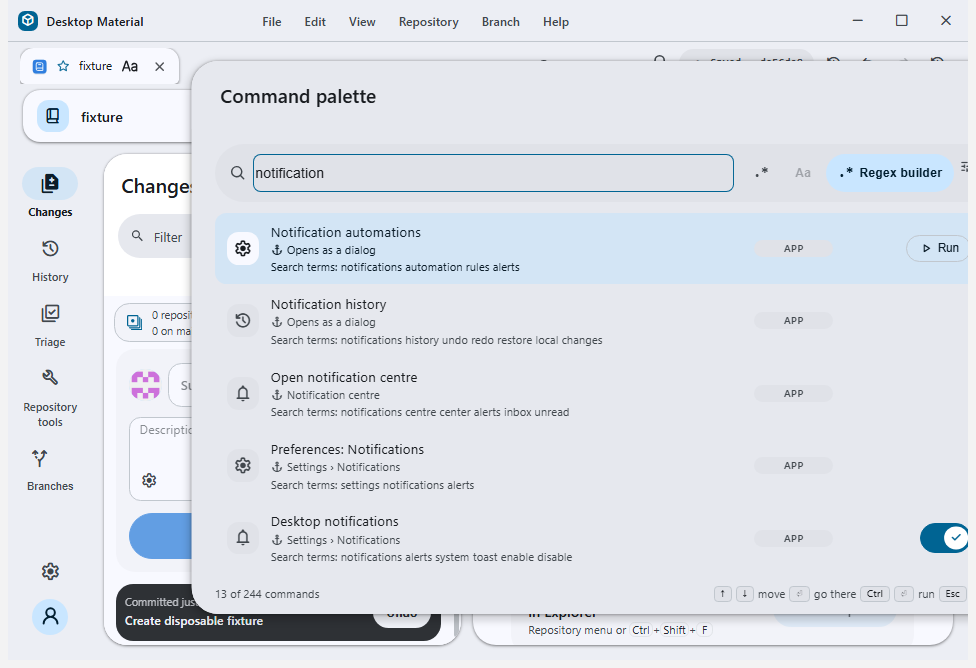
material-command-palette-notification-after.png |
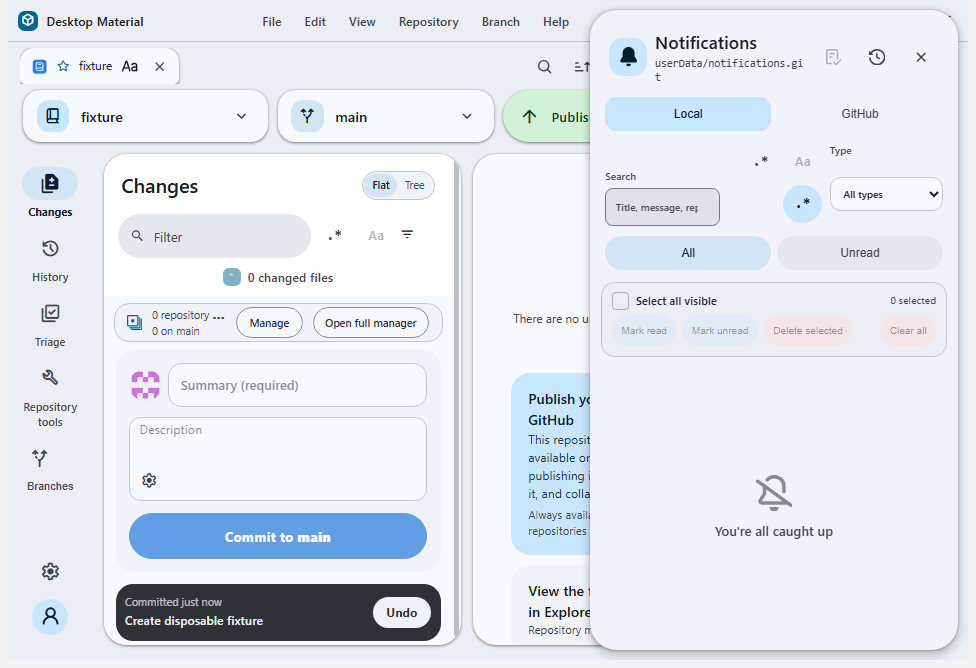
Separate command-palette routes for the live notification centre and local notification history |
material-notification-centre-route.png |
The corrected notification-centre command opening the live side sheet |
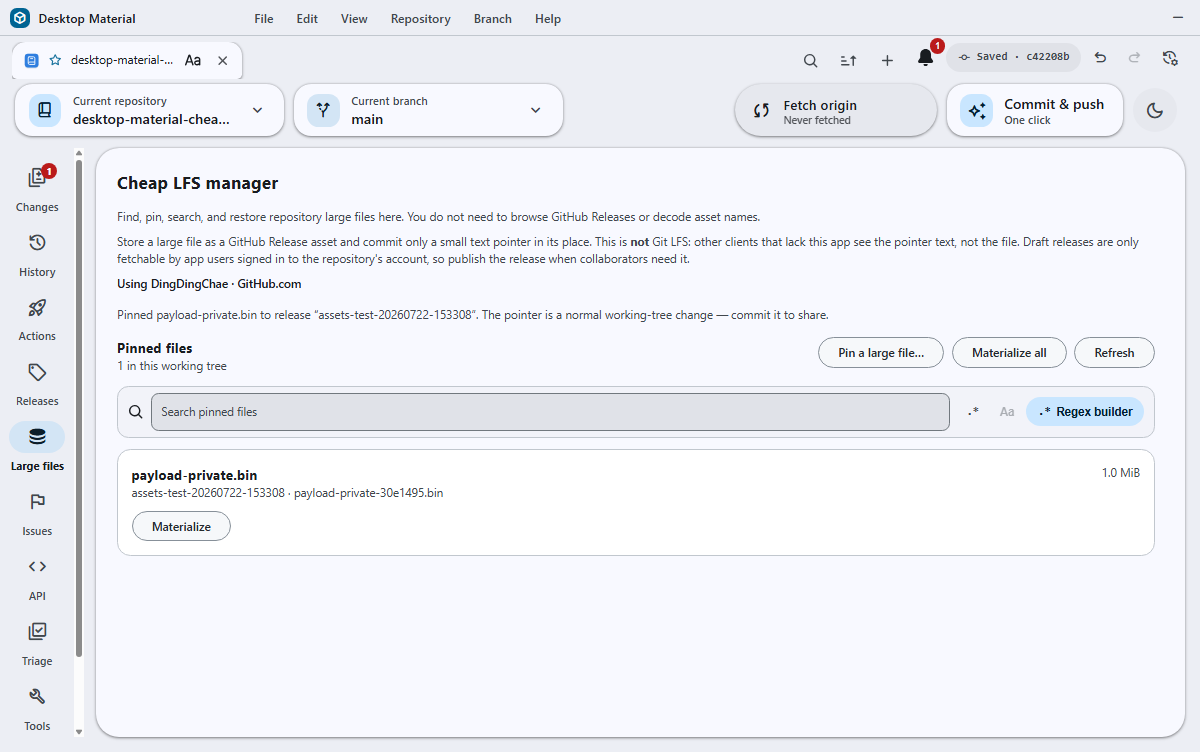
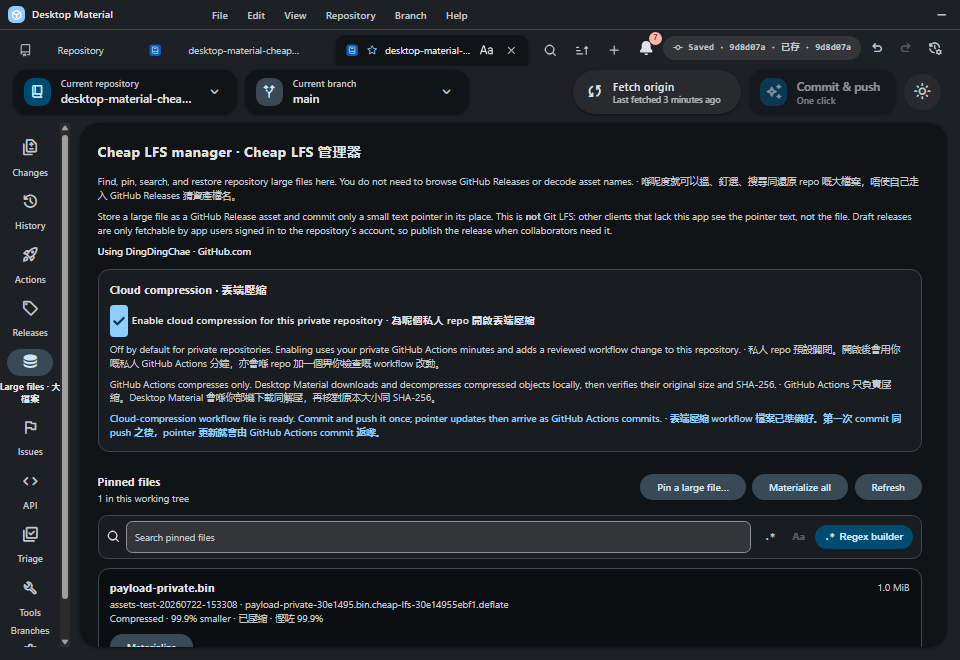
cheap-lfs-ui-acceptance.png |
Live private-repository Cheap LFS pin result with the verified pointer and Materialize action |
cheap-lfs-cloud-compression.png |
Bilingual persisted private opt-in routed through the encrypted public builder, with no private-repository workflow and one verified 99.9%-compressed pointer |
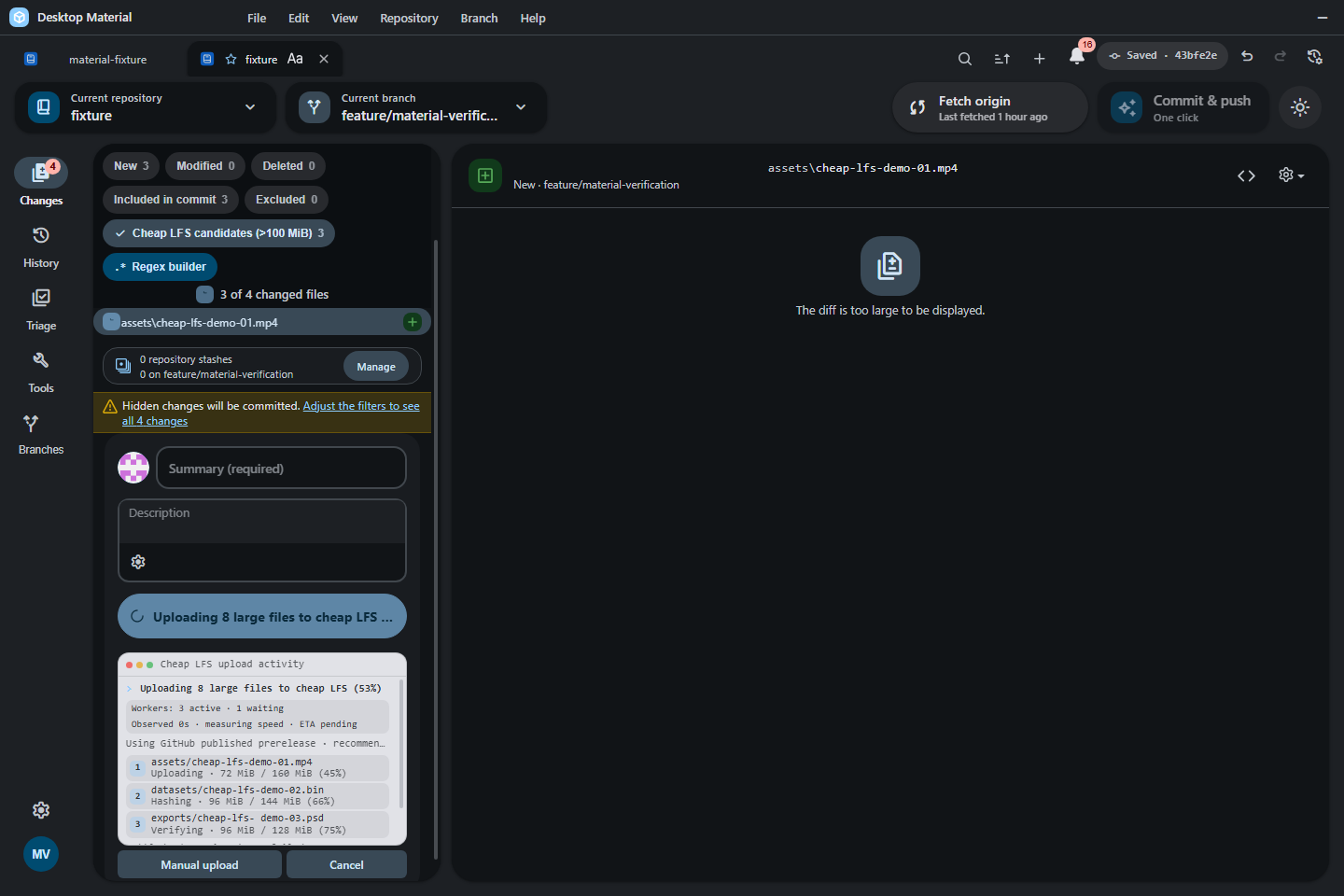
cheap-lfs-commit-progress.png |
Three-worker Cheap LFS terminal with queue, provider, reason, timing, ETA, manual-phase, and keyboard-disclosure context |
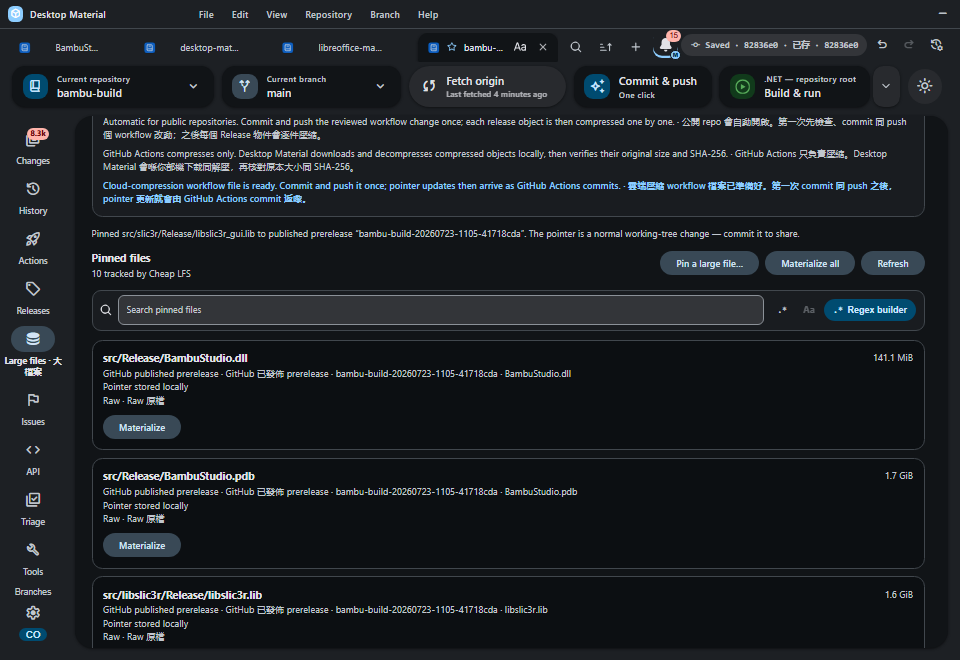
cheap-lfs-bambu-build-live.png |
Live public Bambu build inventory with ten tracked Release-backed pointer objects |
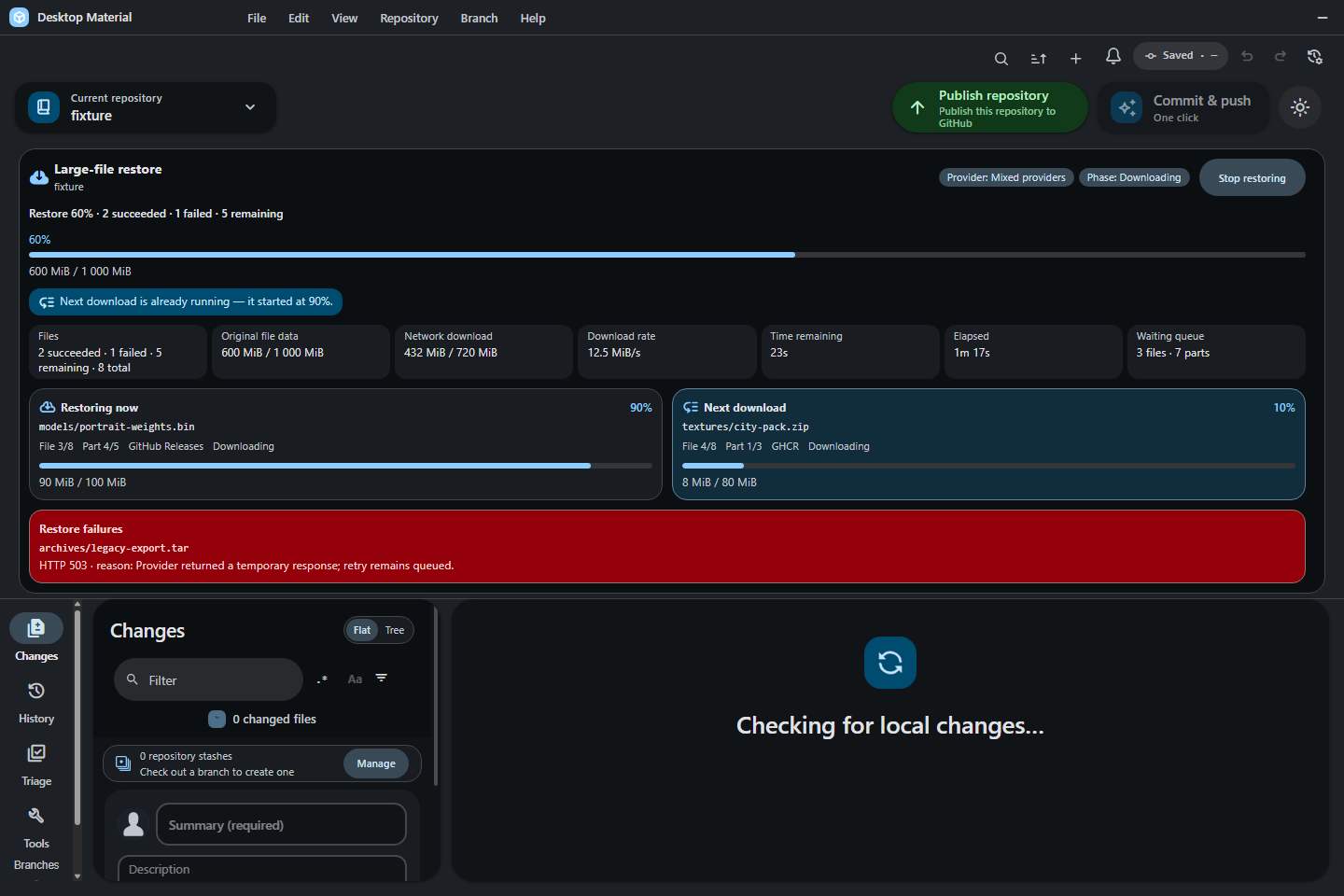
cheap-lfs-restore-lookahead.png |
Exact-90% Release restore with detailed current and already-running look-ahead lanes |
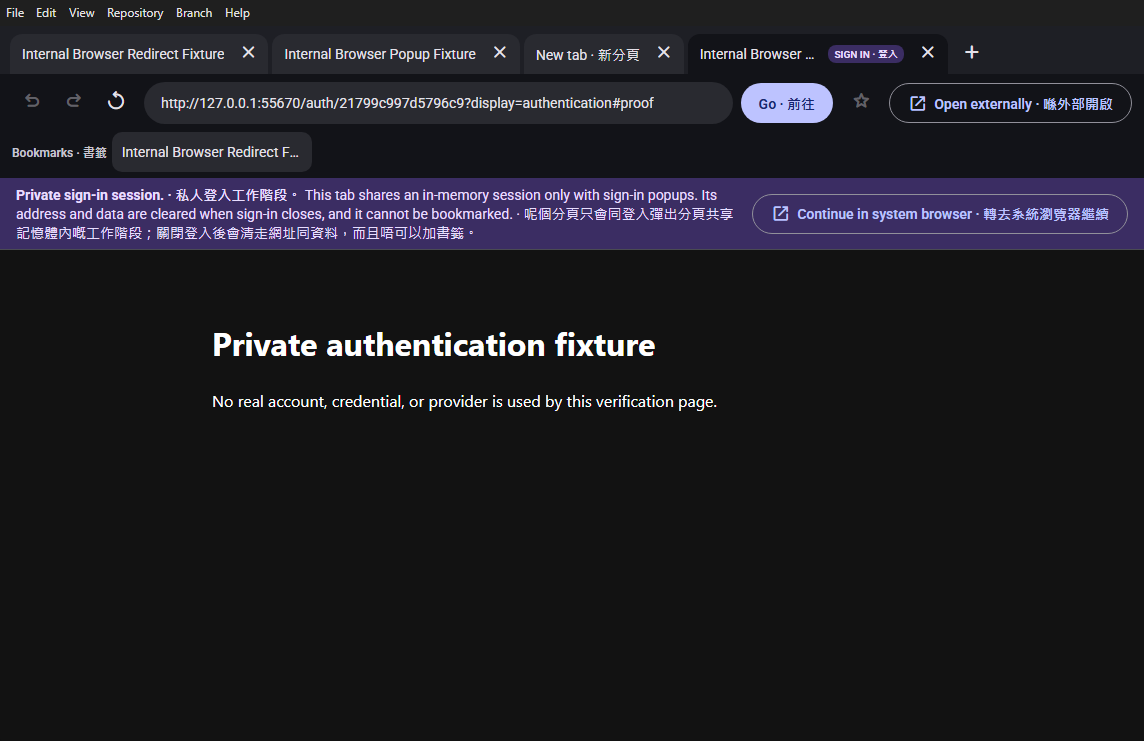
app-hosted-browser-authentication.png |
Sandboxed app-hosted browser with tabs, redirects, bookmark sanitization, and private authentication escape |
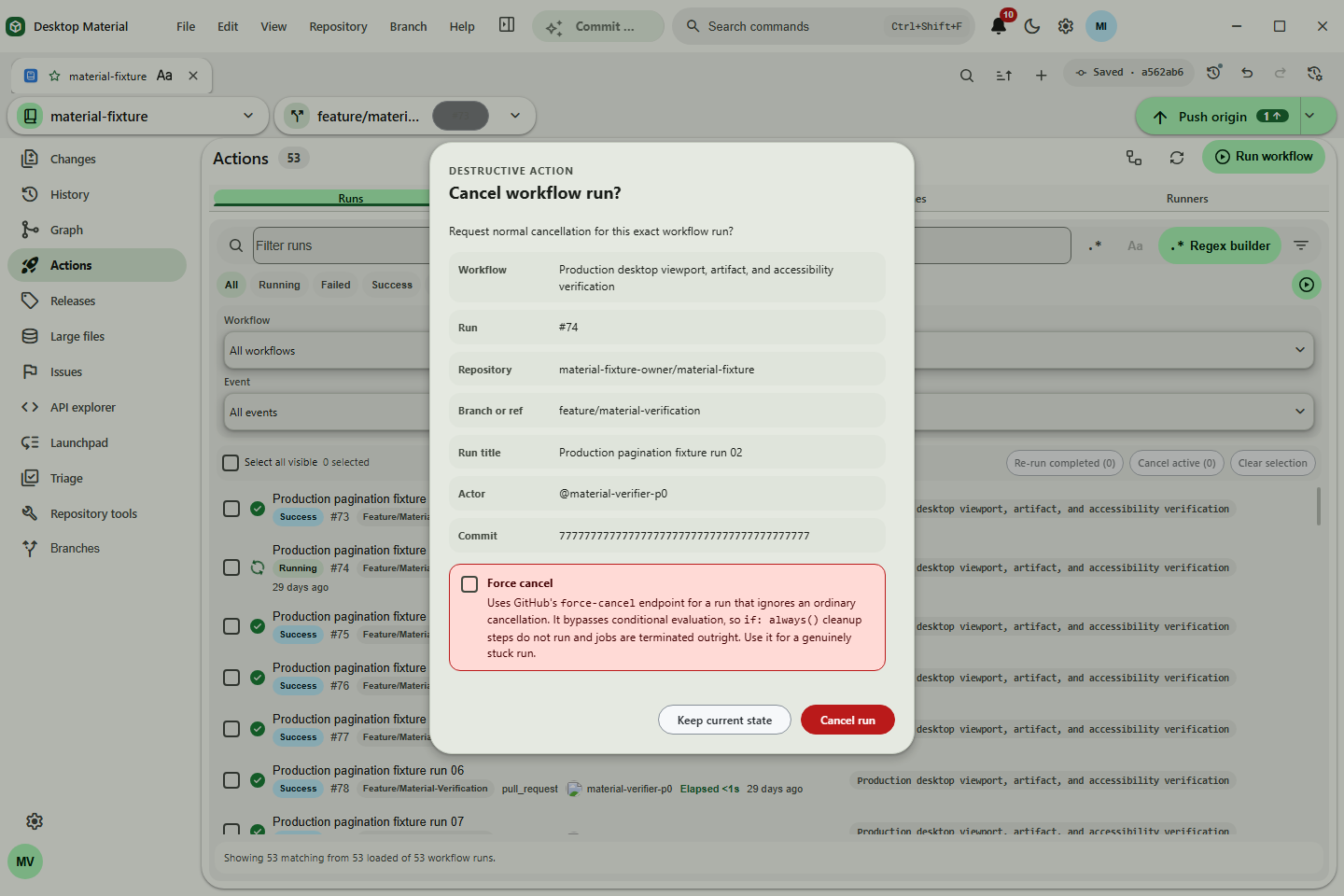
material-actions-cancel.png |
Exact workflow-run cancellation review with ref, actor, and commit context |
material-rebase-review.png |
Reviewed current→target rebase with ahead/behind state and commit preview |
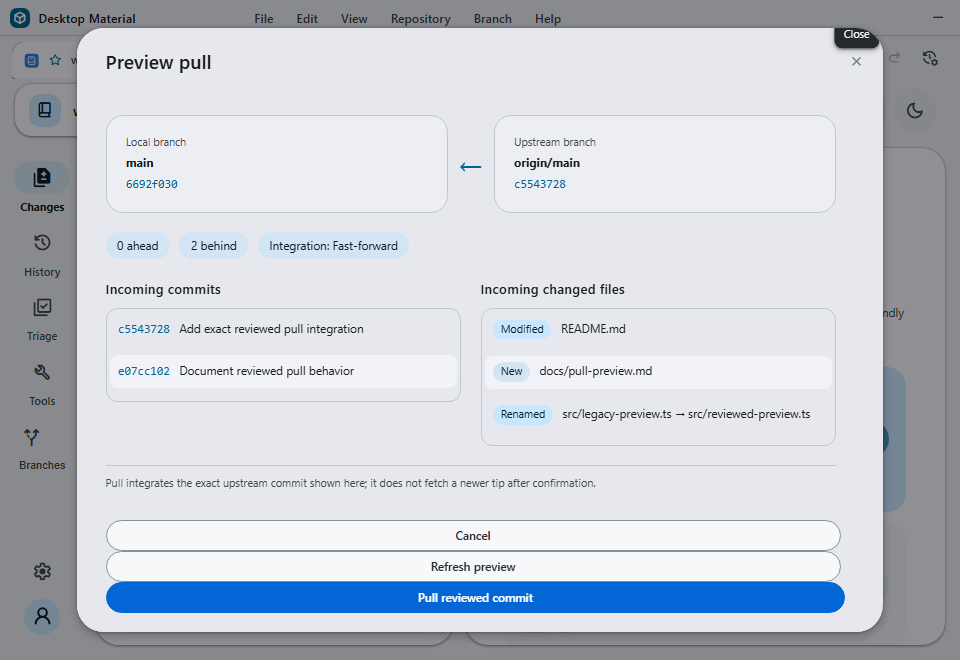
material-pull-preview.png |
Freshly fetched ordinary pull review bound to one exact upstream OID |
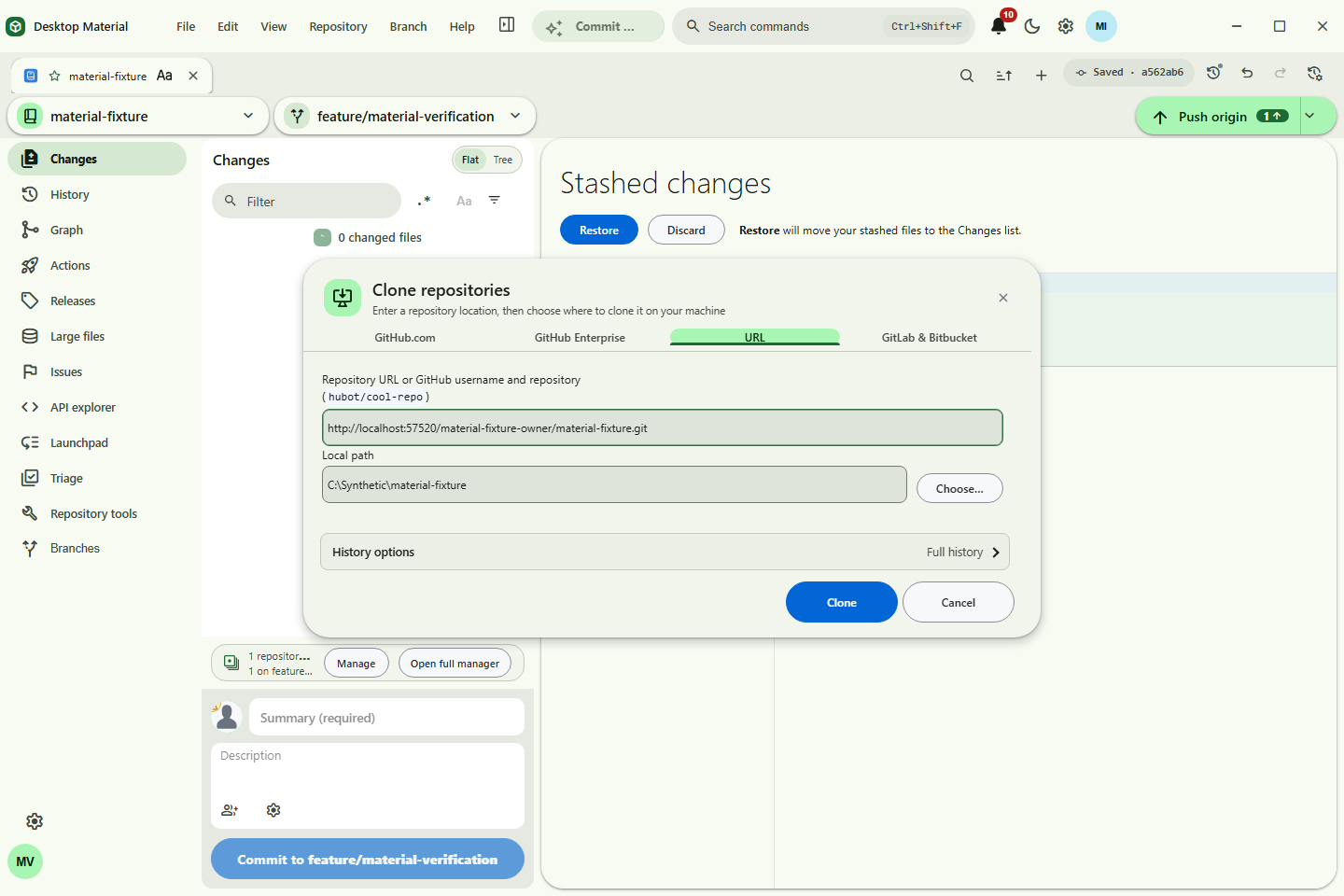
material-shallow-clone-safe.png |
Reviewed shallow clone with a bounded commit depth |
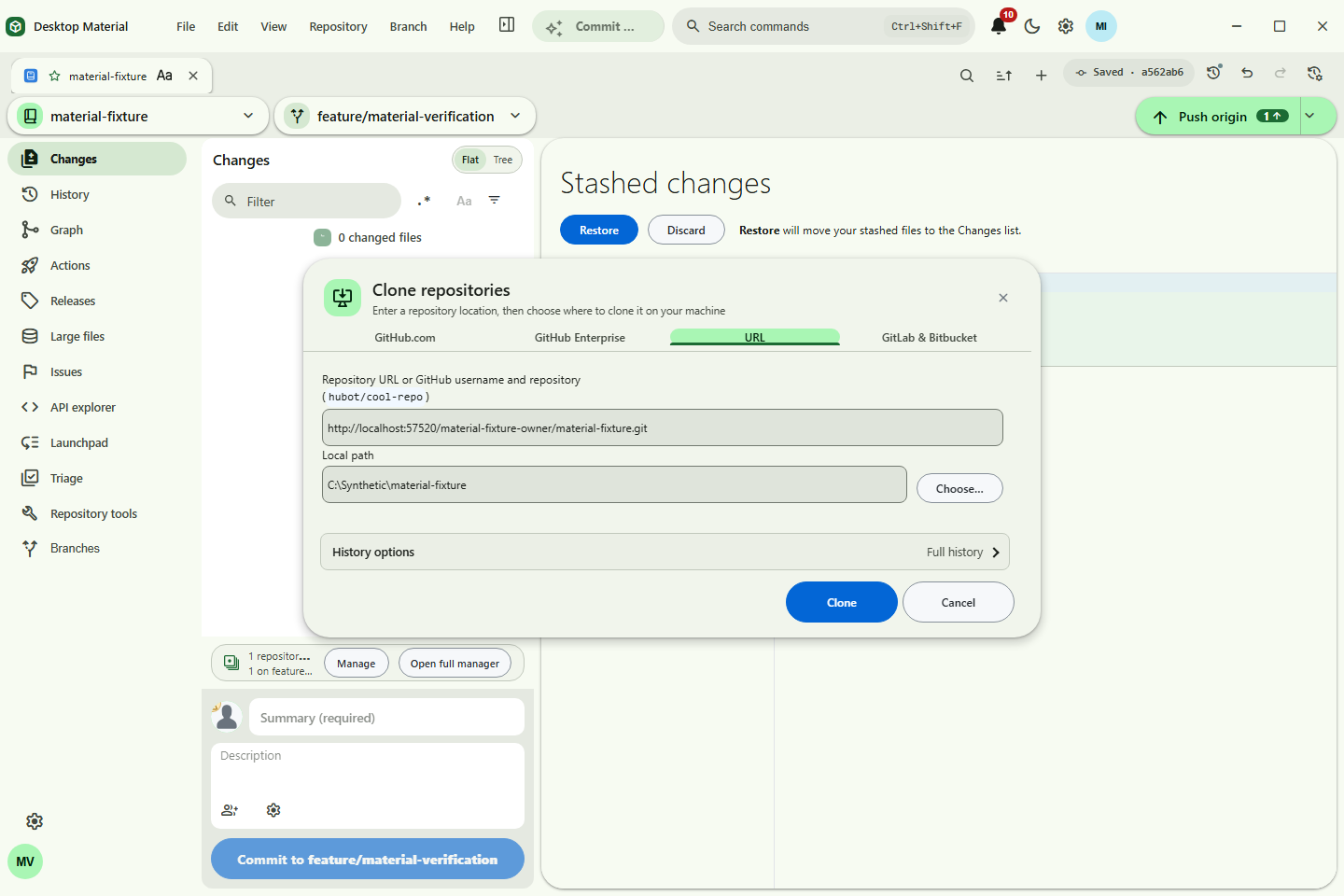
material-clone-account-fallback.png |
Generic HTTPS clone completed through exact-origin signed-in account fallback |
add-submodule-dialog.png |
Clone-style Add Submodule review with source, checkout path, and branch |
material-submodule-context.png |
Initialized submodule opened temporarily with context and Back to the persisted root |
material-pull-all-account-fallback.png |
Pull all with per-repository results and exact-origin account retry |
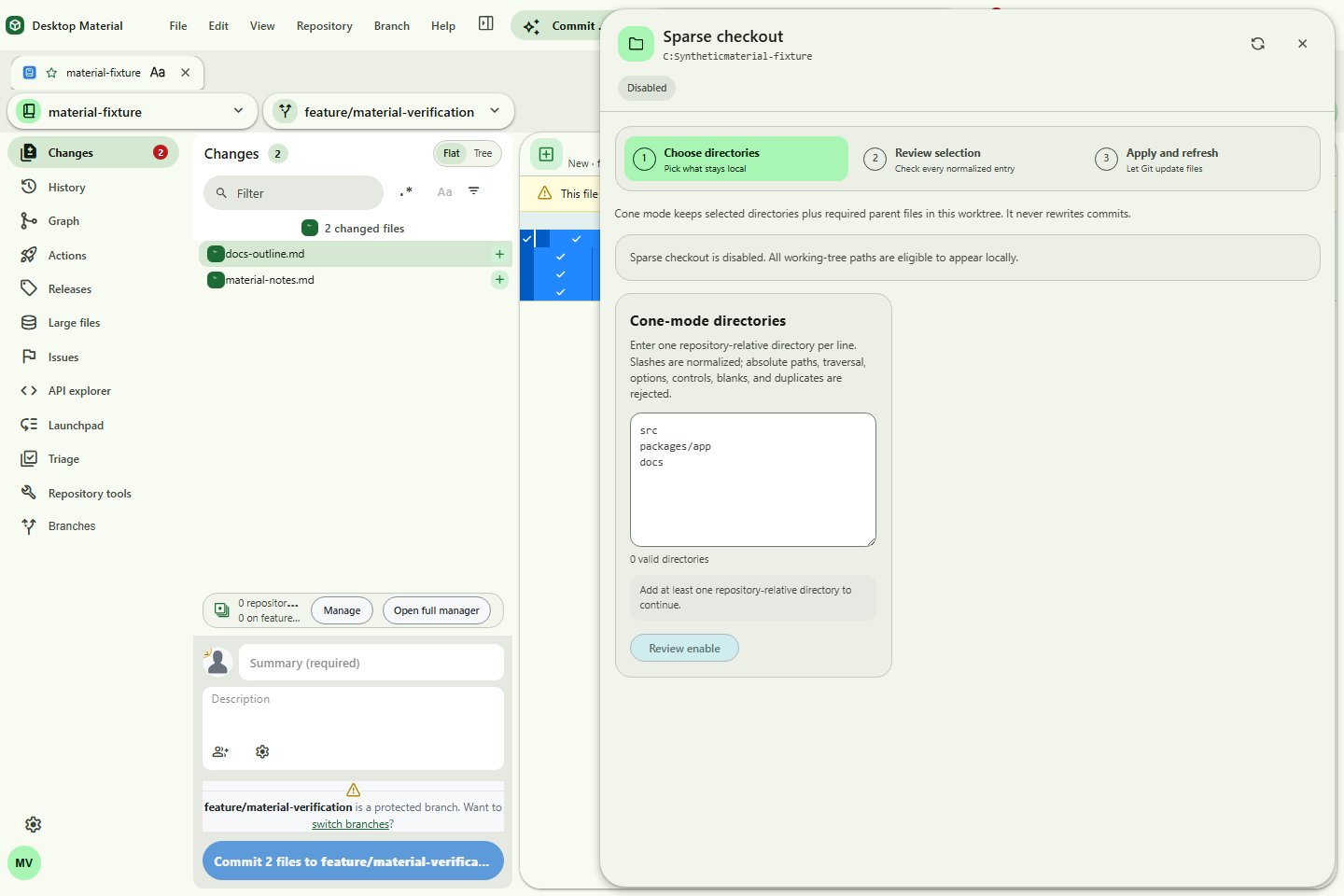
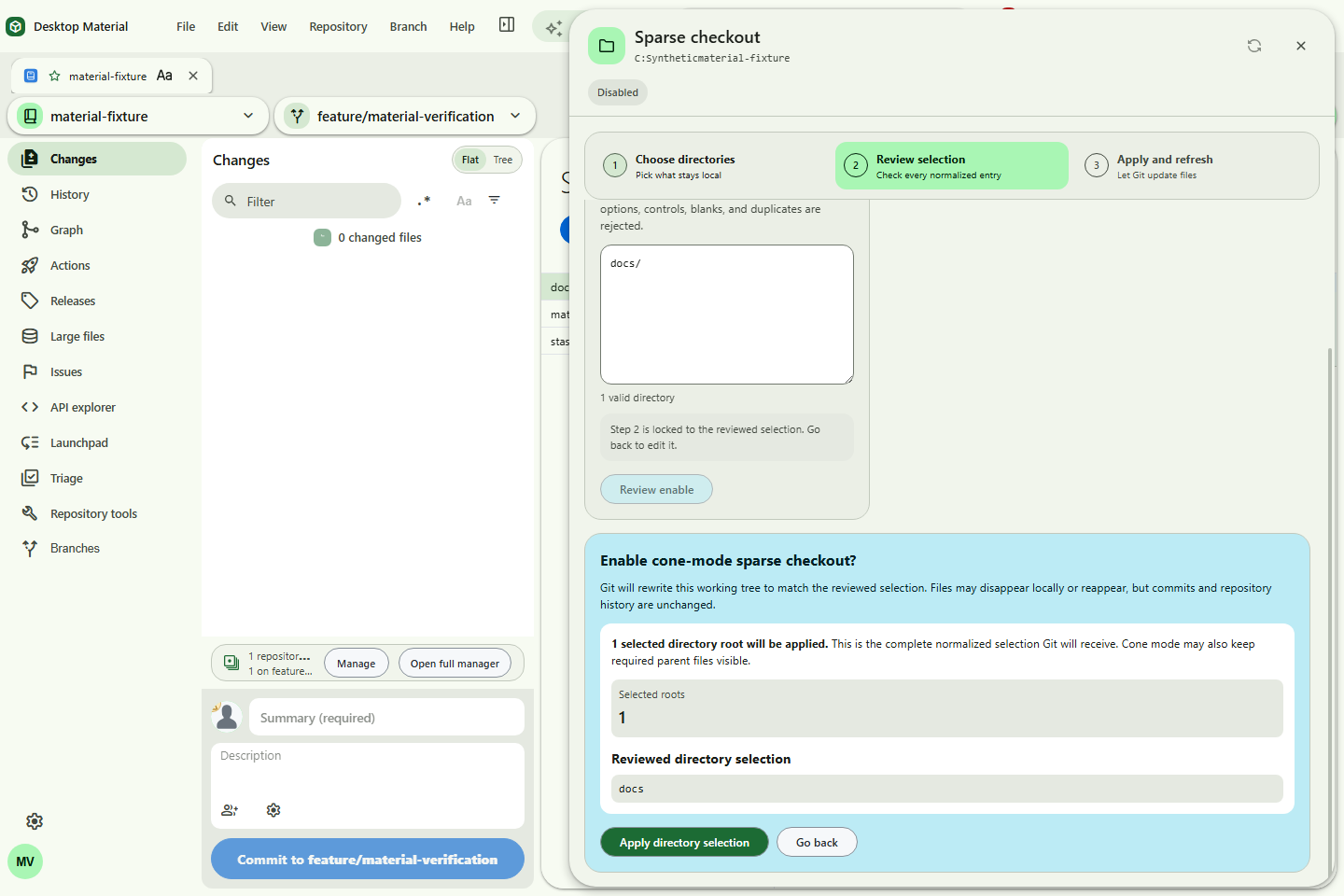
material-sparse-checkout-safe.png |
Persistent guided review with the locked editor and exact normalized selection |
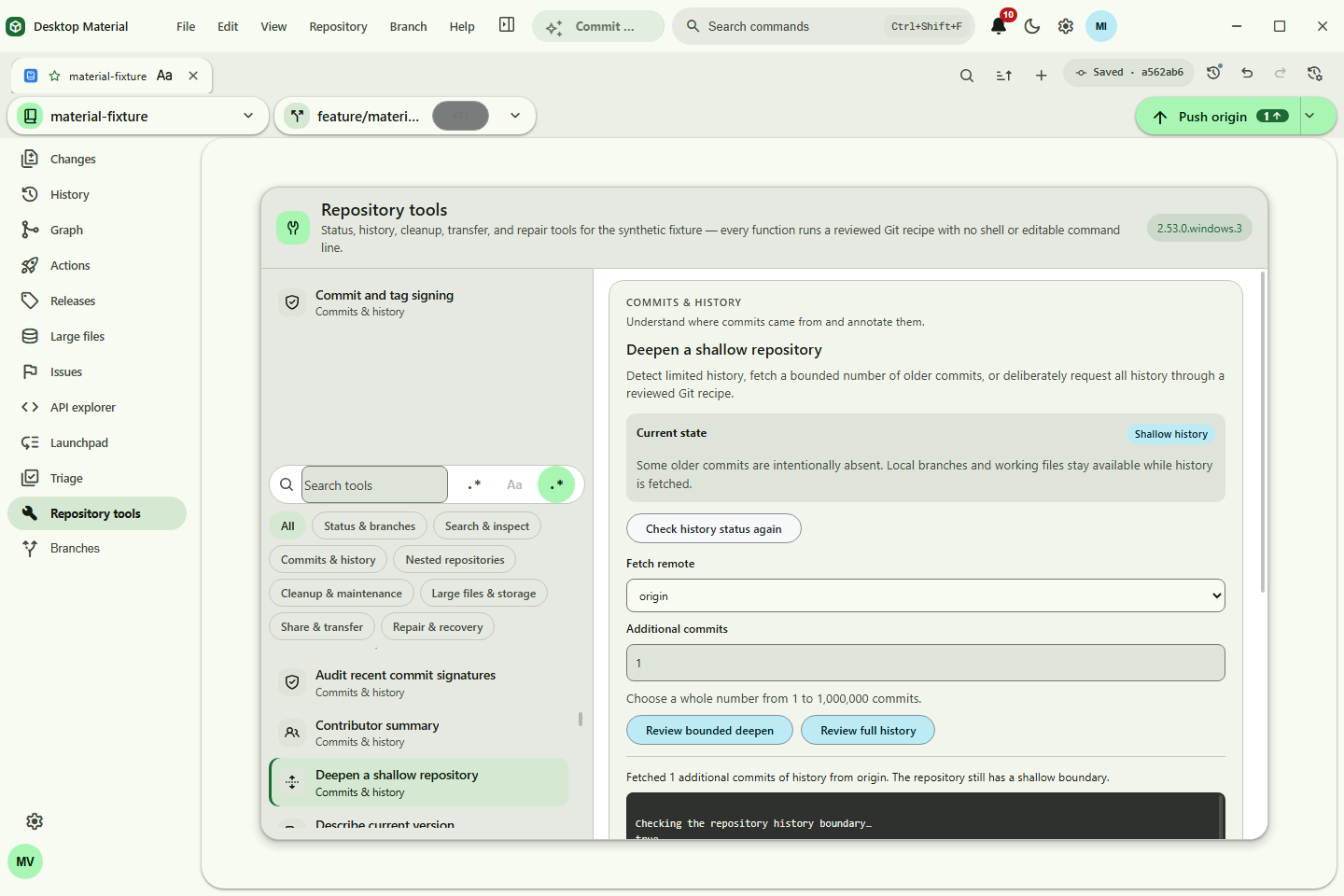
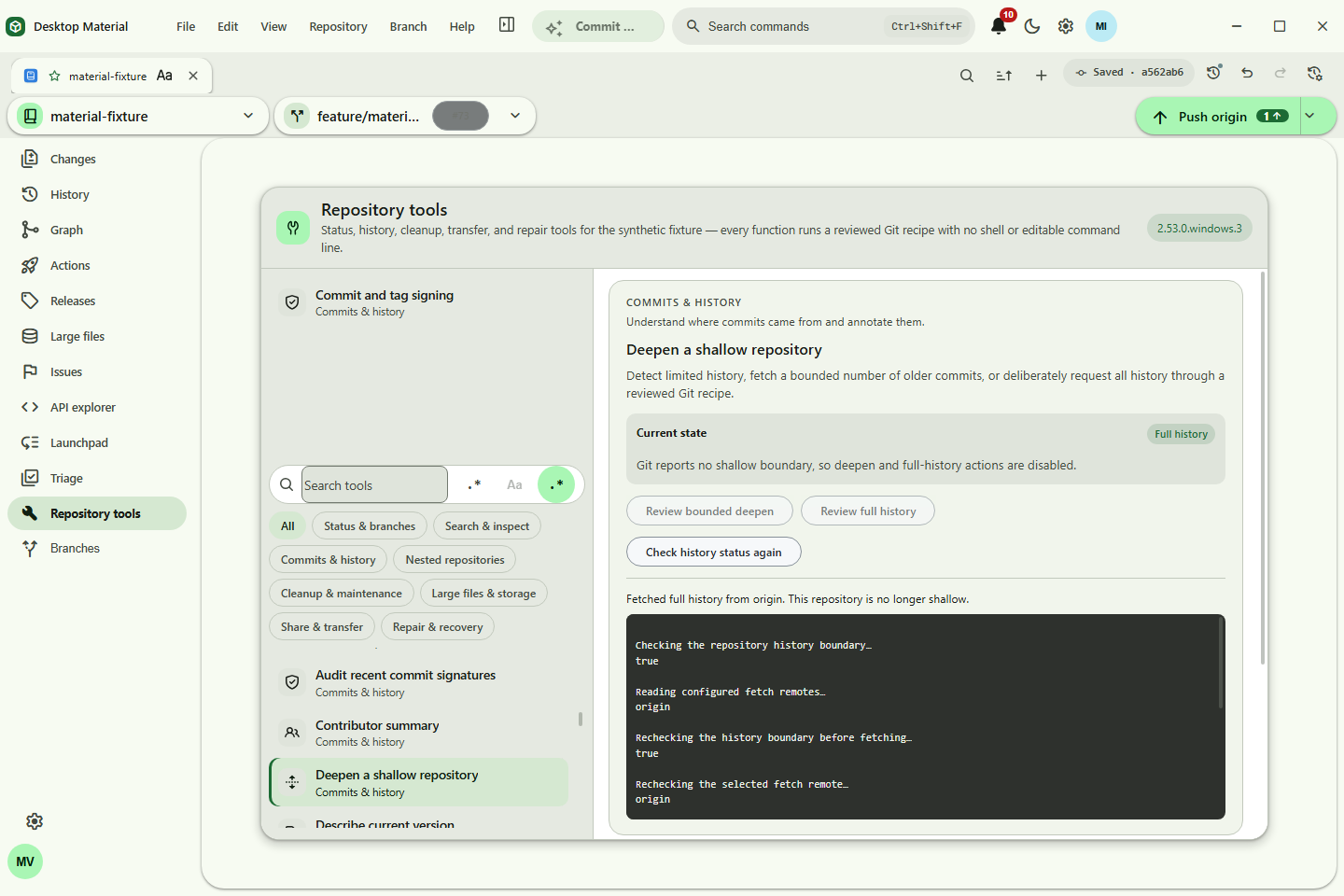
material-history-deepen.png |
Deepen-history result without exposing the account used |
material-remote-manager.png |
Repository Settings with browser-style pages and the Remote page selected |
material-native-pull-request.png |
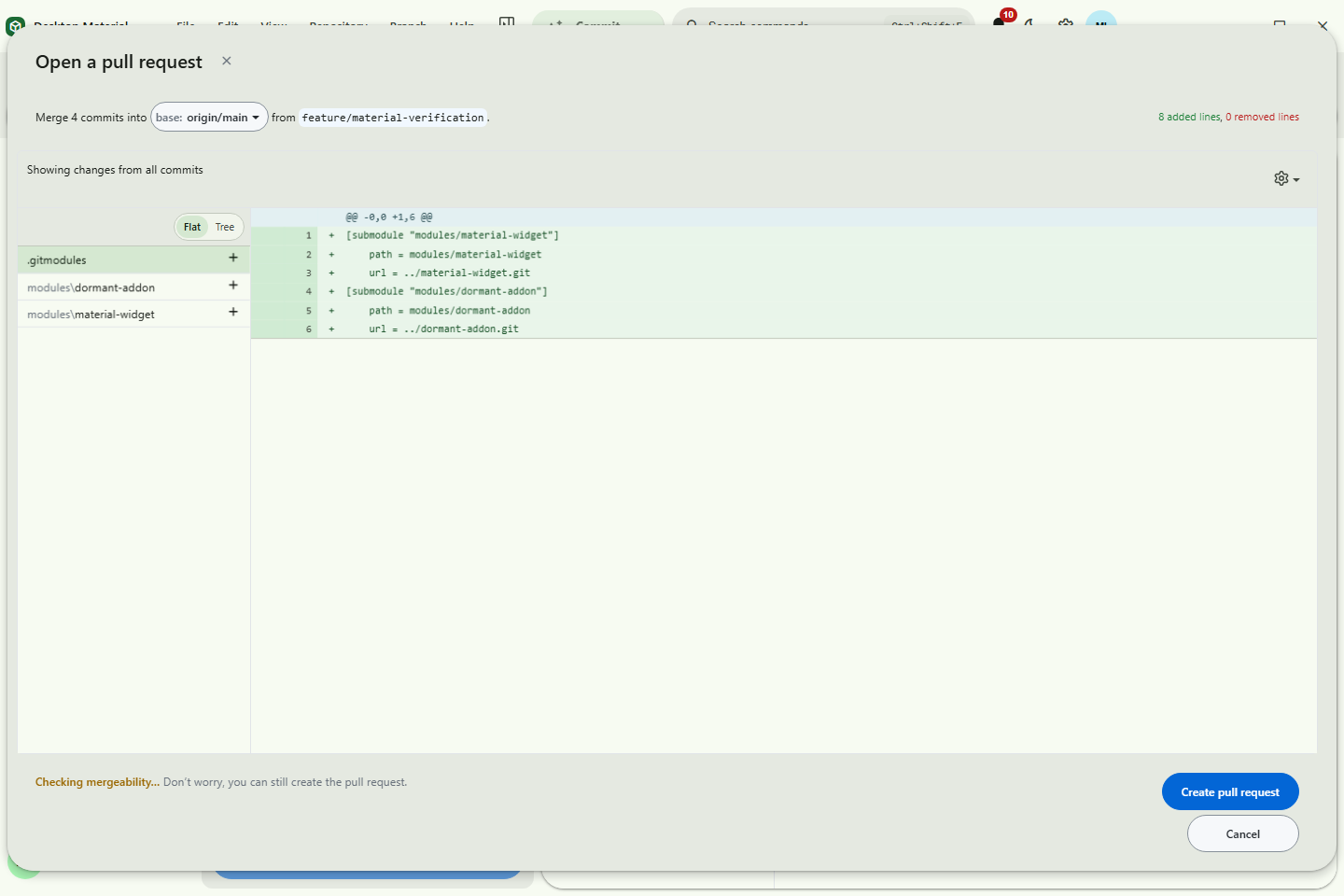
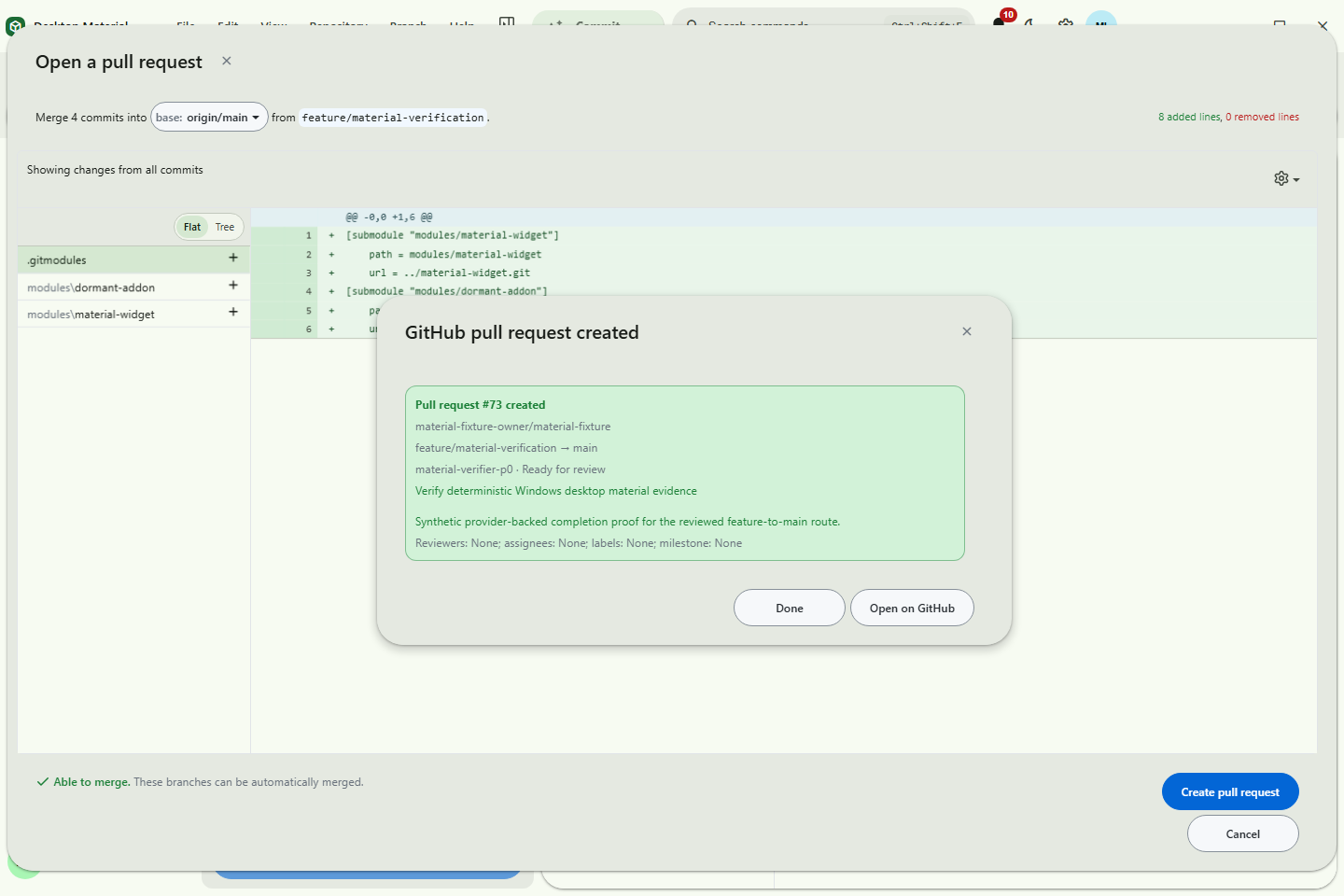
Native pull-request creation with bounded metadata |
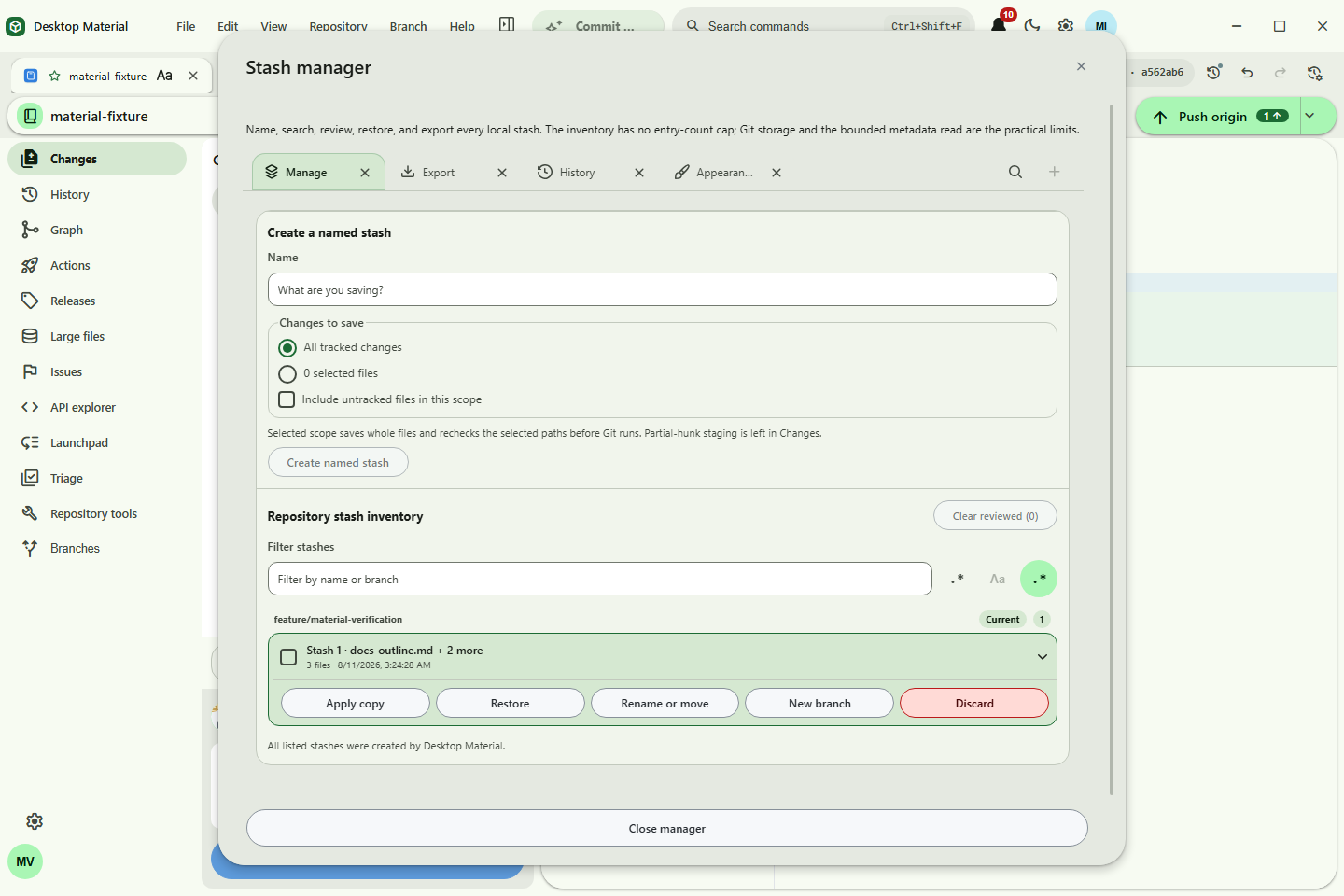
material-stash-manager.png |
Stash Manager with browser-style Manage, Export, History, and Appearance and voice pages |
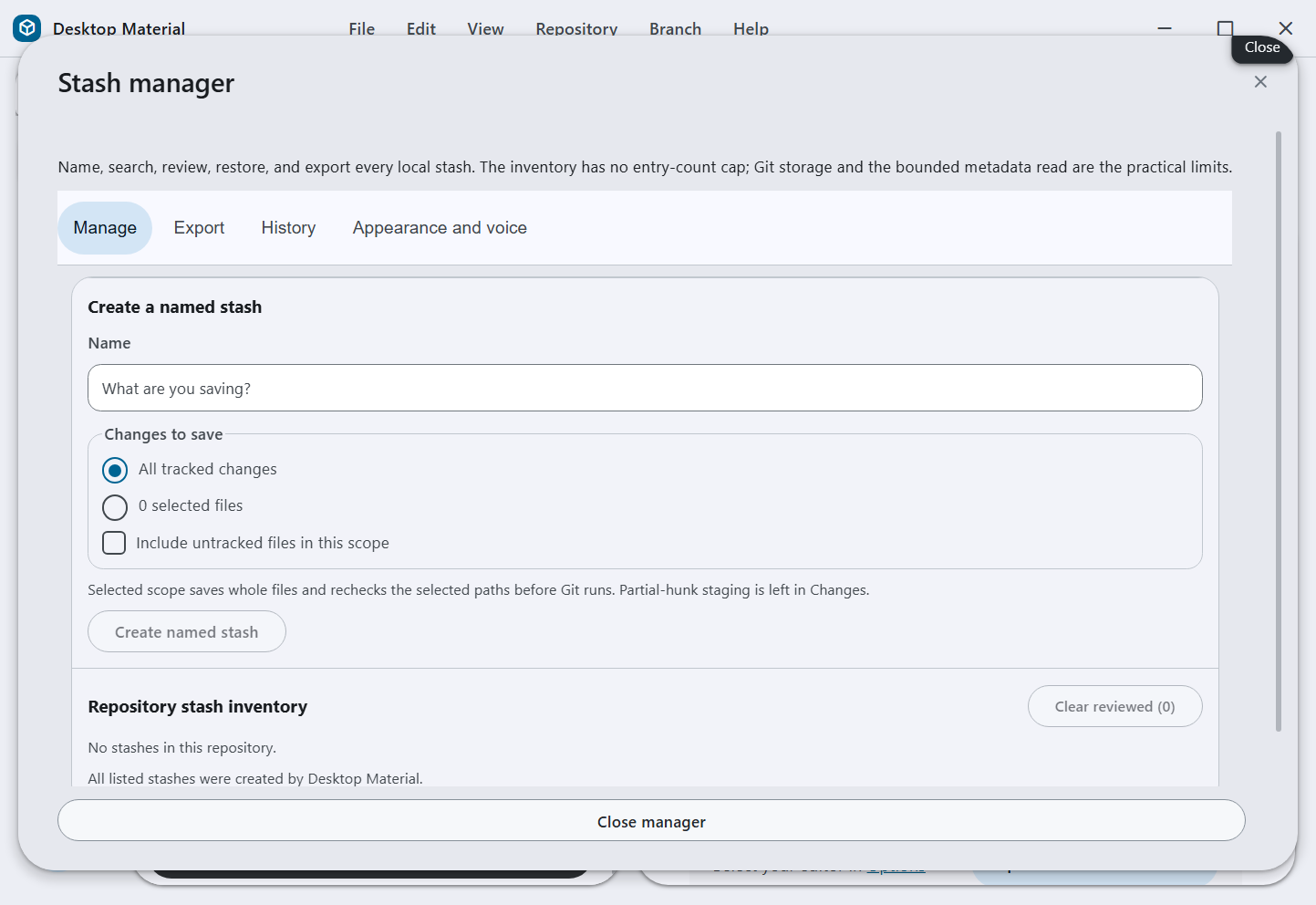
material-stash-manager-centered-20260803.png |
Centered Material stash manager with Manage, Export, History, and Appearance and voice tabs |
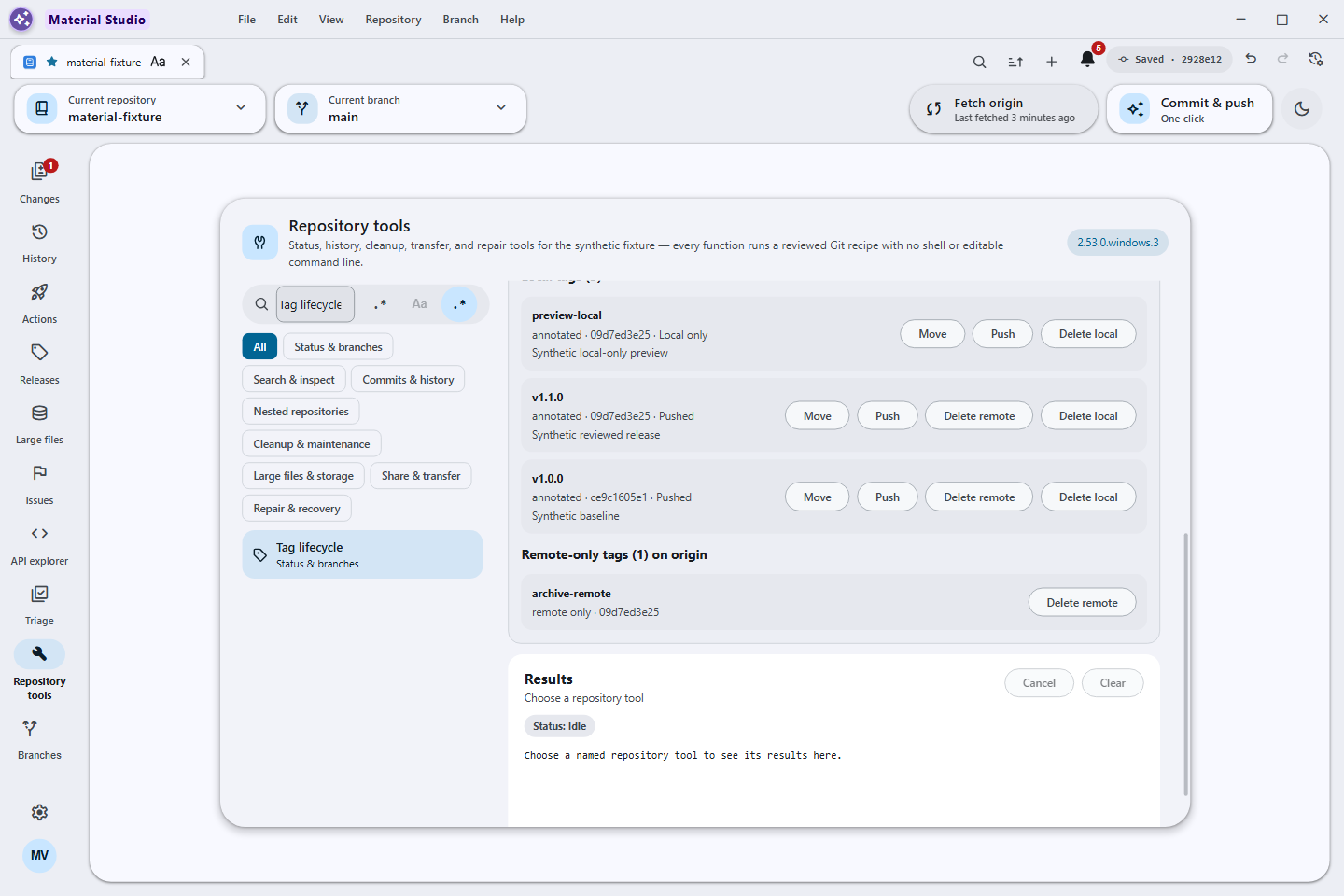
advanced-workflows.png |
Tag lifecycle inventory with local-only, pushed, and remote-only states and bounded actions |
material-actions-job-log.png |
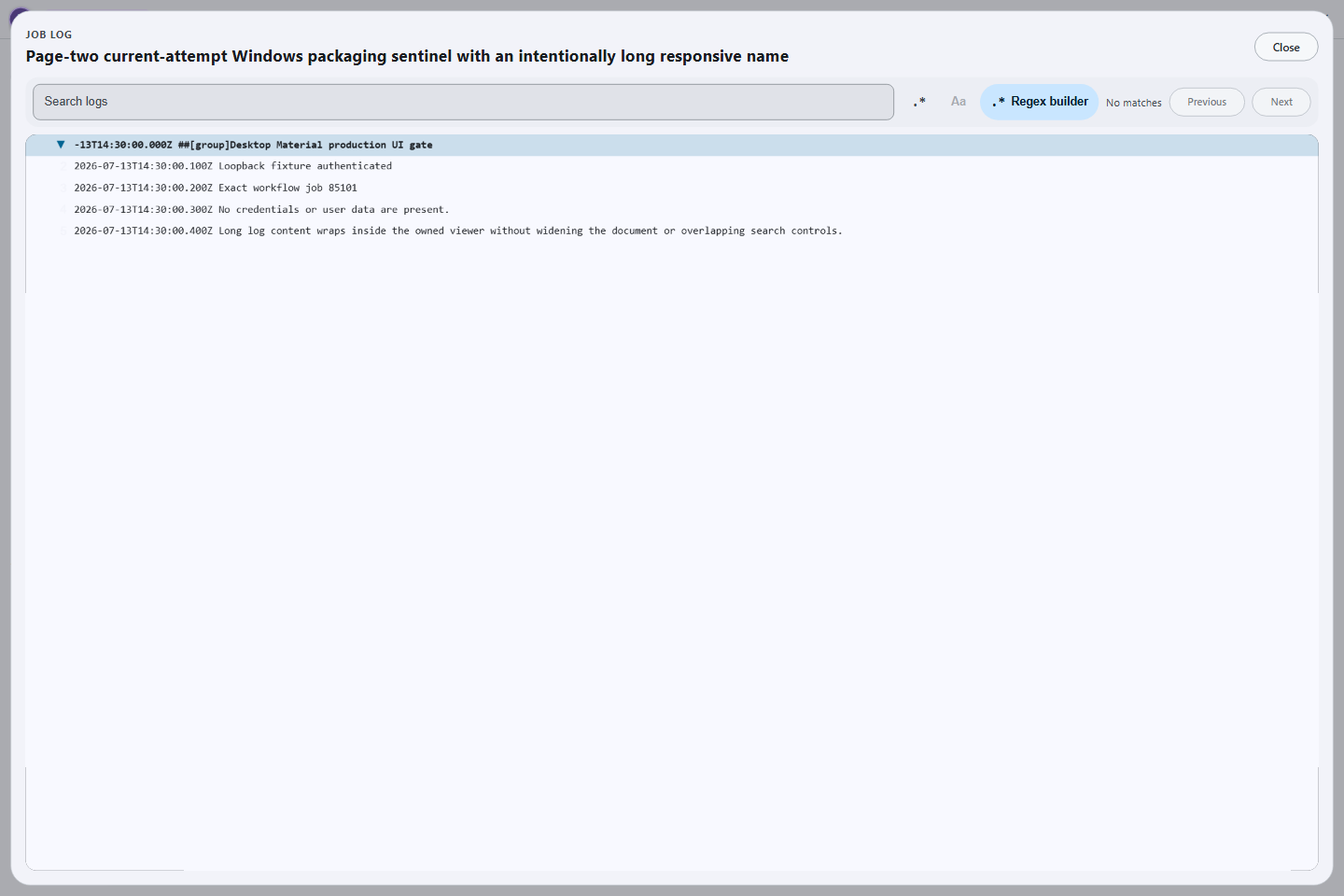
Searchable in-app Actions job log |
material-github-api-explorer.png |
Repository-bound REST/GraphQL API Explorer with mutation review and bounded responses |
material-api-app-functions.png |
Named repository-bound API functions extending the app through reviewed contracts |
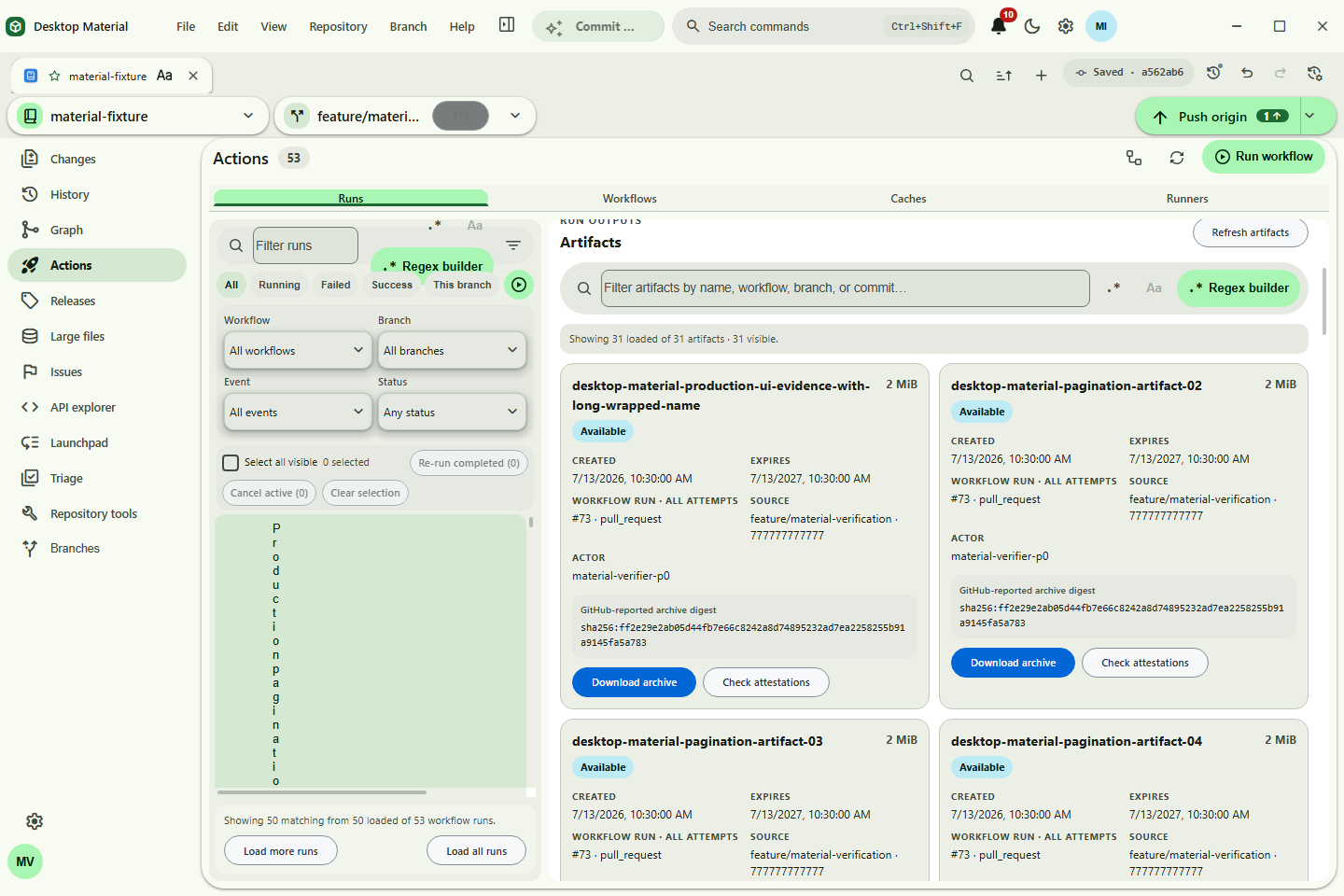
material-actions-artifact-download.png |
Bounded artifact download with a locally computed digest |
material-actions-cache-manager.png |
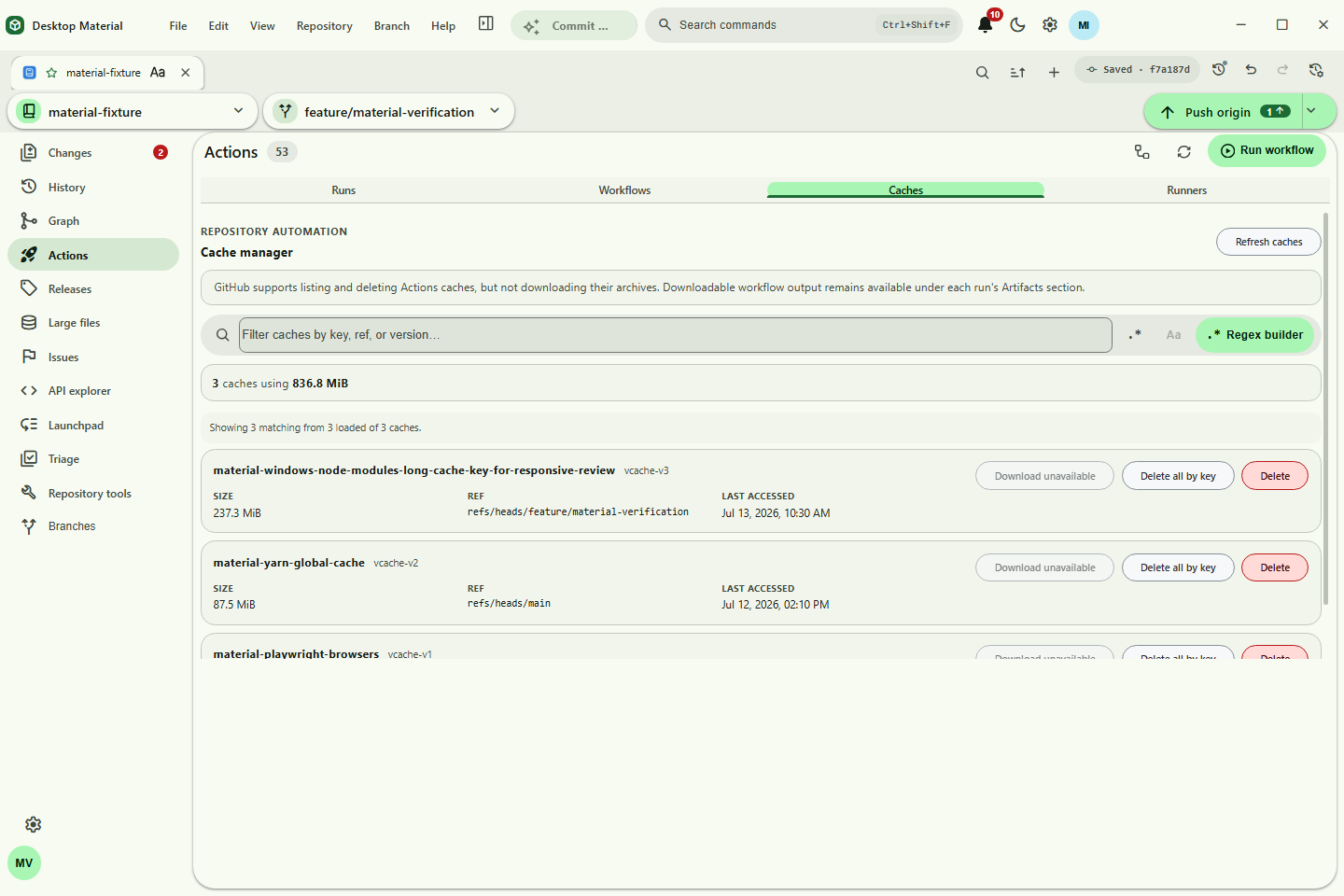
Actions cache usage, inventory, refs, and deletion controls |
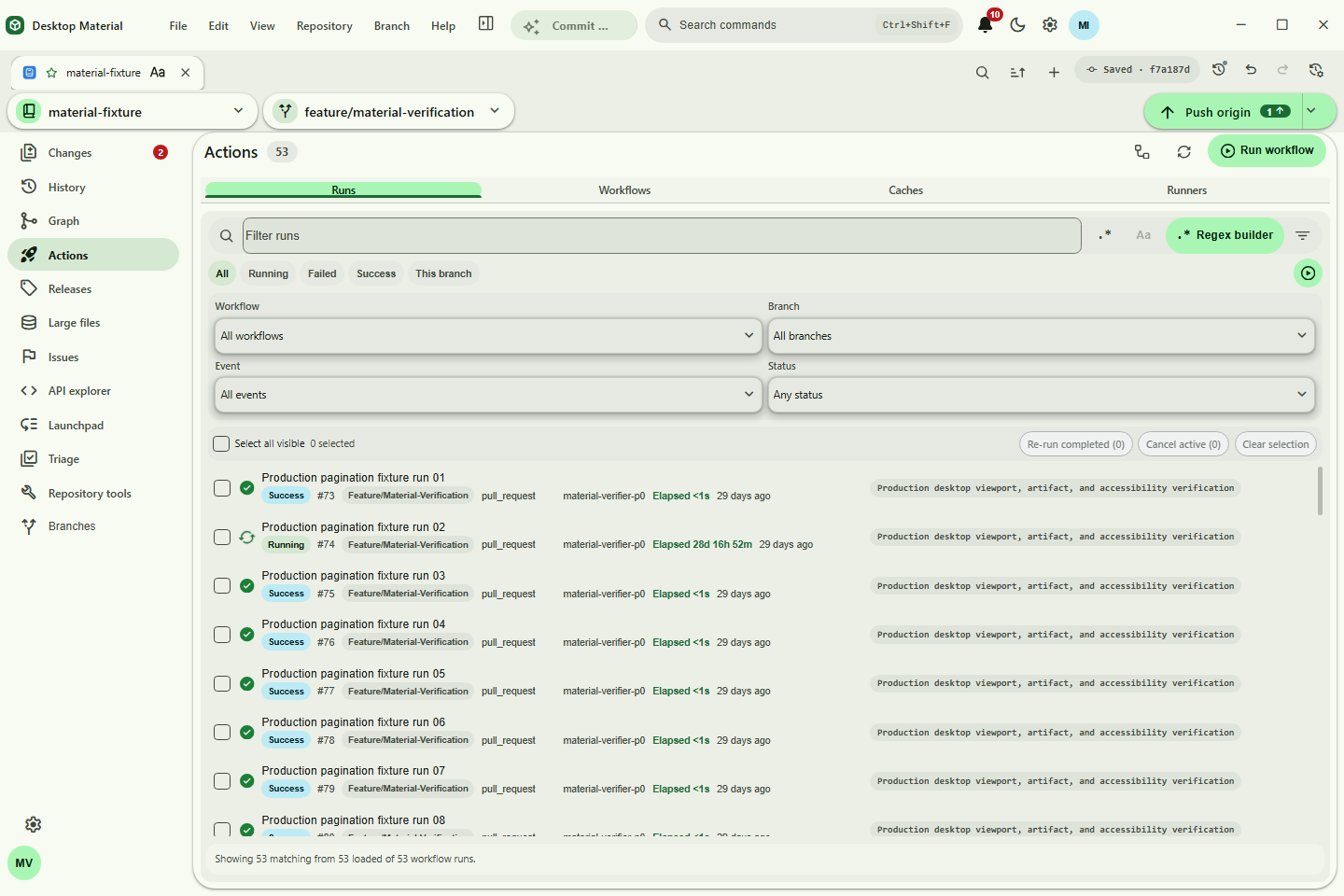
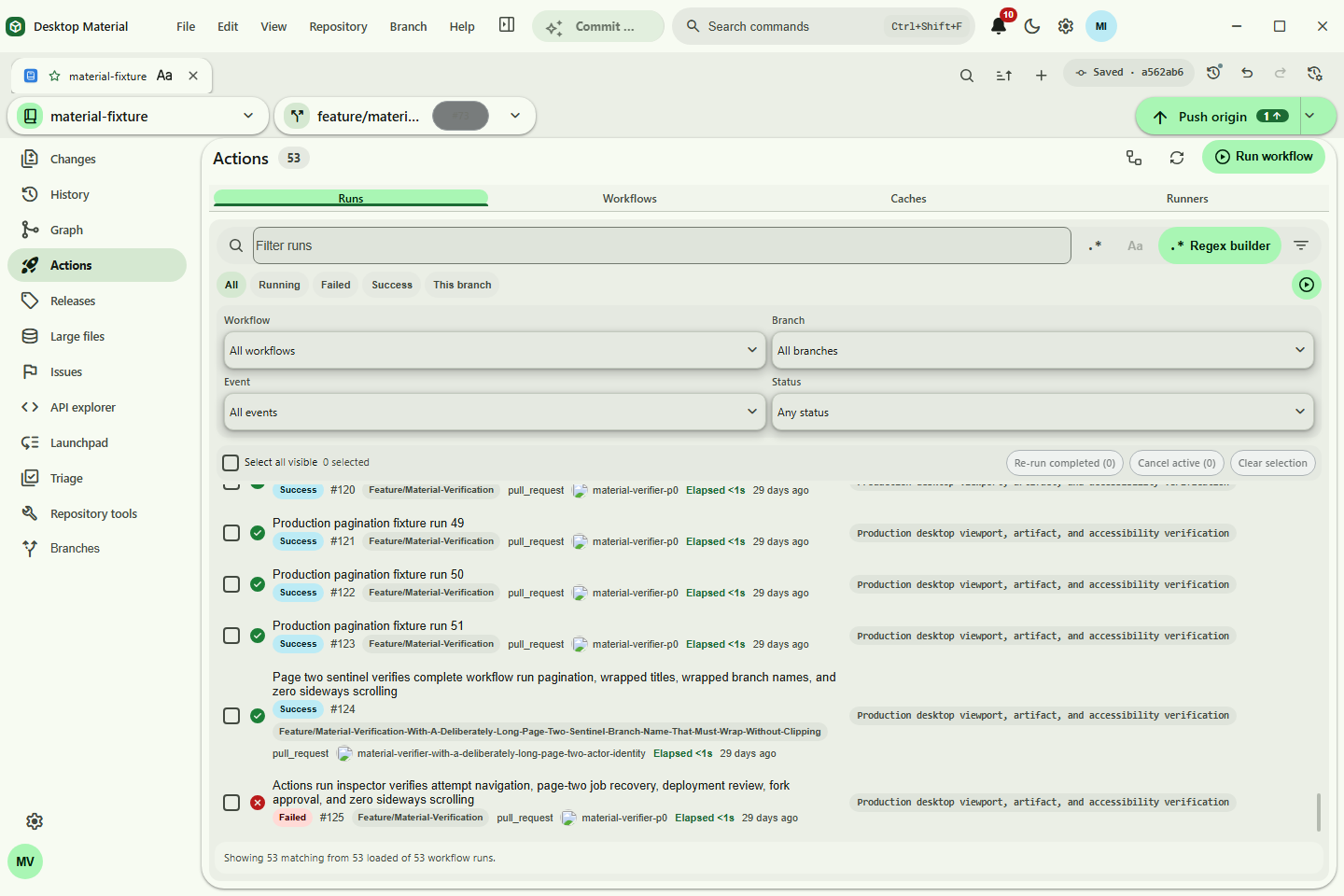
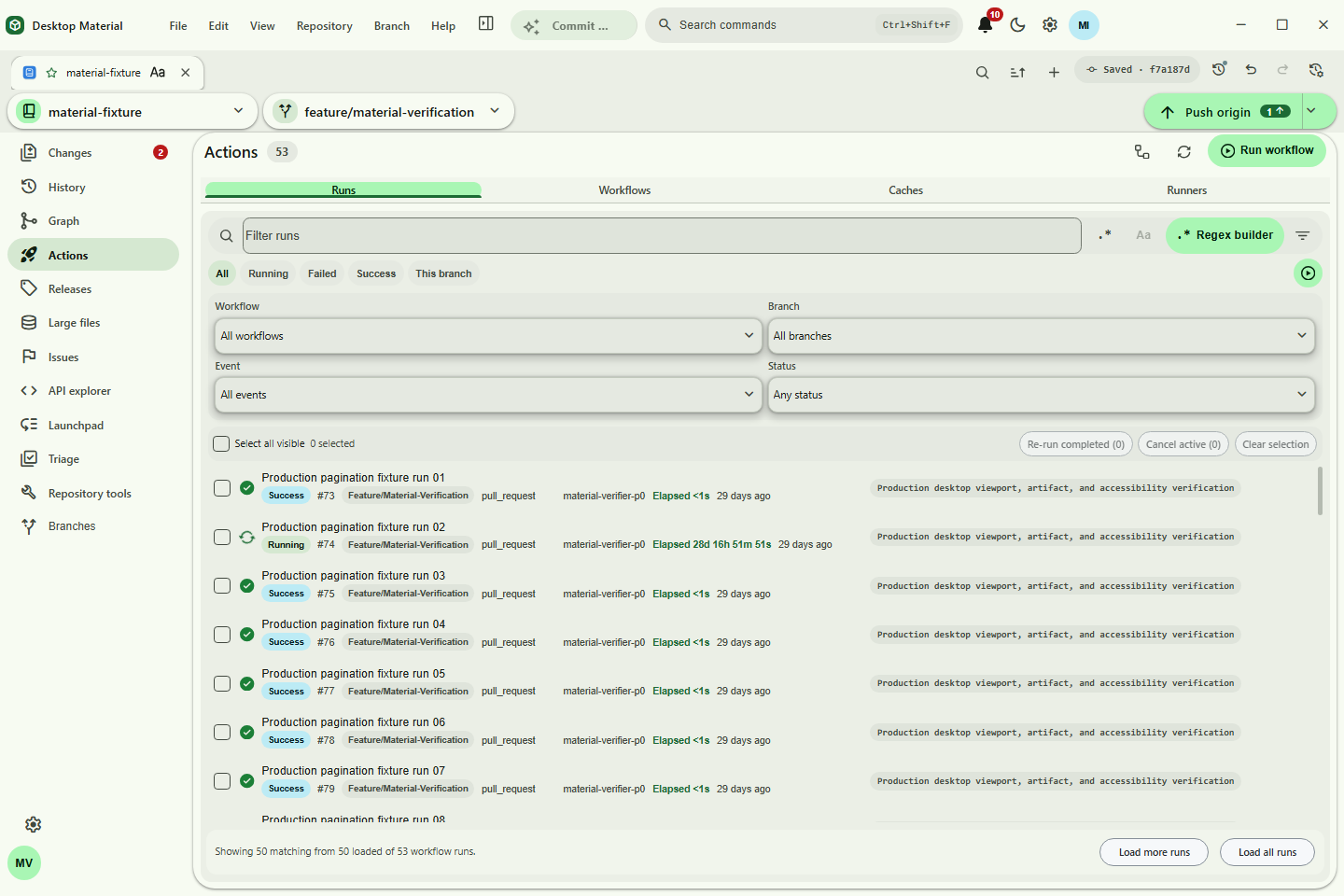
material-actions-pagination-headless.png |
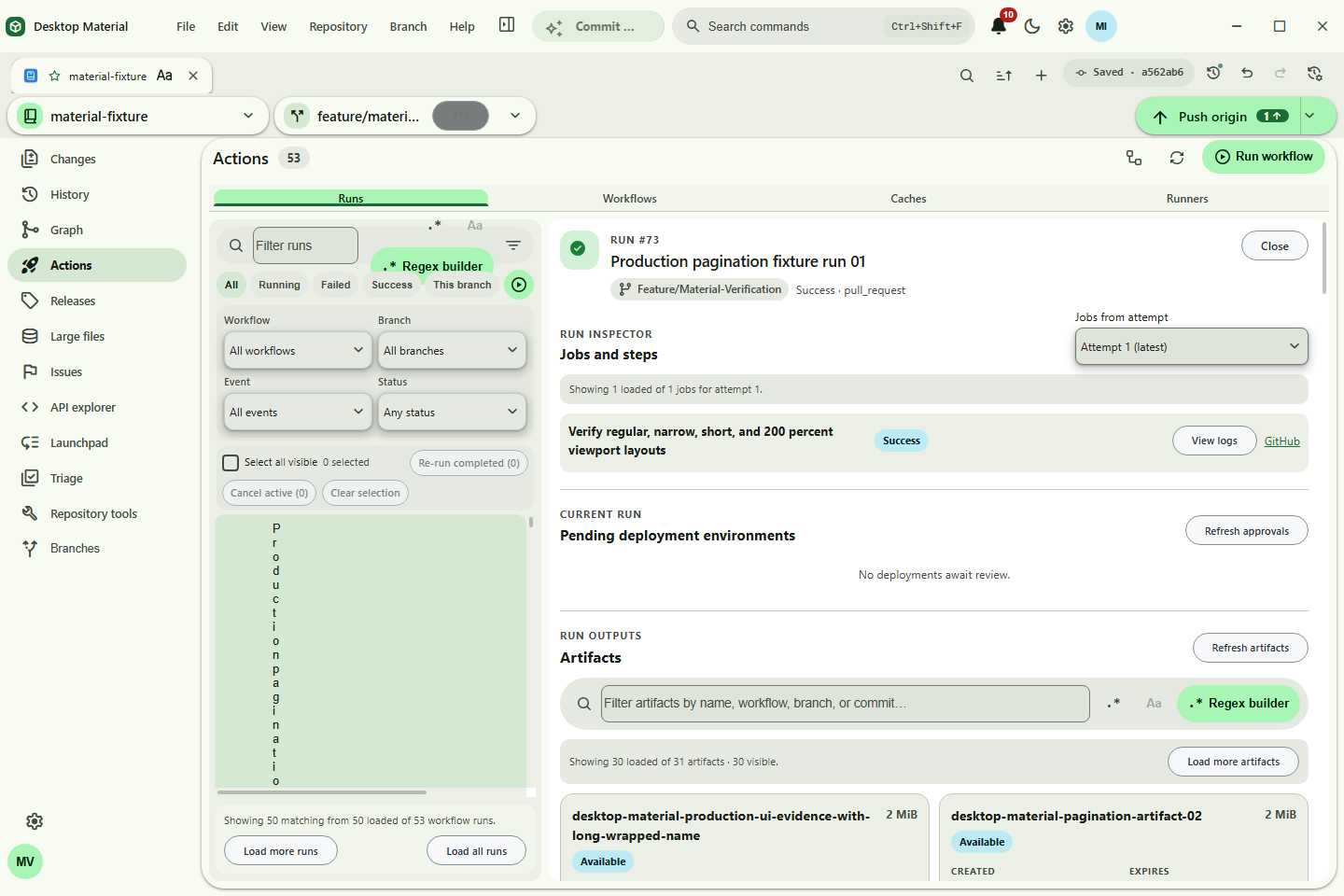
Headless Actions run pagination and page-two sentinel |
material-actions-artifacts-headless.png |
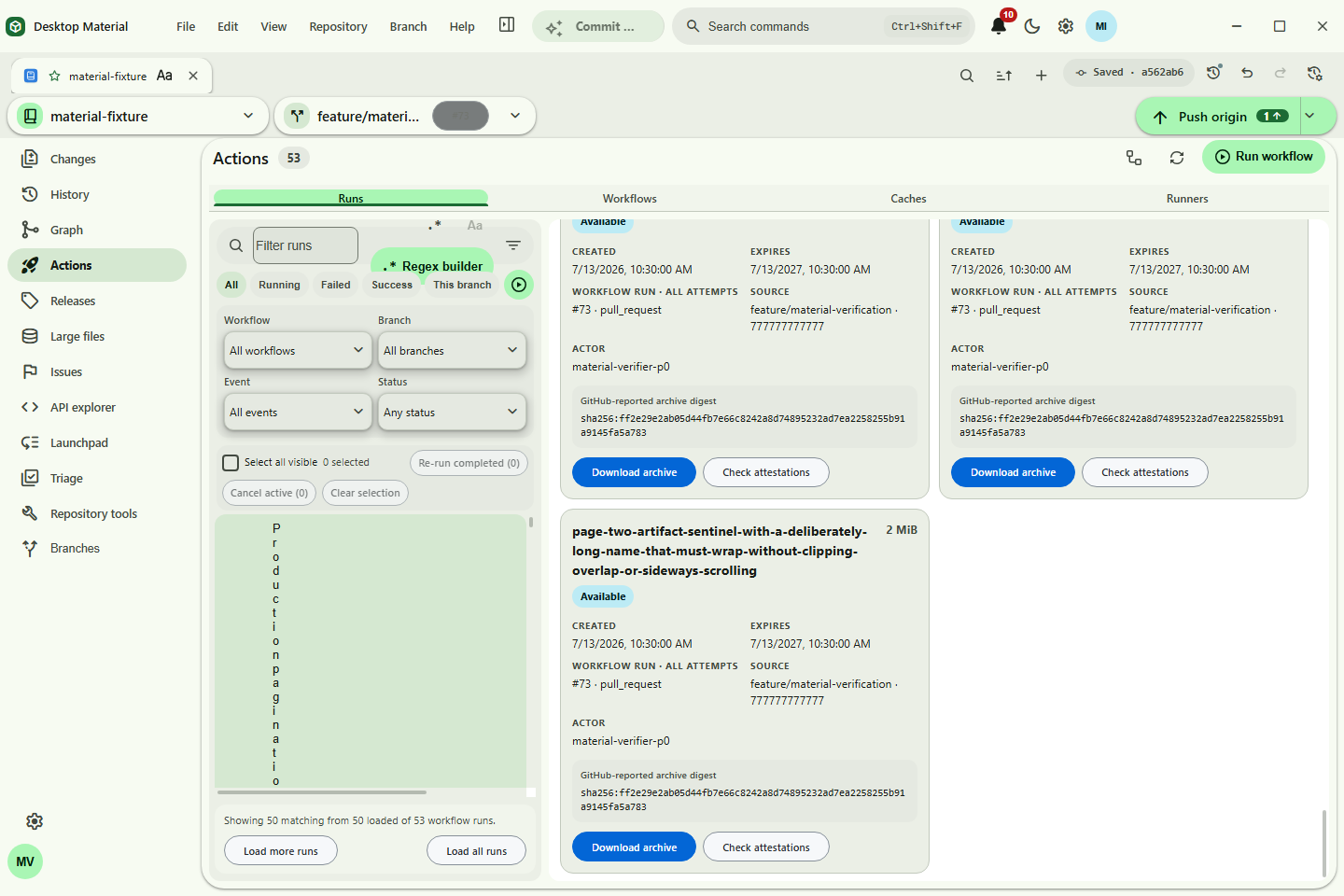
Headless bounded artifact inventory |
material-actions-sentinel-headless.png |
Headless wrapped sentinel evidence with no clipping |
material-github-releases.png |
Repository-bound Releases dashboard, status summary, metadata, and assets |
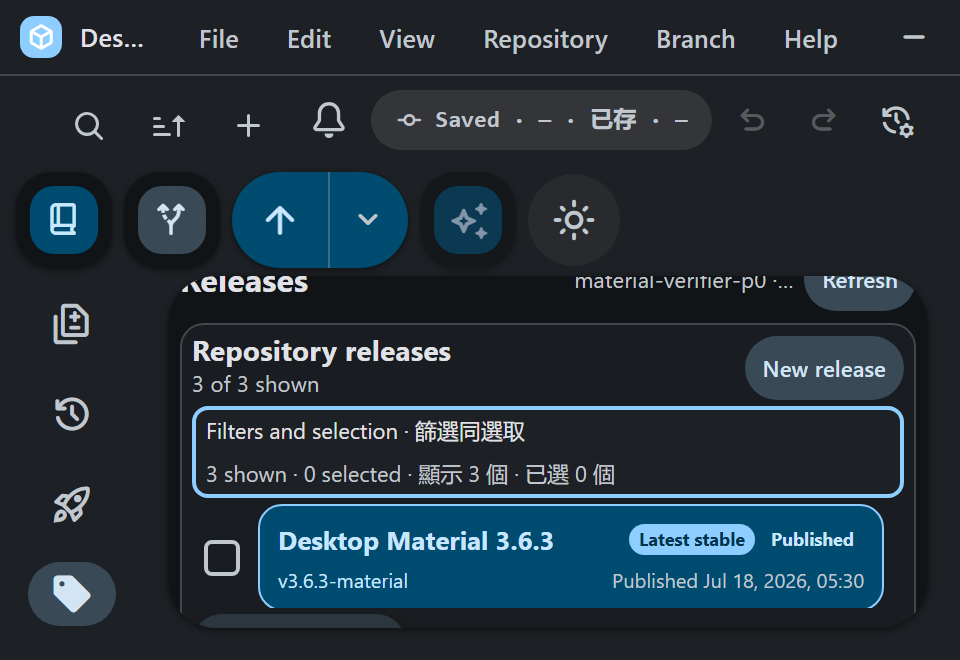
material-github-releases-compact.png |
200%-scaled compact Releases catalog with one complete row and keyboard-reachable tools |
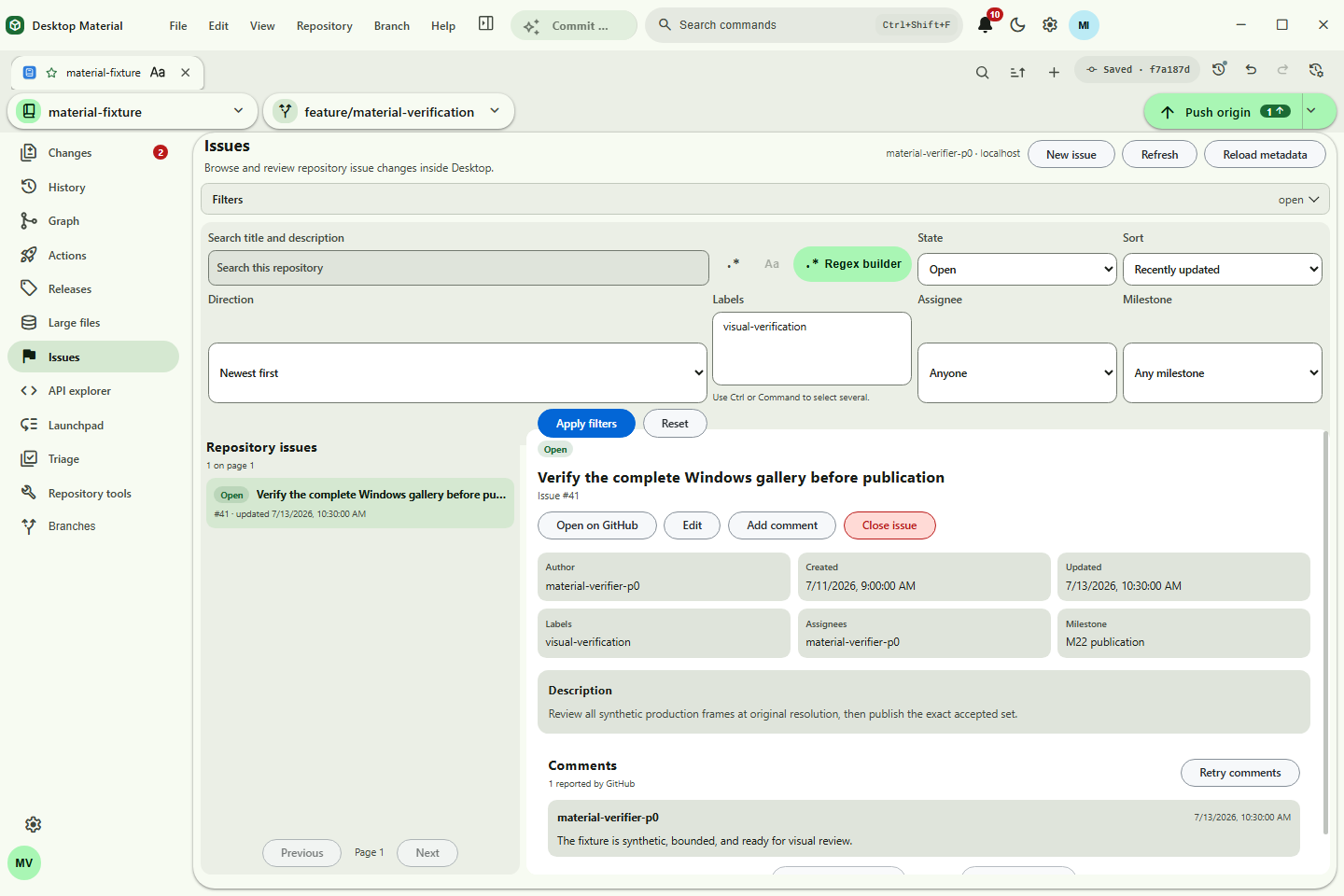
material-github-issues.png |
Issue detail, comments, and reviewed lifecycle controls |
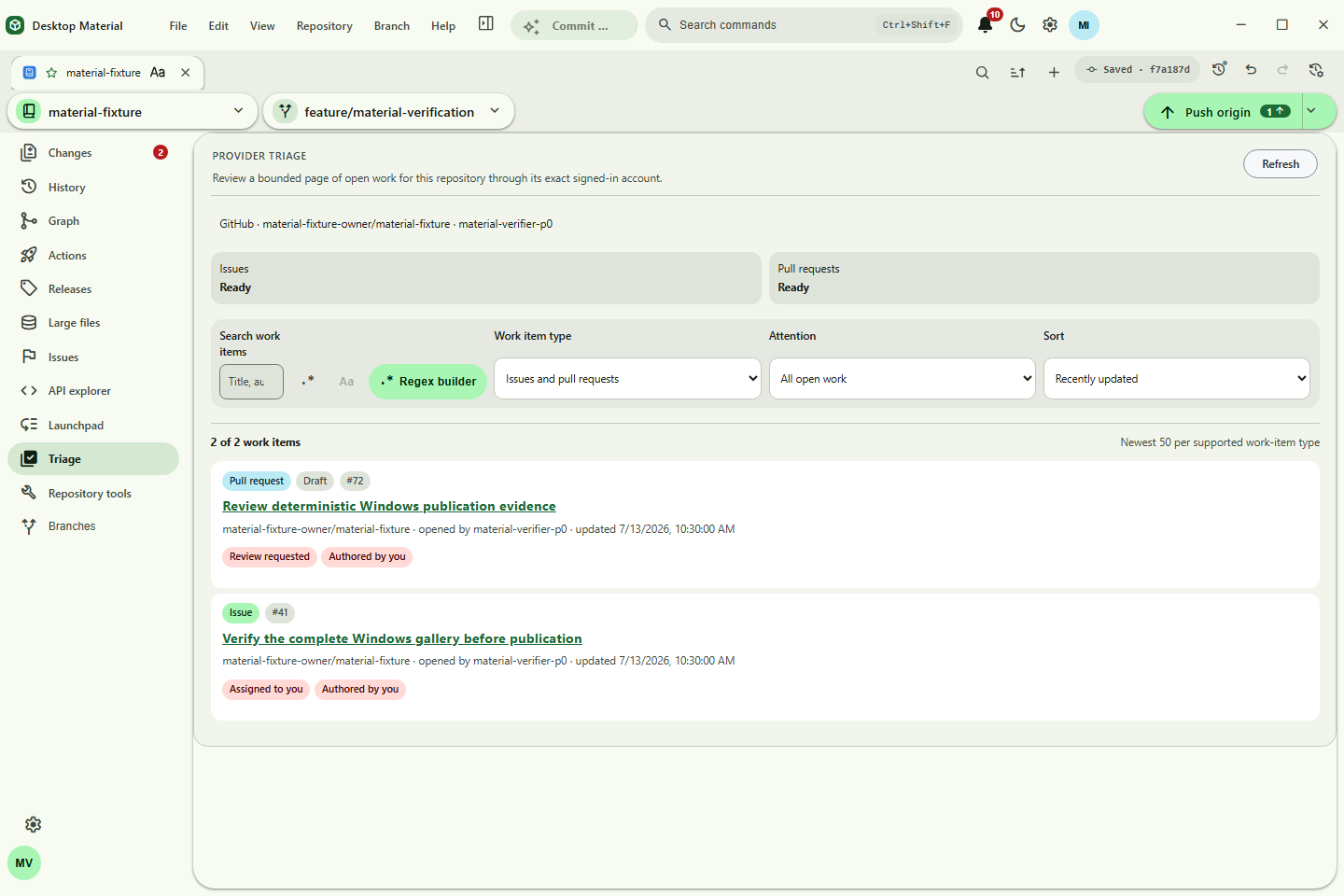
material-provider-triage.png |
Account- and repository-bound provider triage |
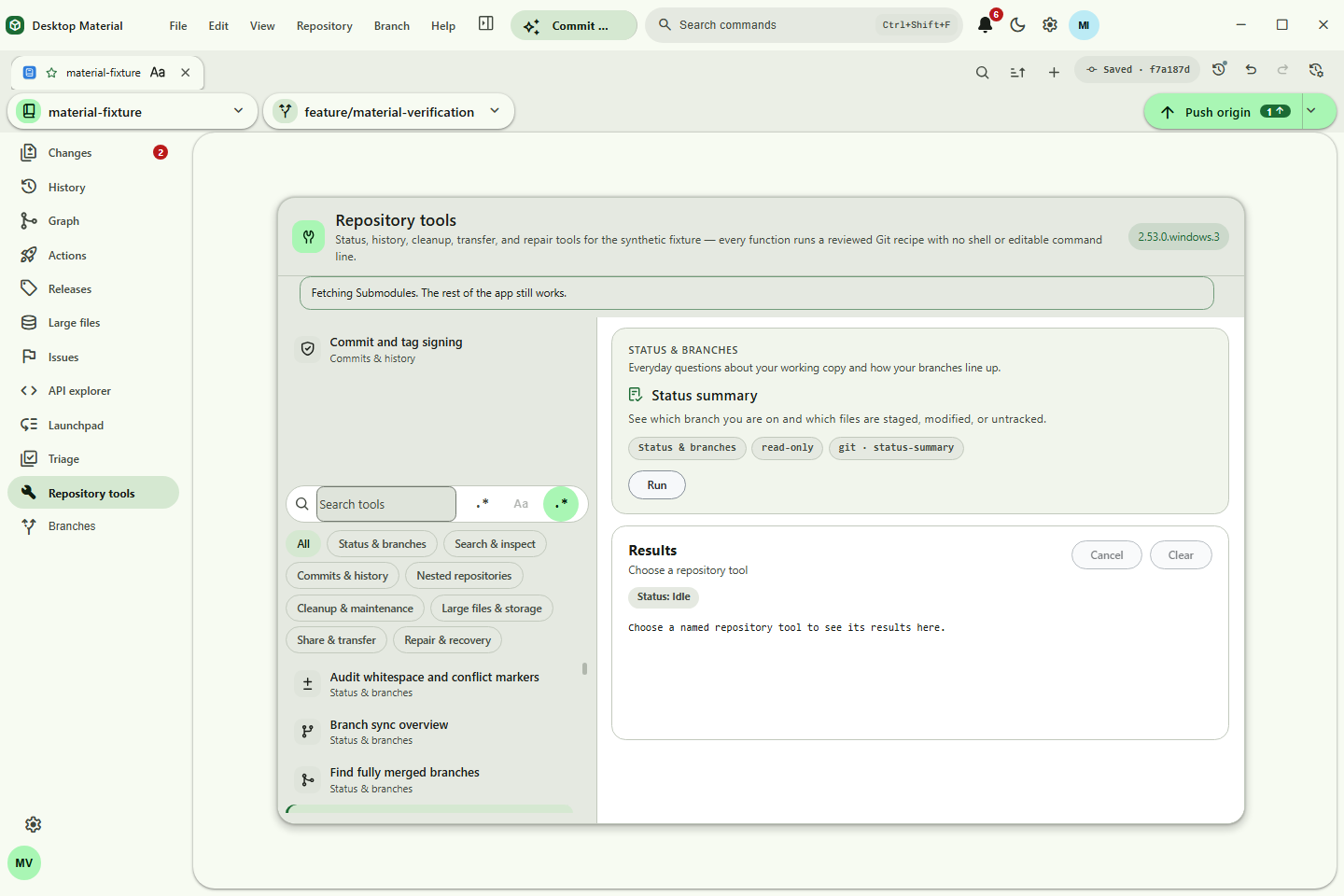
material-repository-tools.png |
Named Repository Tools administration hub |
material-repository-tools-scroll.png |
Short-height Repository Tools scrolled to its reachable final results surface |
material-repository-folder-detection.png |
Repository folder detection during add and open |
material-repository-submodule-management.png |
Repository submodule management and reviewed update actions |
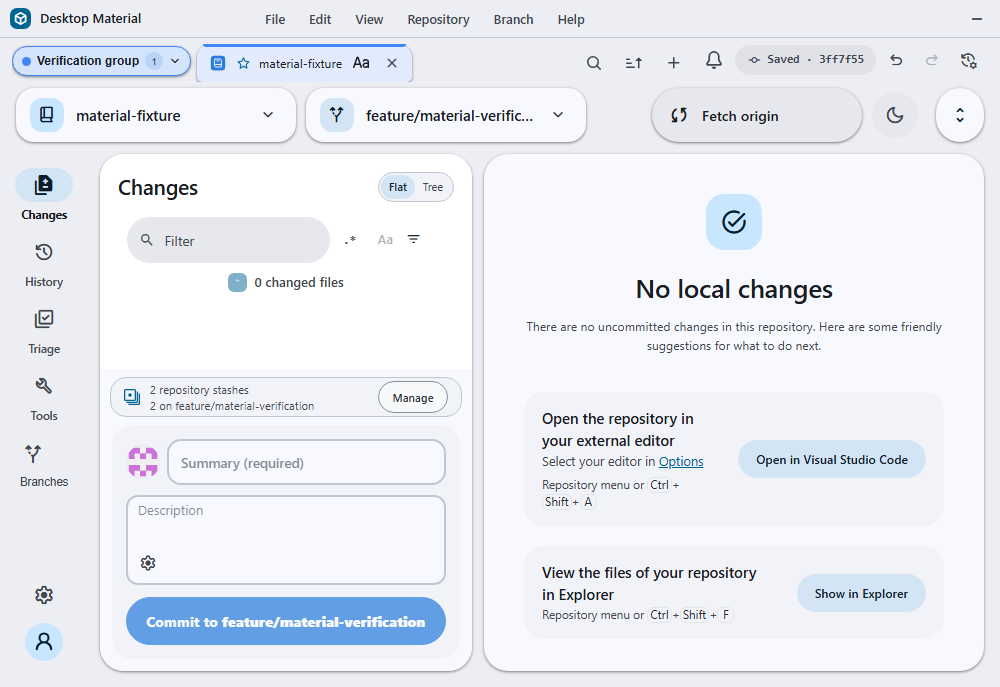
material-workspace-changes.png |
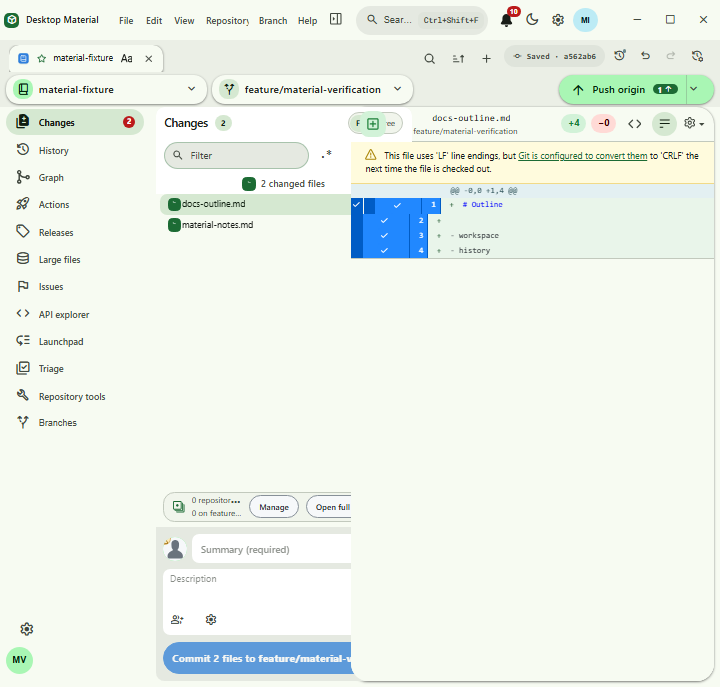
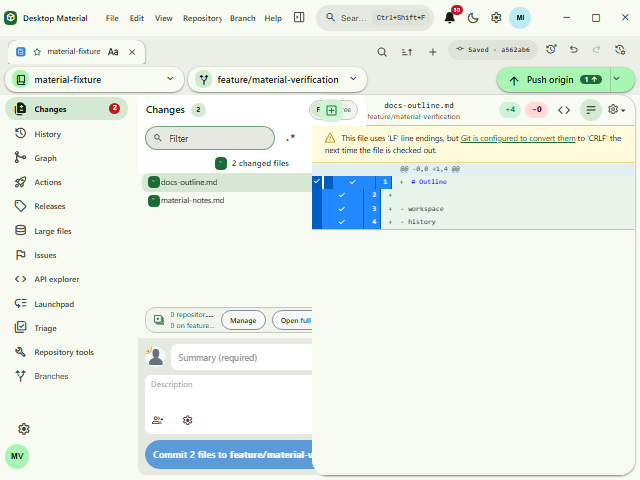
Material Changes workspace and commit flow |
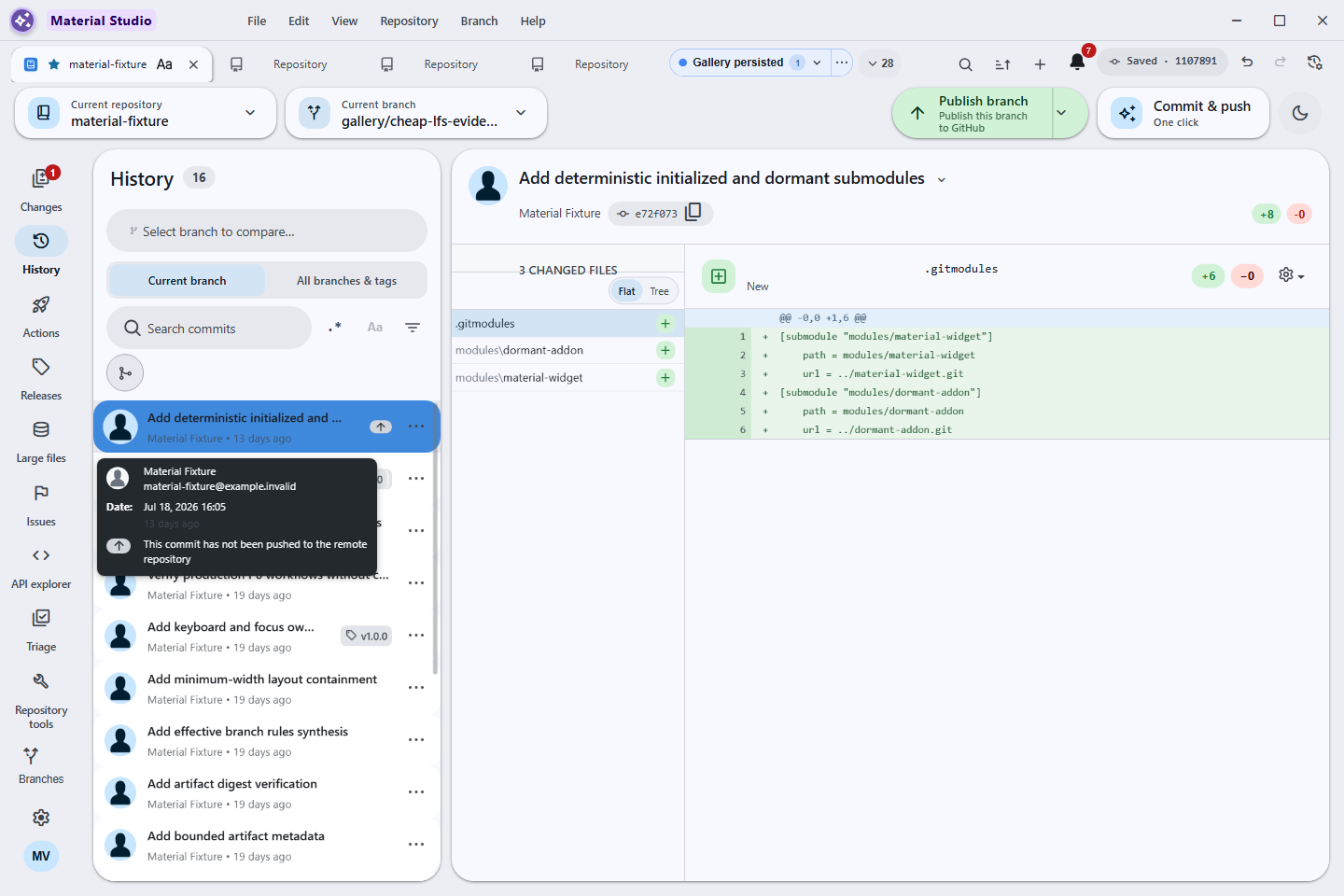
material-history.png |
Core History browsing and selected-commit inspection |
material-history-context-actions.png |
Selection-aware History commit More/right-click actions and button hint |
material-history-hover-time.png |
Commit hover/focus card with exact authored timestamp and relative age |
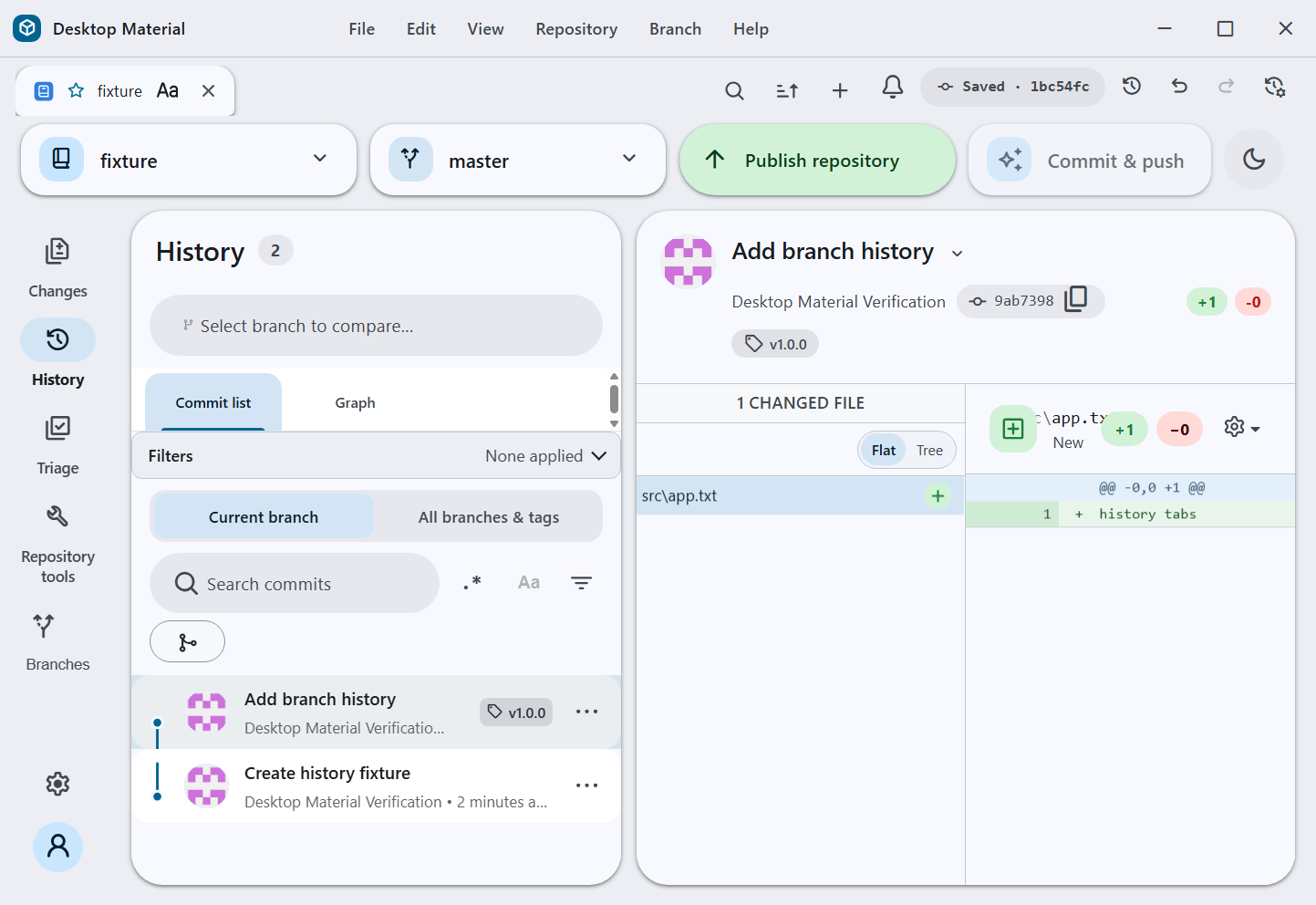
material-history-view-tabs-list.png |
Built History Commit list tab with its real tab strip and selected state |
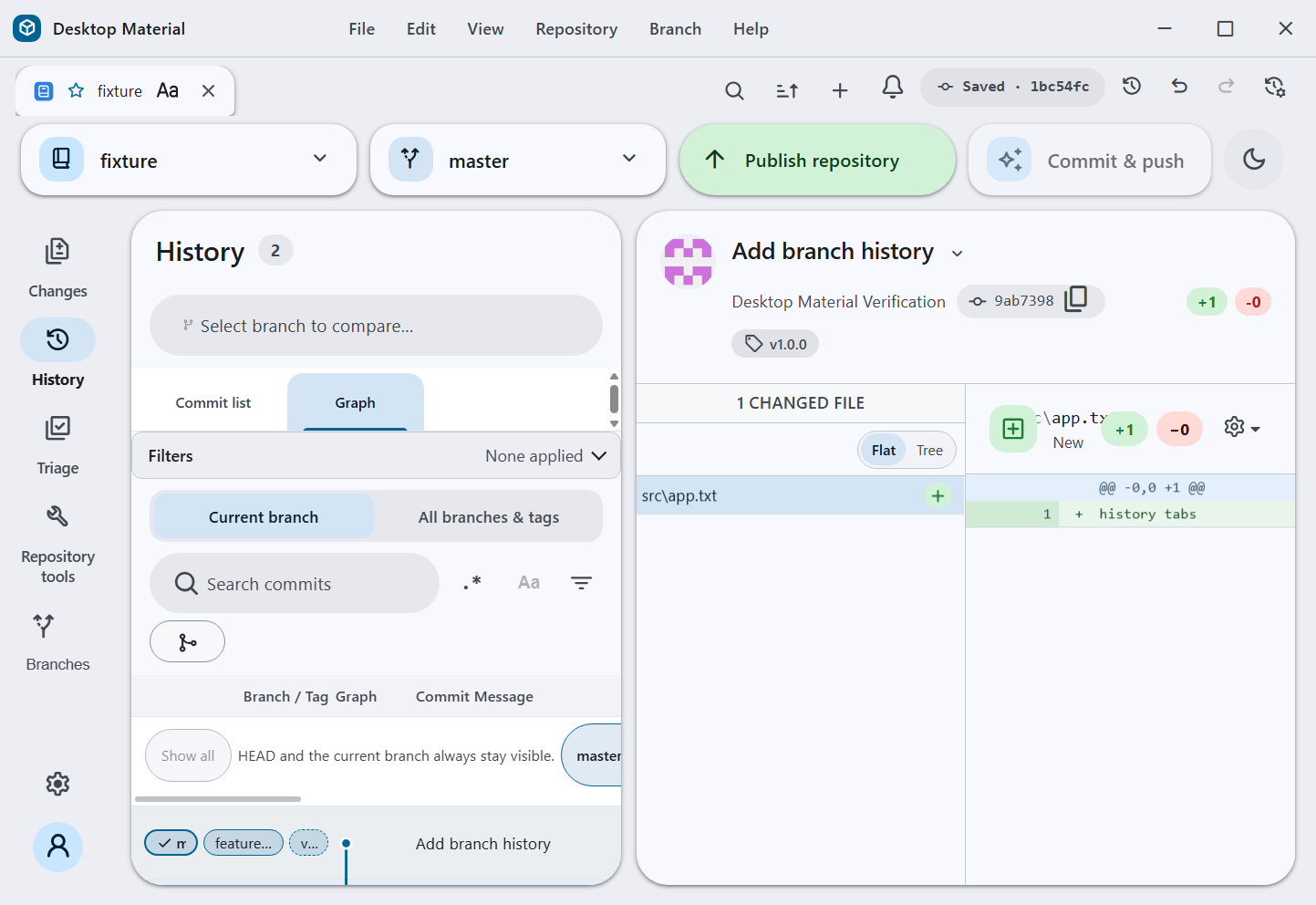
material-history-view-tabs-graph.png |
Built History Graph tab with its real tab strip and ancestry graph |
material-settings.png |
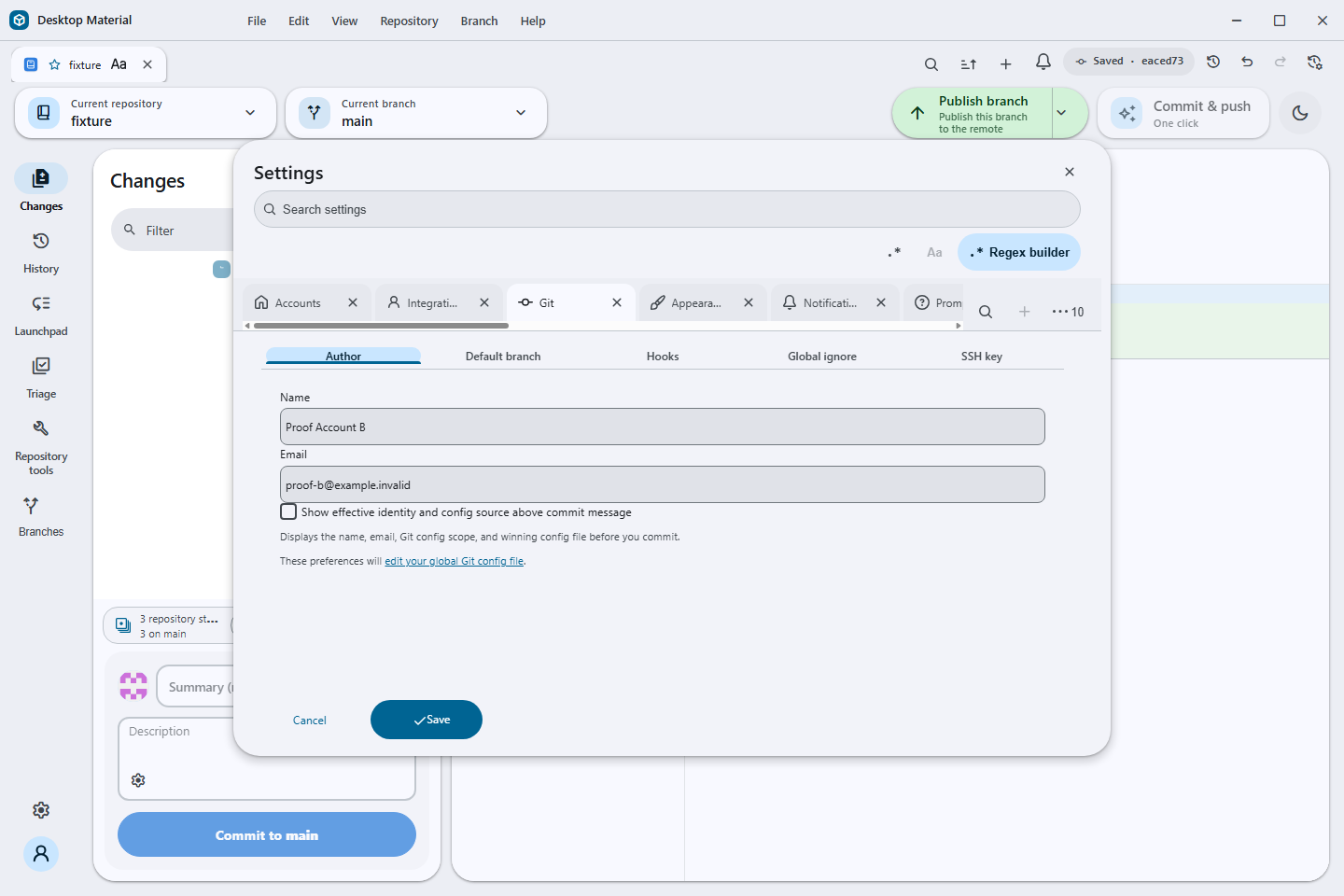
Global Settings with browser-style tabs, close actions, search, and overflow |
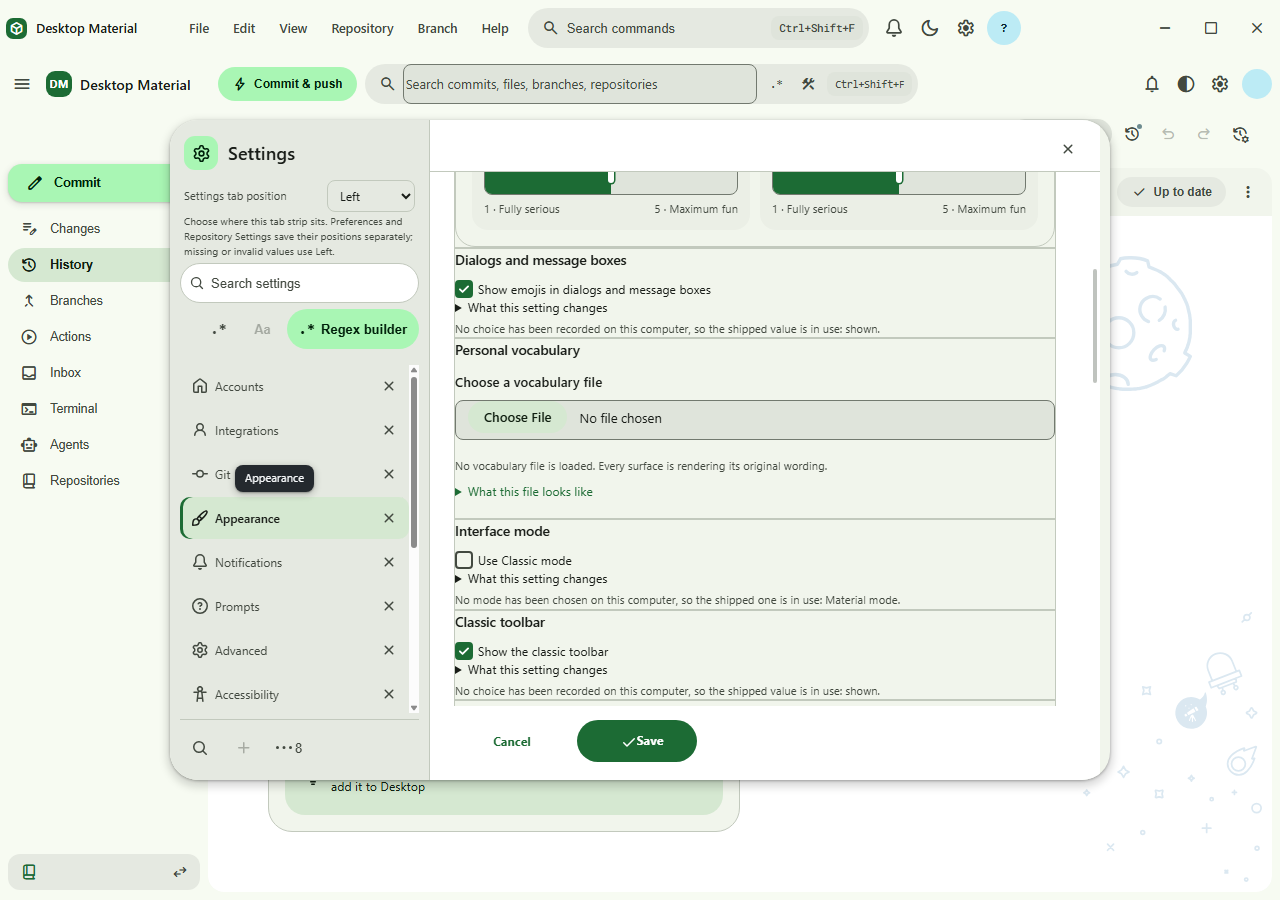
personal-vocabulary.png |
Personal vocabulary upload on Settings then Appearance, in its no-file state |
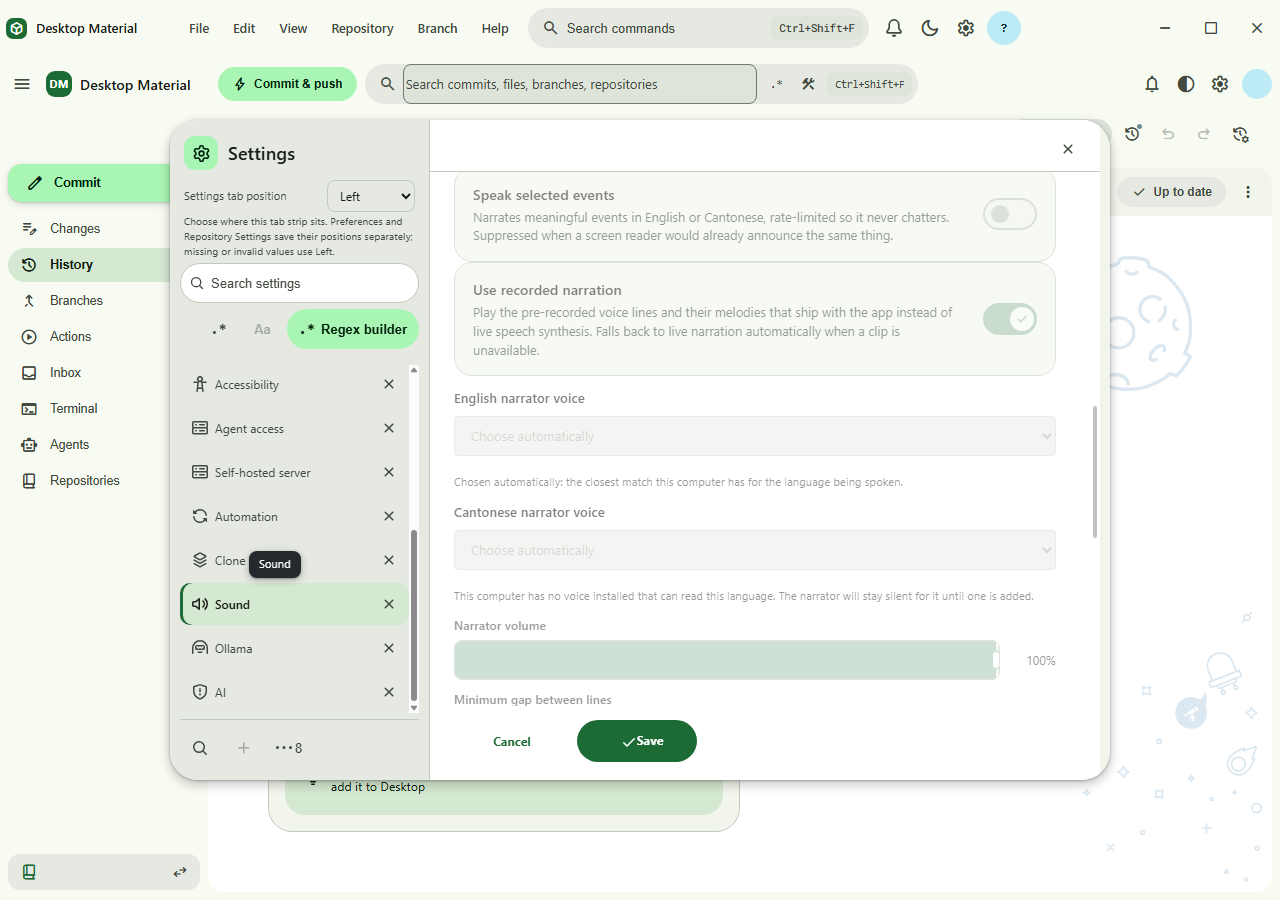
narrator-voice-pickers.png |
Per-language narrator voice pickers showing an automatic choice and a language with no installed voice |
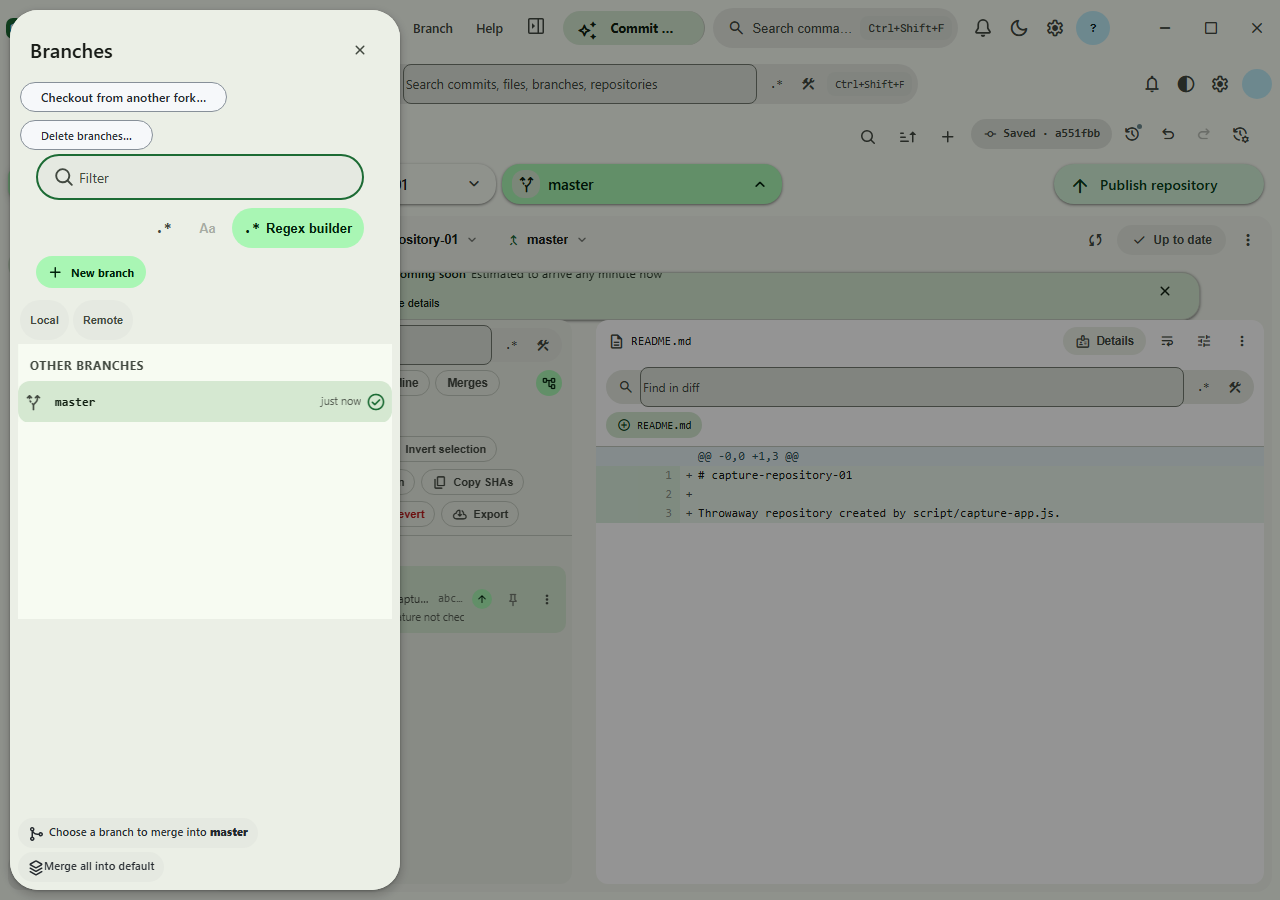
branches-sheet.png |
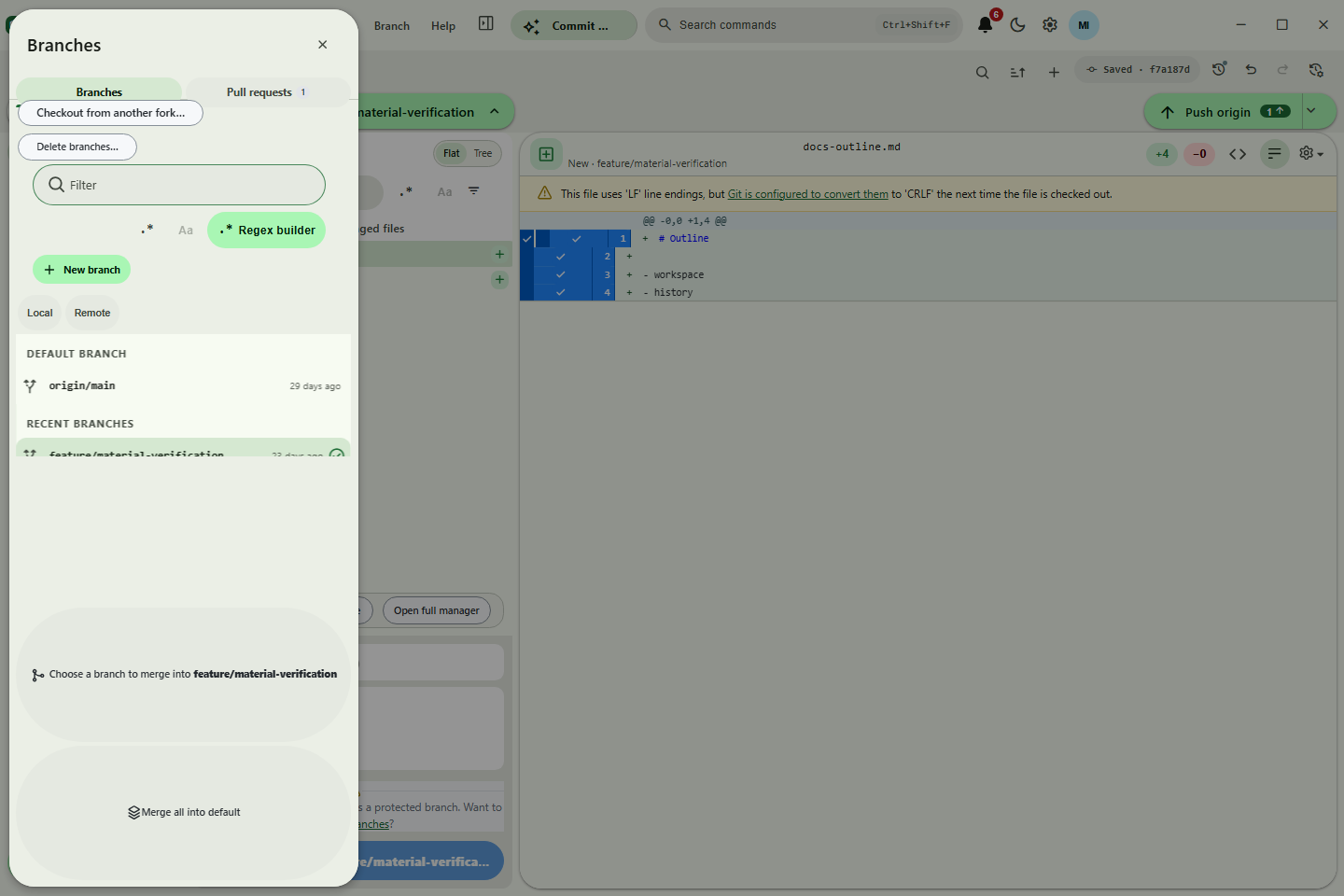
Branches side sheet with its tab strip, filter, branch list and merge footer at their real sizes |
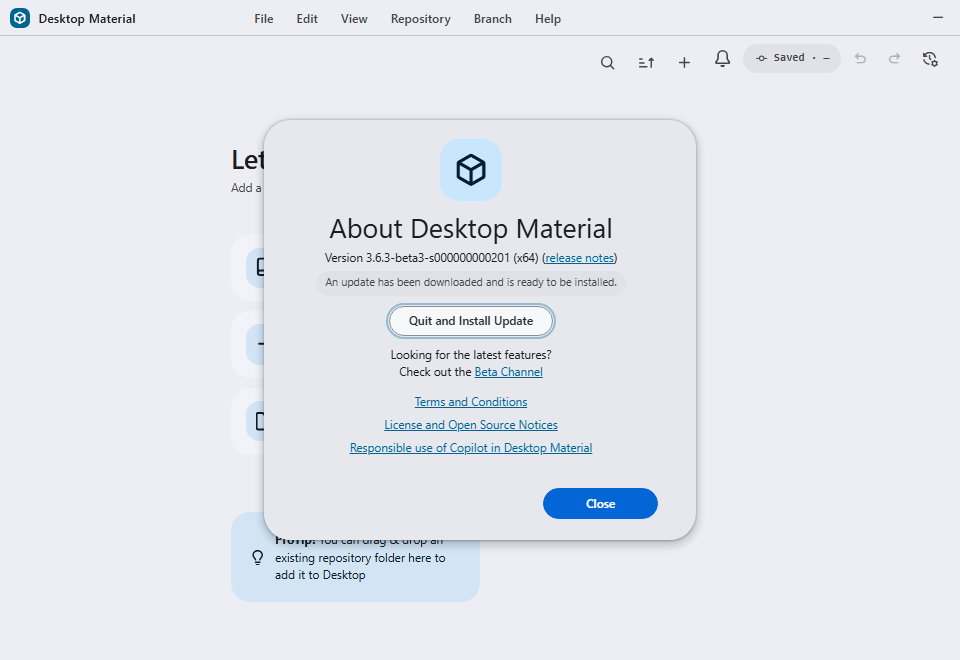
auto-updater-current-source-ready.png |
Current-source production UI after a genuine Electron/Squirrel update-downloaded path with a disclosed inert verifier payload and no published-payload claim |
settings-history-manager.png |
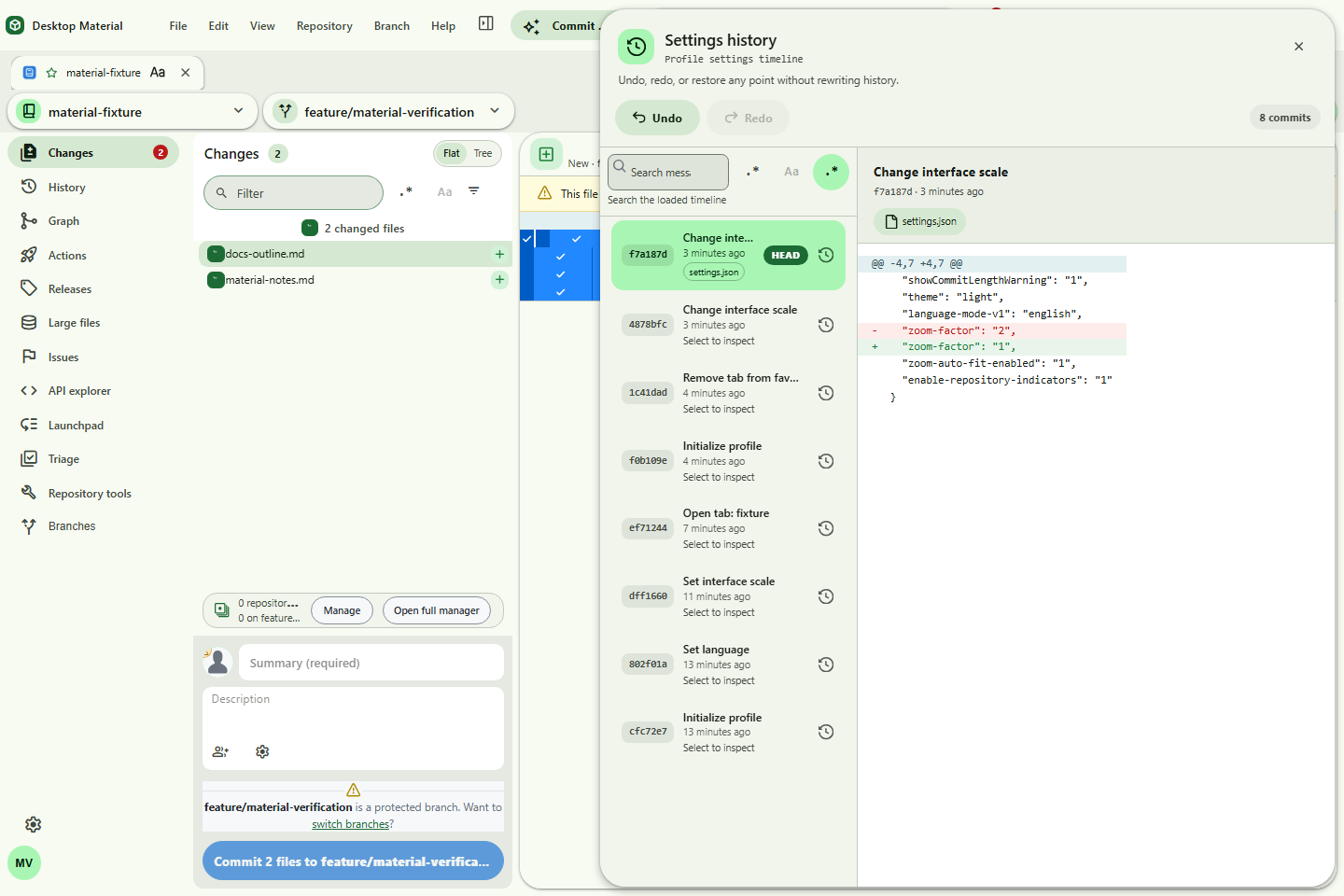
Git-backed Settings history side sheet |
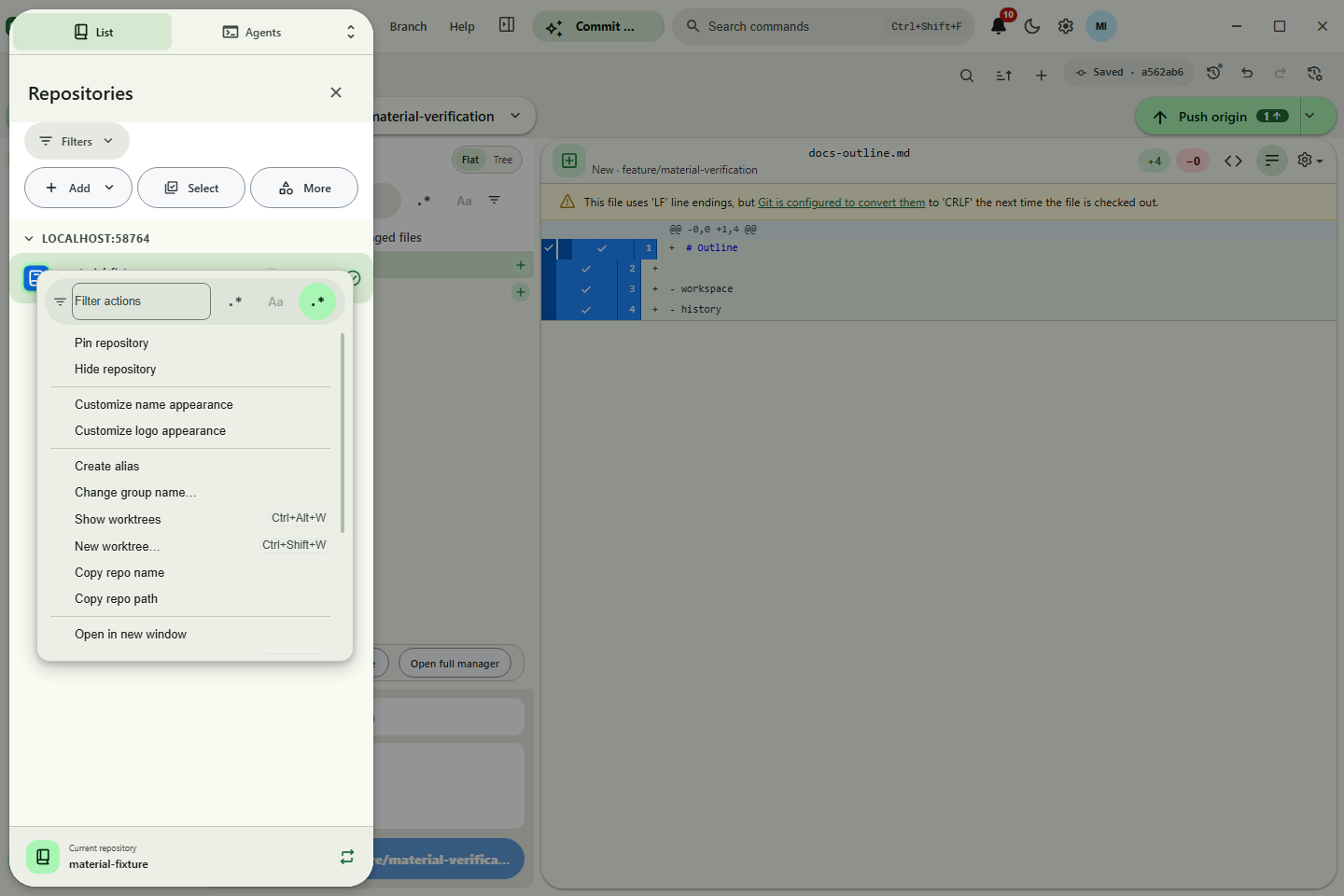
material-repositories-sheet.png |
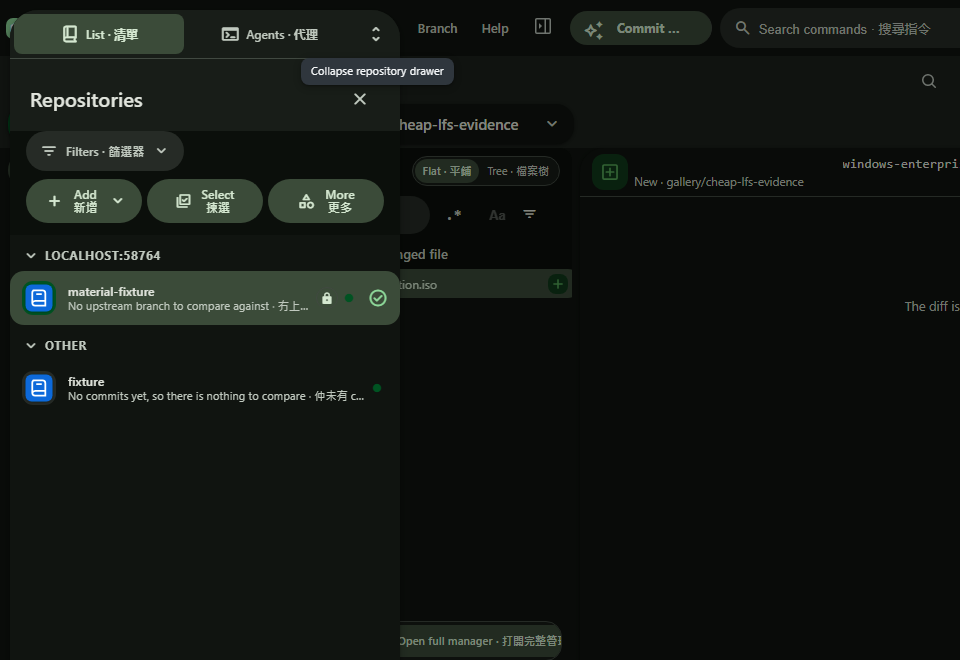
Dark bilingual repository drawer with List and Agents tabs, collapsed Filters, and compact Add, Select, and More actions |
material-publish-organization-picker.png |
Searchable personal-or-organization owner listbox with bounded filtering, keyboard selection, and physical narrow-window containment |
material-branches-sheet.png |
Branch navigation and status side sheet |
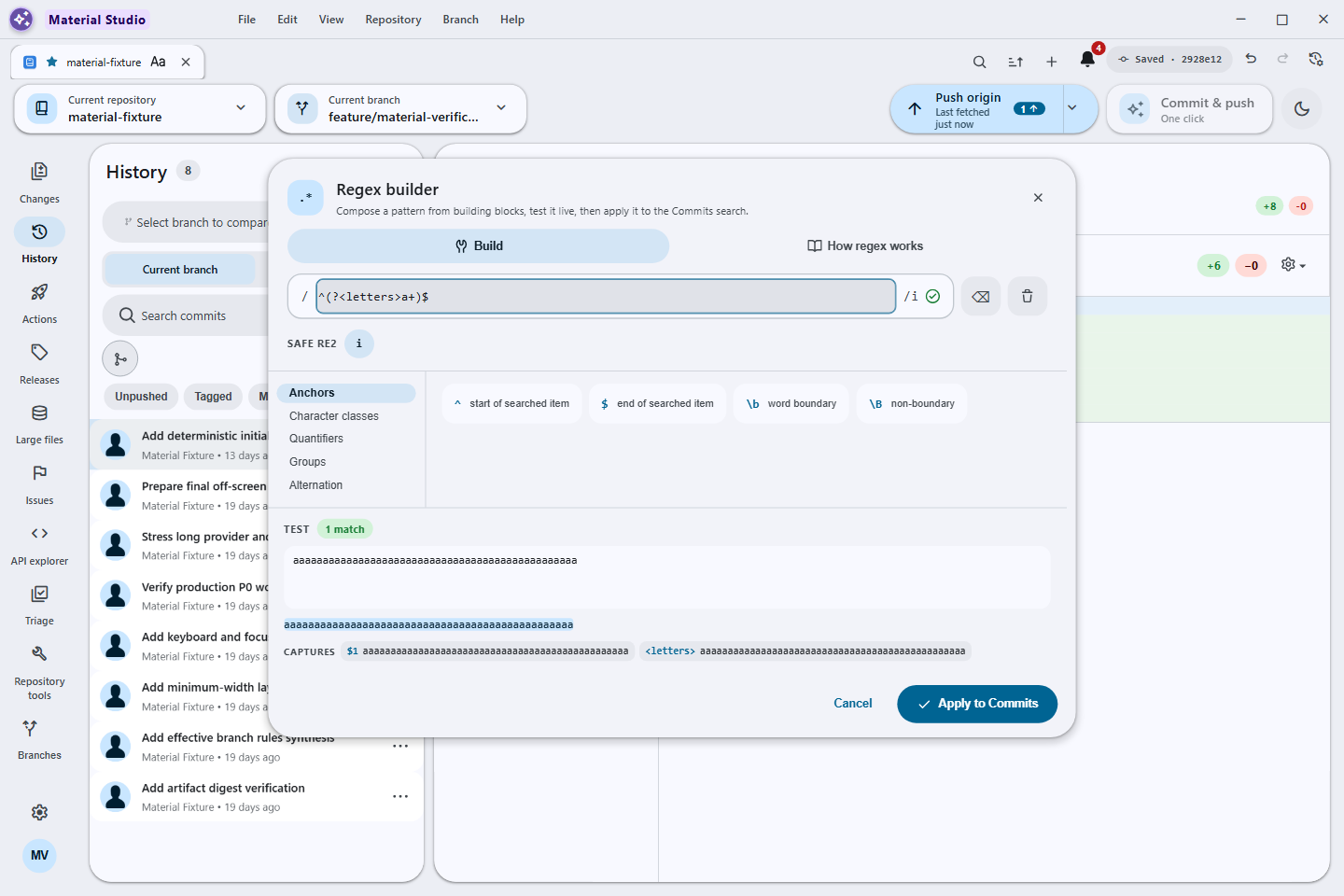
regex-builder.png |
Safe RE2 builder with bounded live matches and captures |
material-gitignore-manager.png |
Reviewed .gitignore template catalogue |
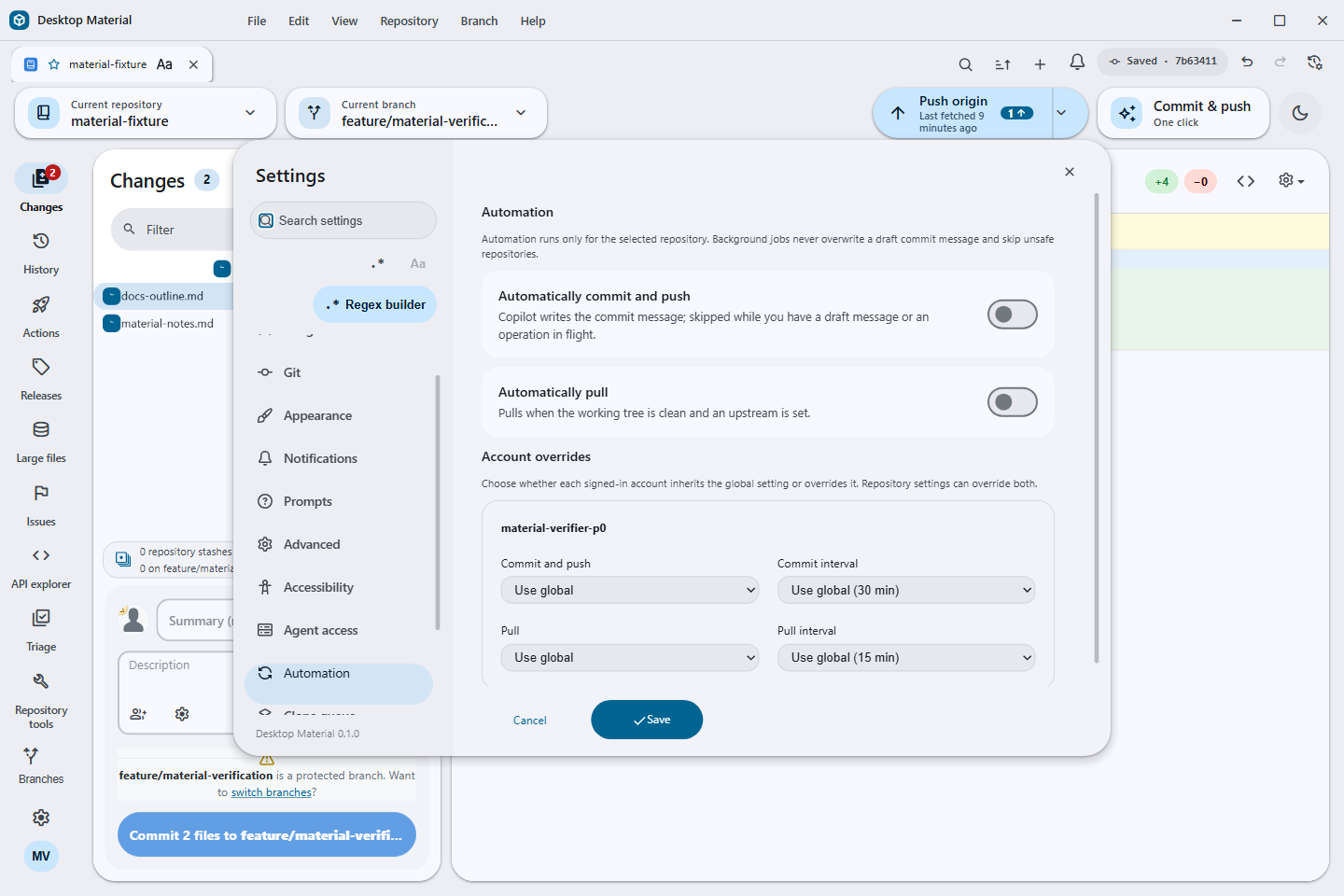
material-automation.png |
Layered automation schedules and account overrides |
material-notification-center.png |
Git-backed notification centre |
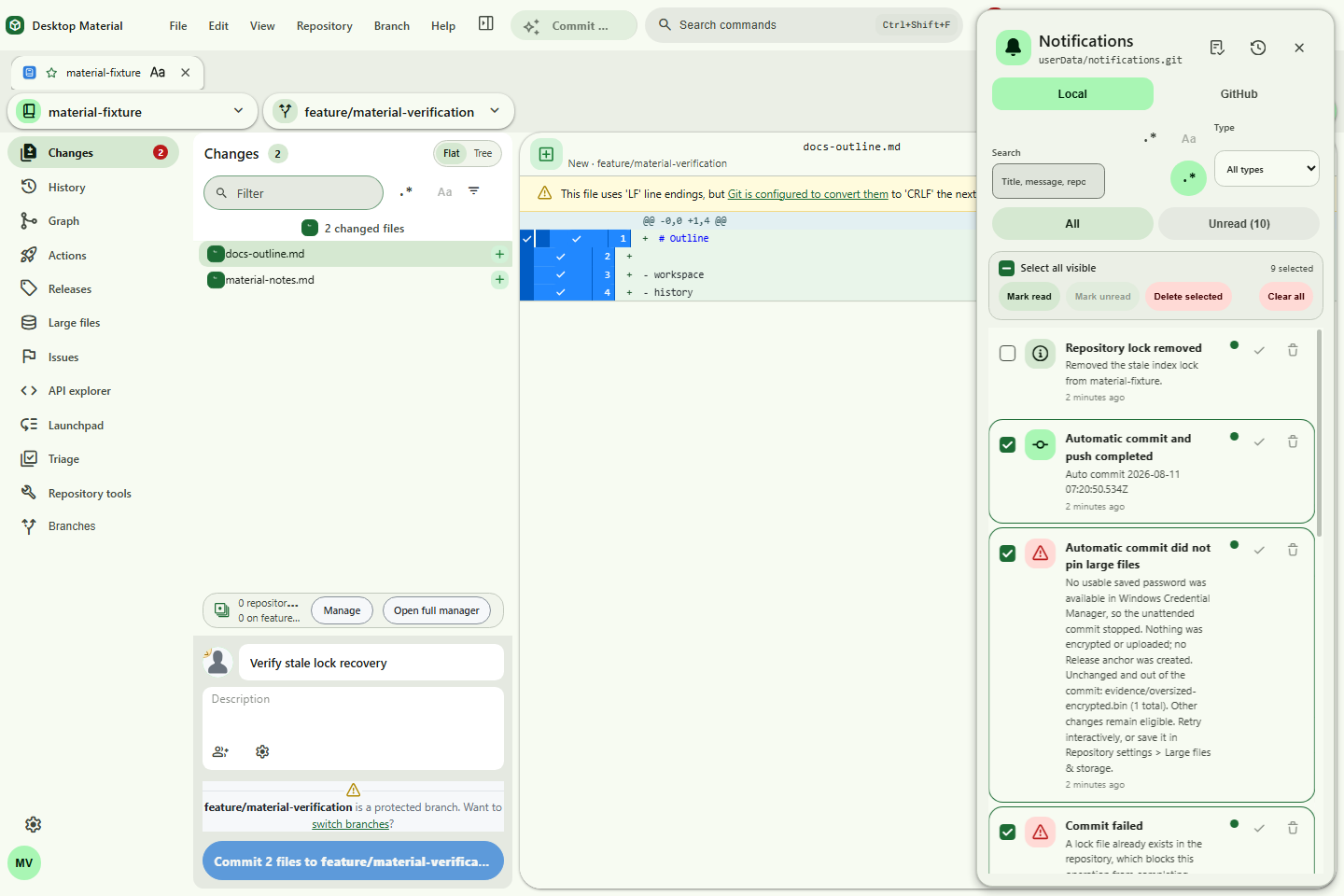
material-notification-bulk-actions.png |
Filtered Local notification selection and bulk triage |
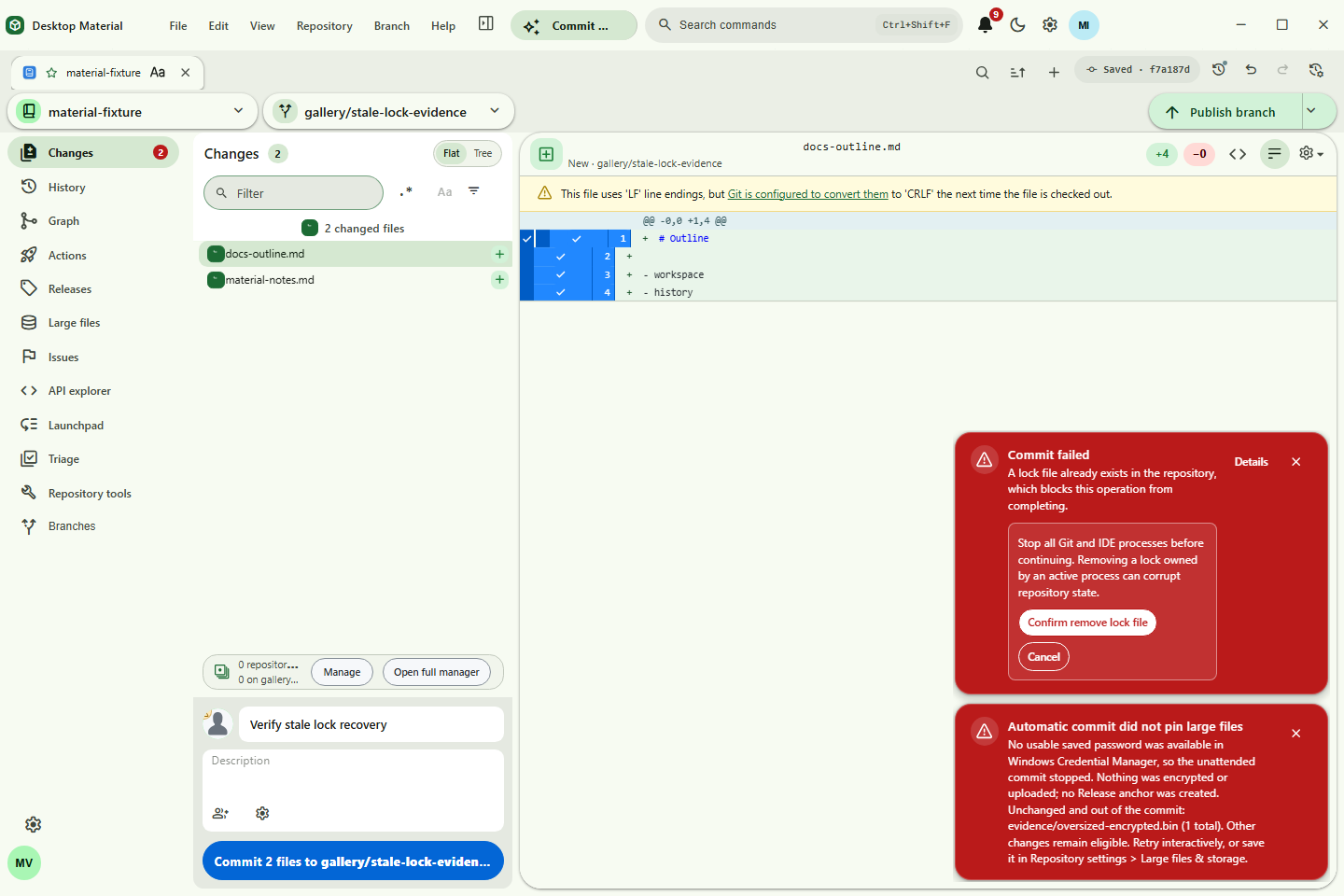
material-error-notice.png |
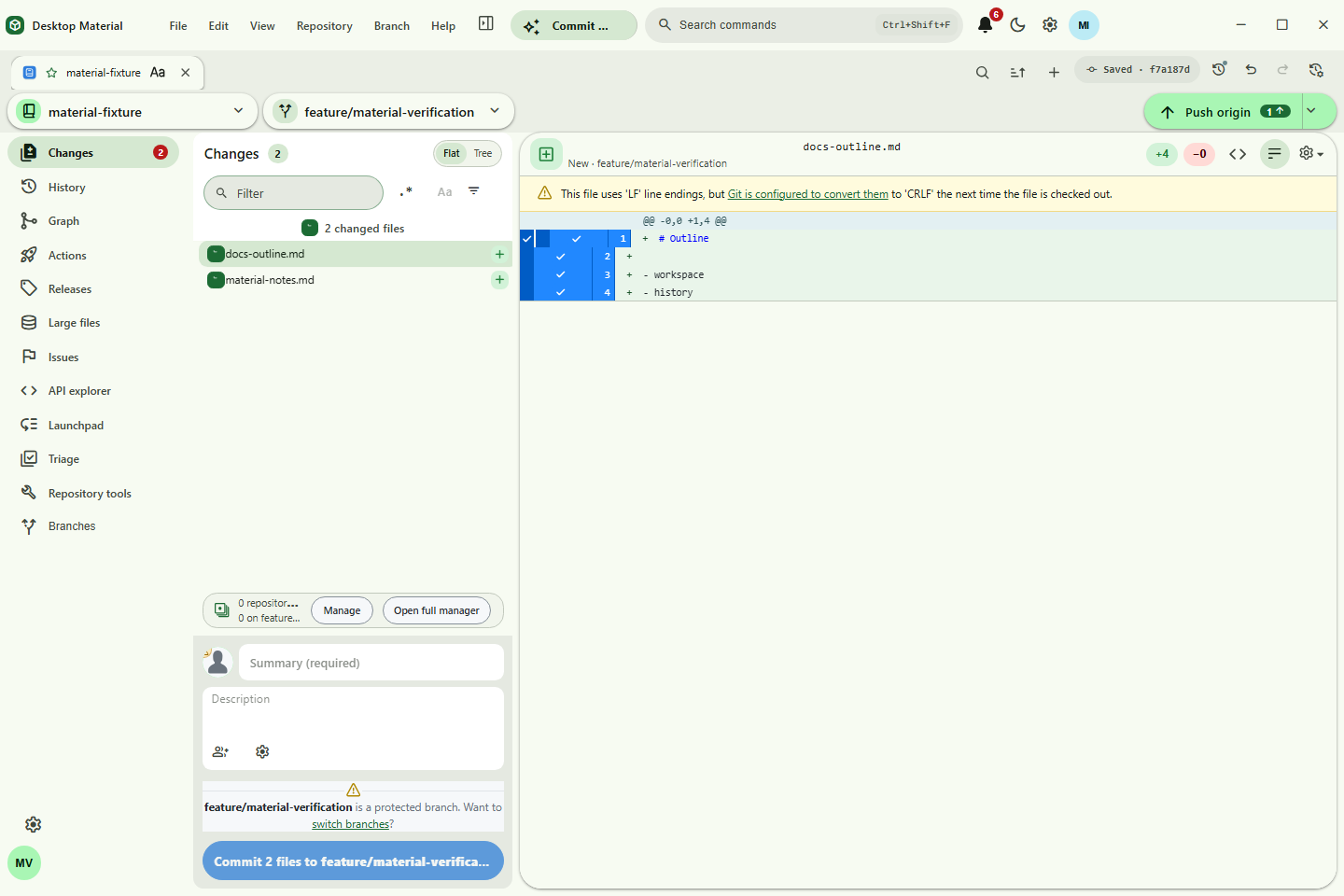
Scoped stale Git lock recovery from a bottom-right error notice |
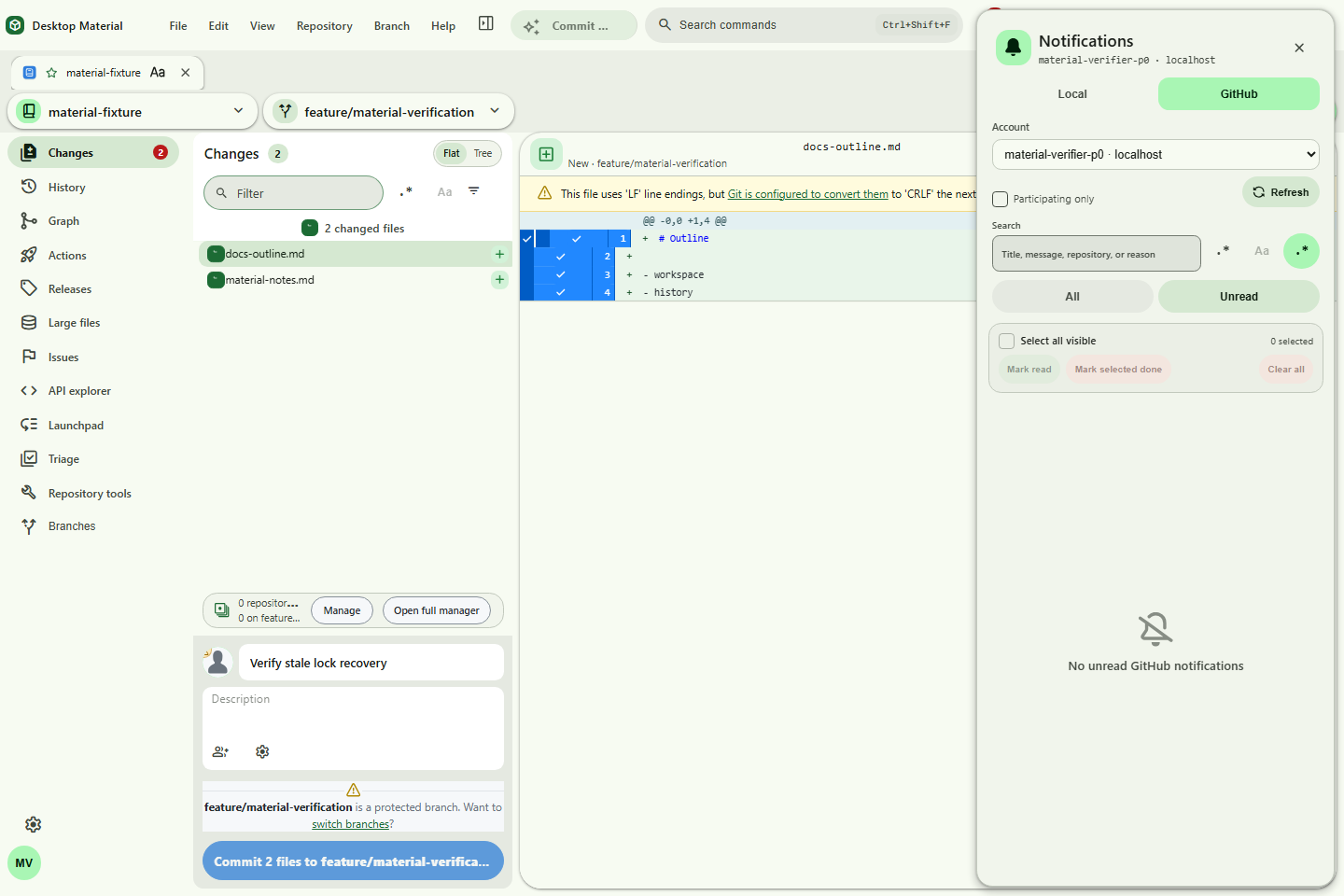
material-github-notifications.png |
Account-aware GitHub notifications |
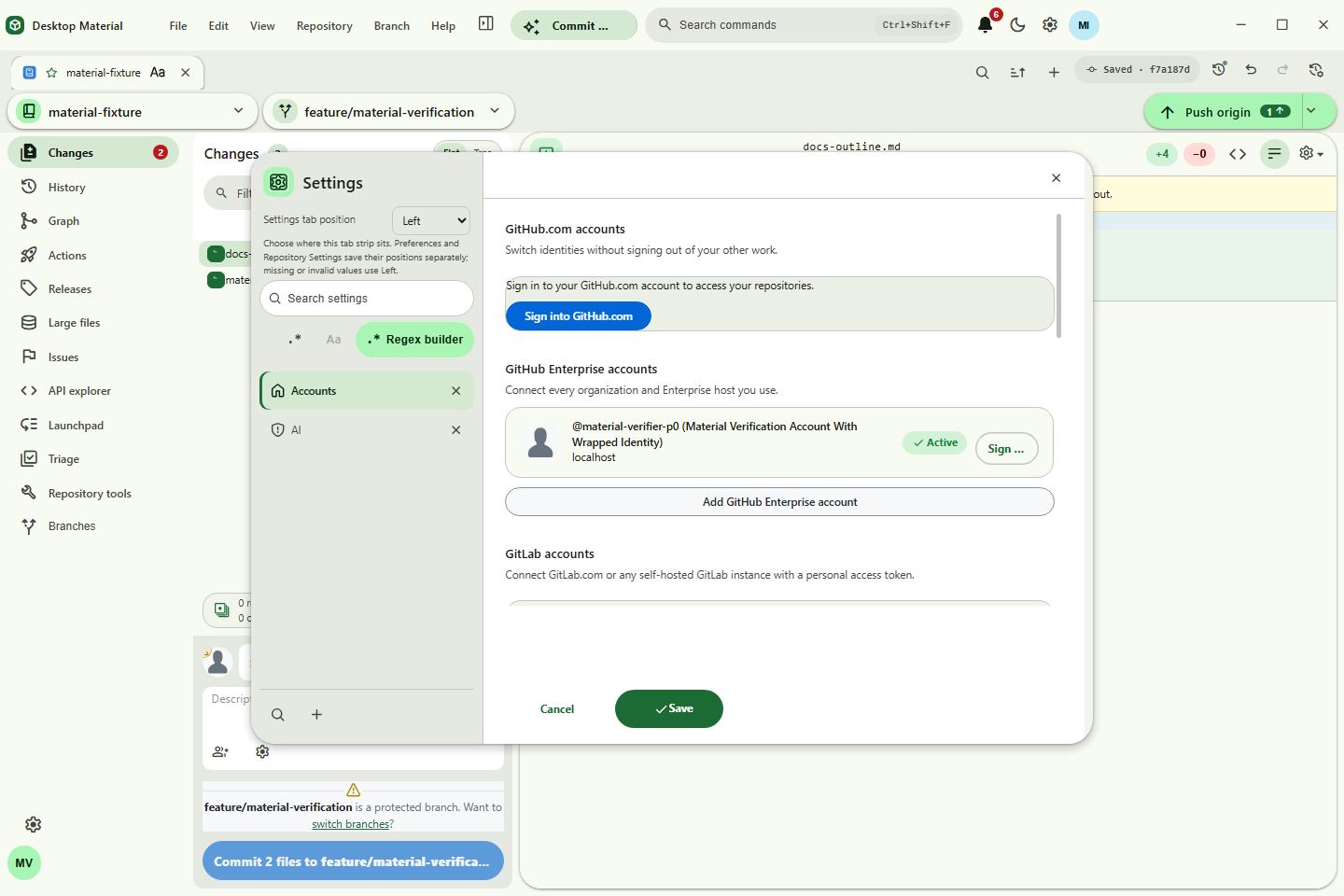
material-provider-accounts.png |
GitHub, GitLab, and Bitbucket account controls |
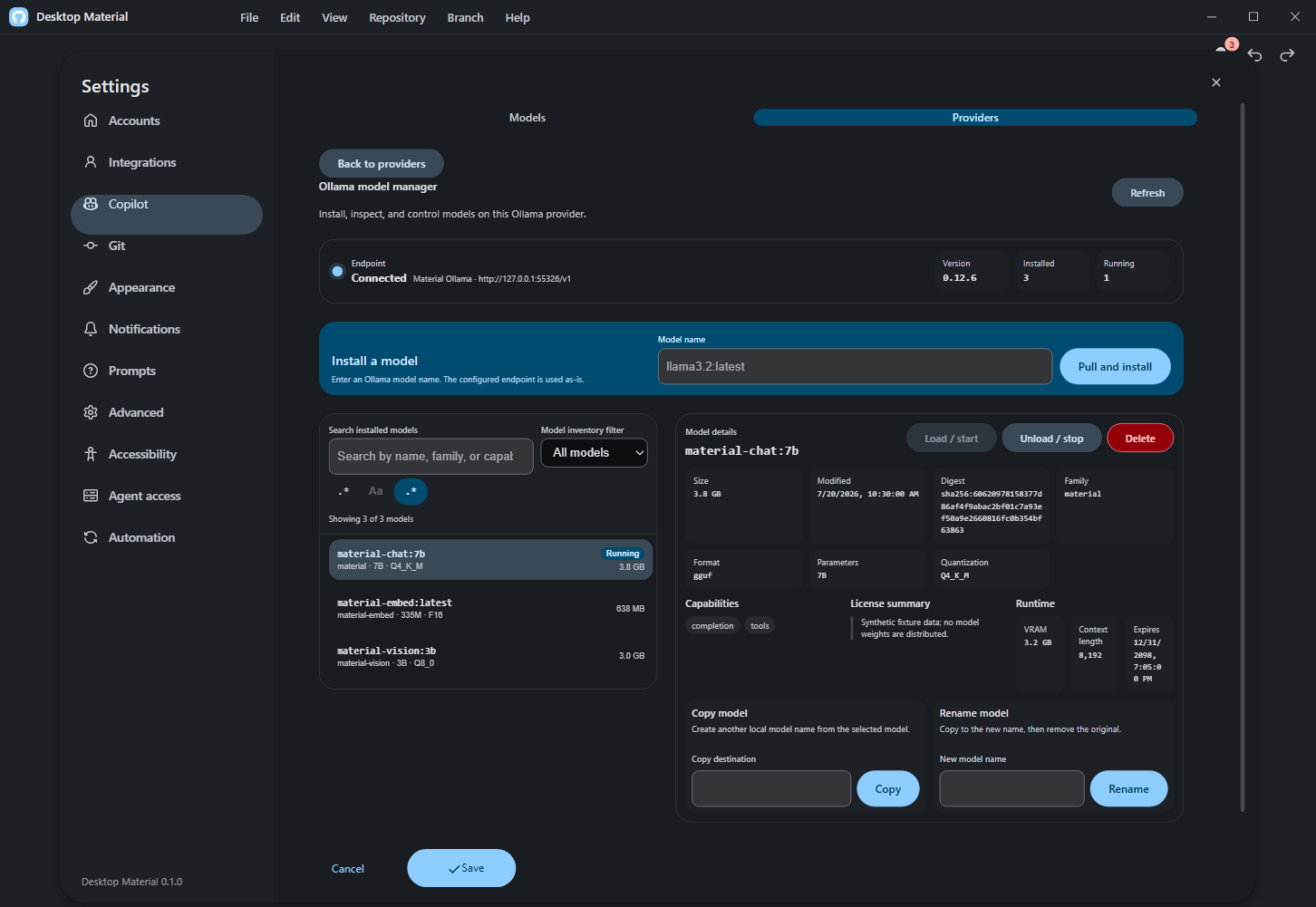
material-ollama-model-manager.png |
Ollama health, installed/running inventory, model details, and guarded lifecycle actions |
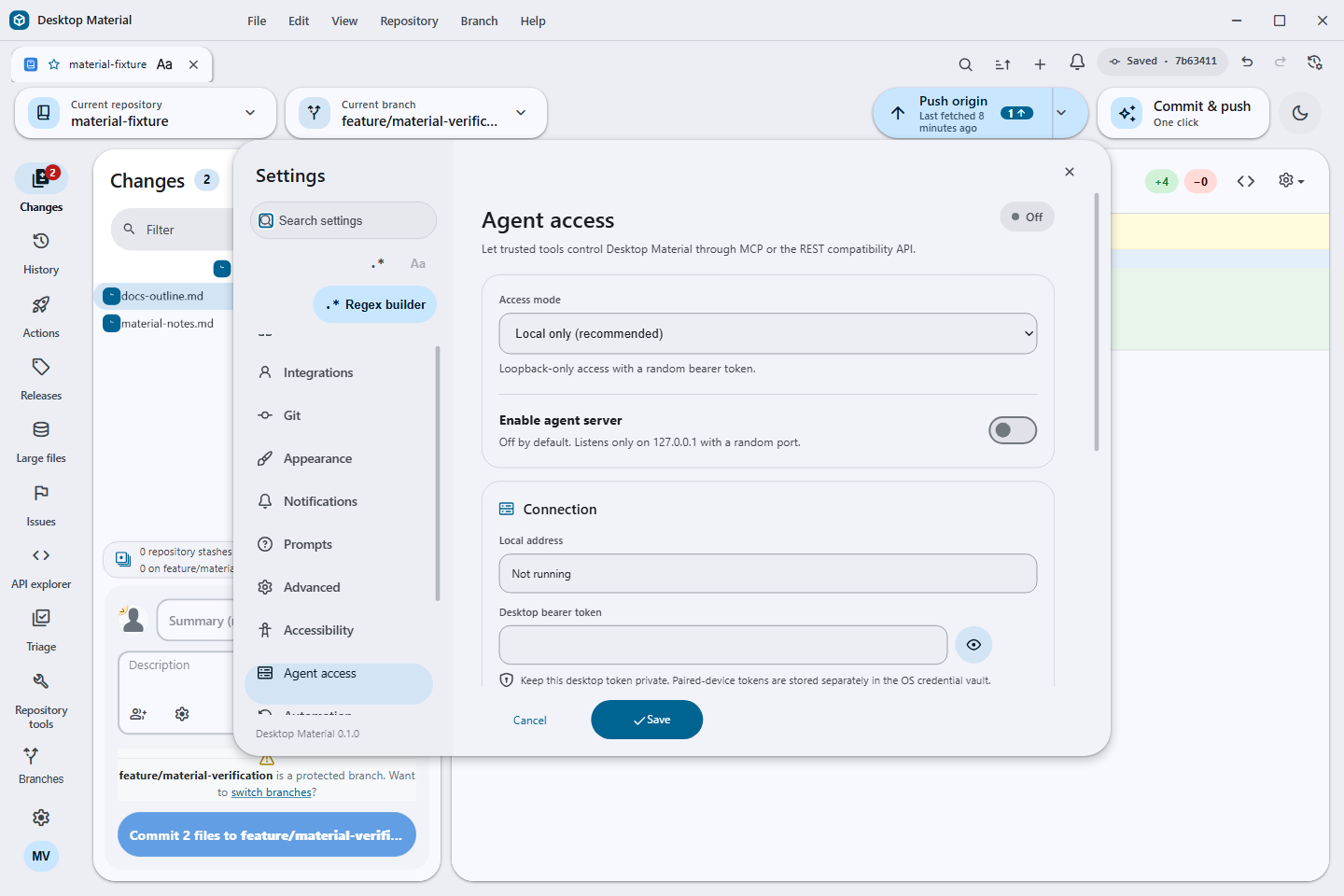
material-agent-access.png |
Local MCP and REST agent access controls |
material-multi-window-menu.png |
Open repositories and worktrees in another window |
material-scale-200-autofit.png |
200% requested scale safely auto-fitted at minimum size |
material-responsive-overflow-fixed.png |
Exact-size responsive overflow regression proof |
material-history-power-tools.png |
Searchable History and commit ancestry graph |
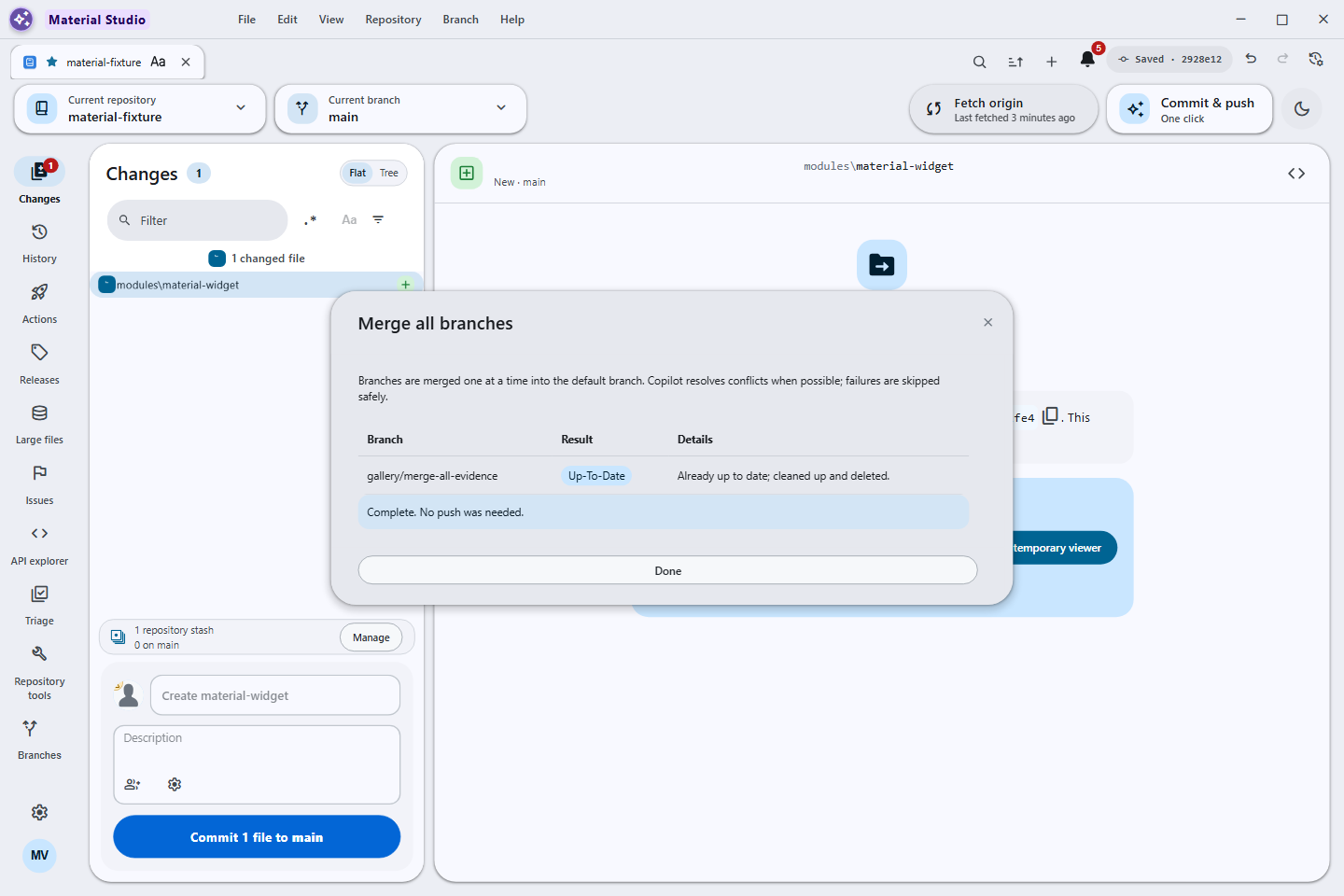
material-branch-merge-all.png |
Merge All branches/worktrees with per-target state |
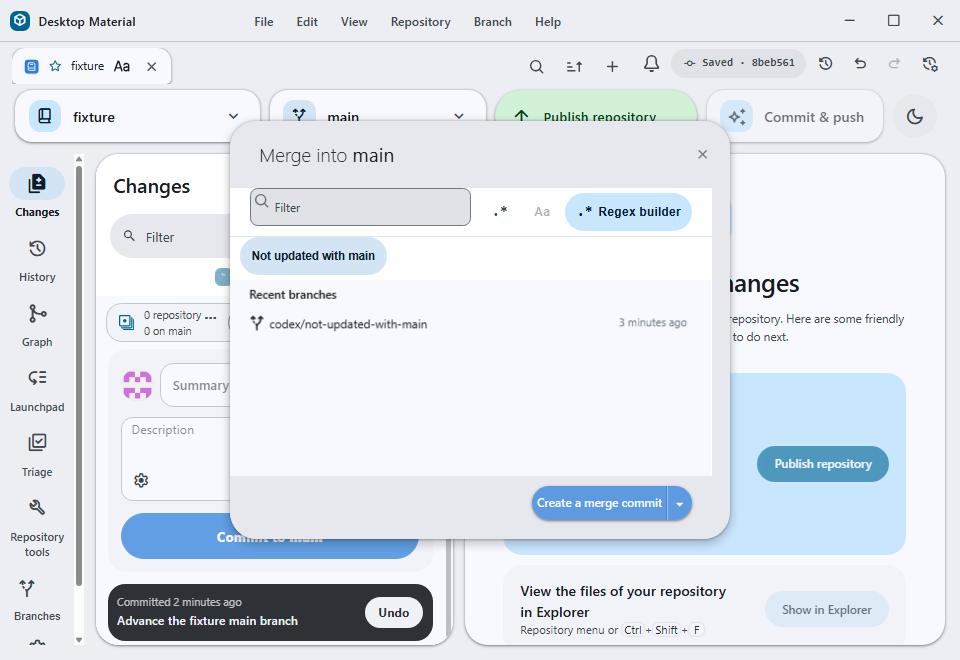
not-updated-with-main-filter.png |
Merge into main chooser filtered to branches not updated with main |
material-create-pull-request.png |
Native pull-request completion state |
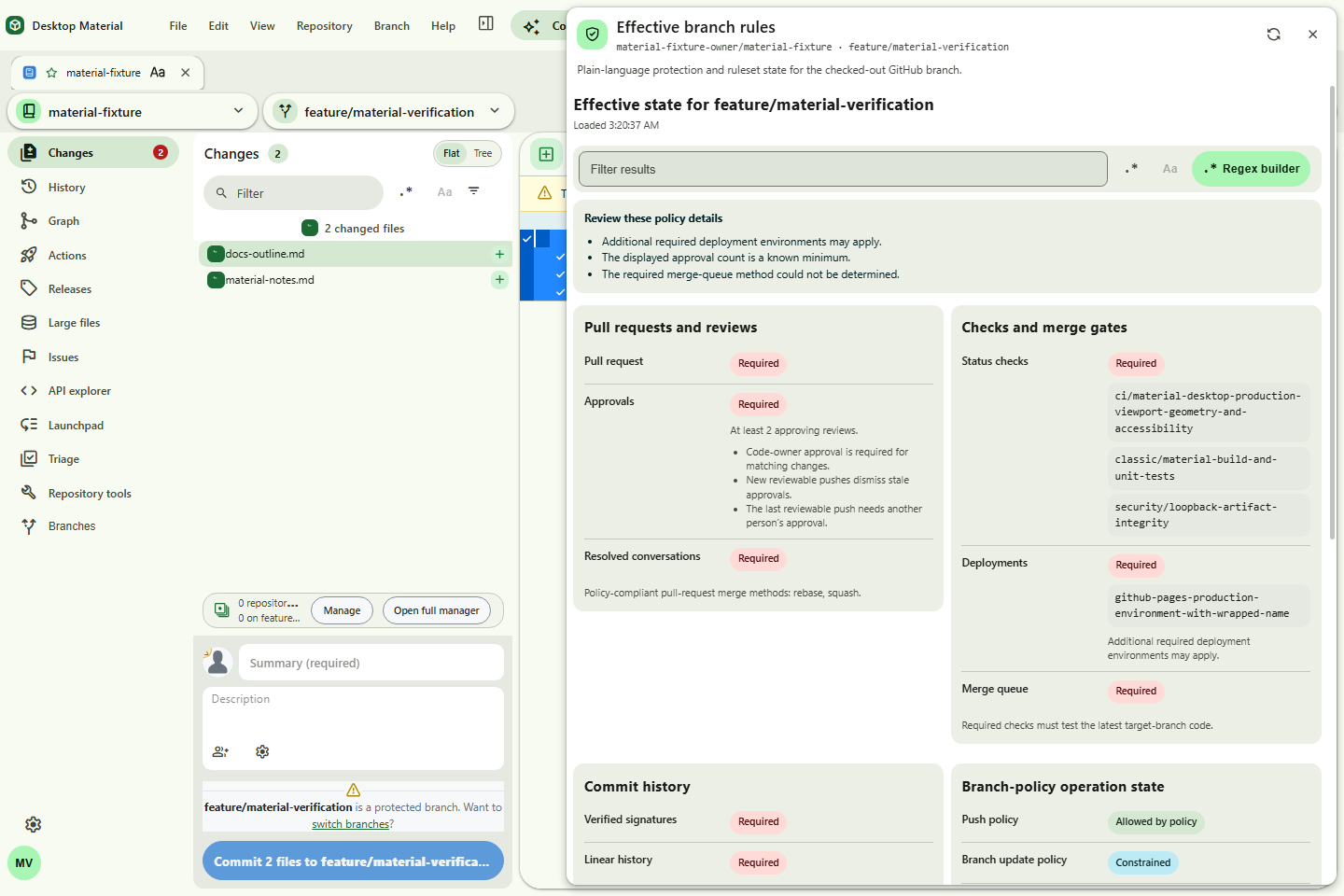
material-effective-branch-rules.png |
Effective protection and ruleset policy |
material-actions-artifacts.png |
Artifact digest and attestation-presence context |
material-actions-pagination.png |
Workflow-run pagination retained across refresh |
material-actions-artifact-page-two.png |
Wrapped artifact page-two sentinel |
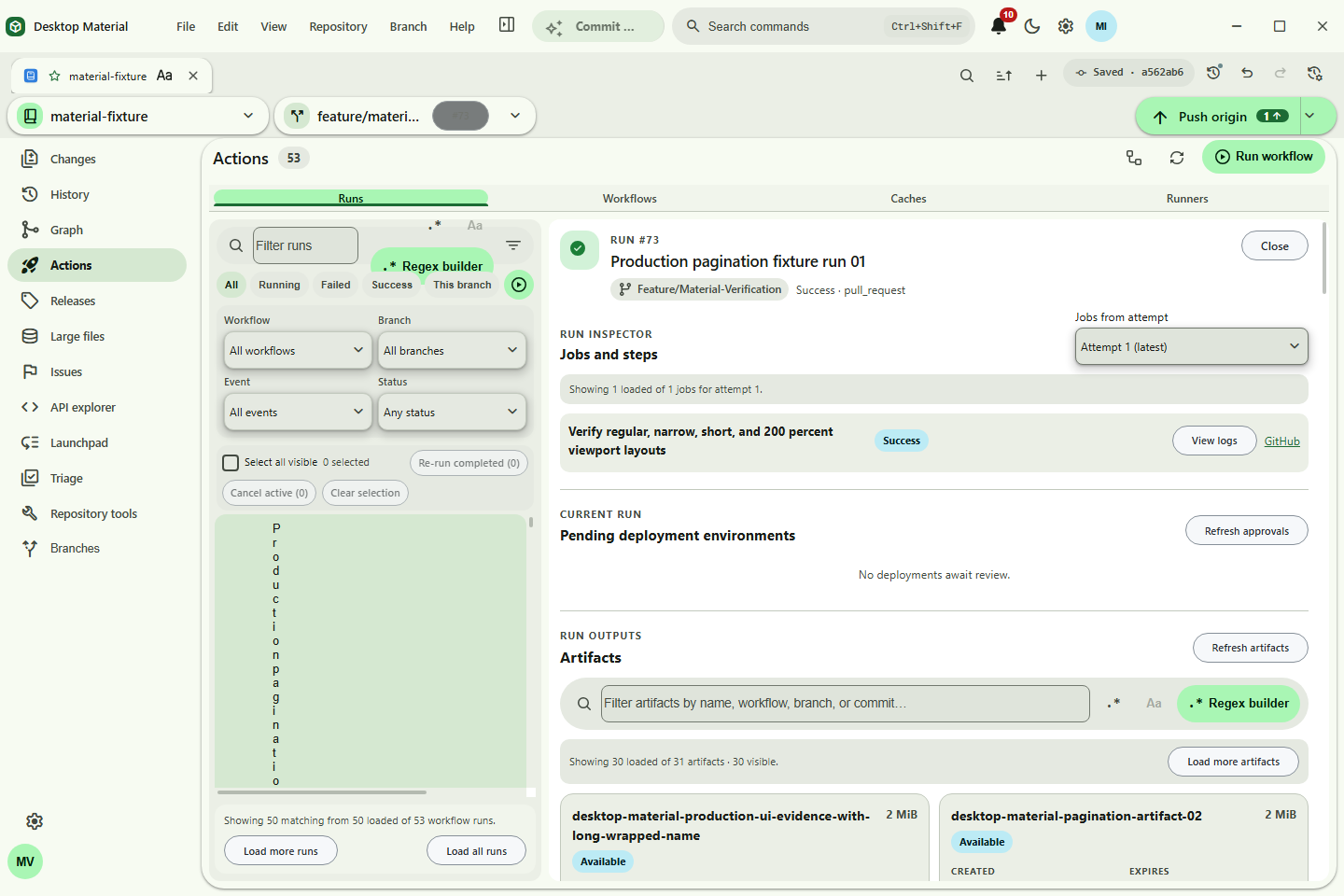
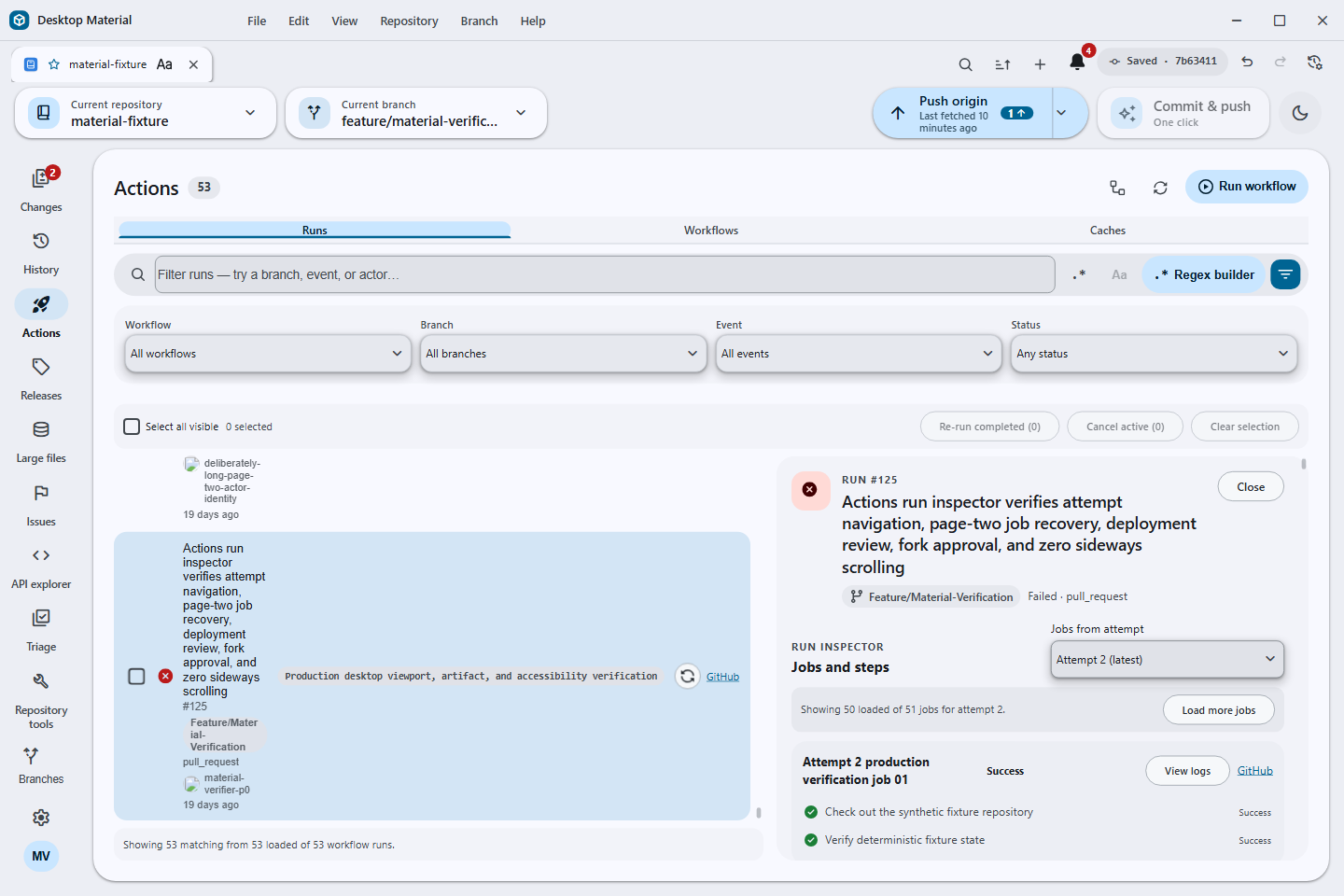
material-actions-jobs-pagination.png |
Attempt-aware job pagination and retry |
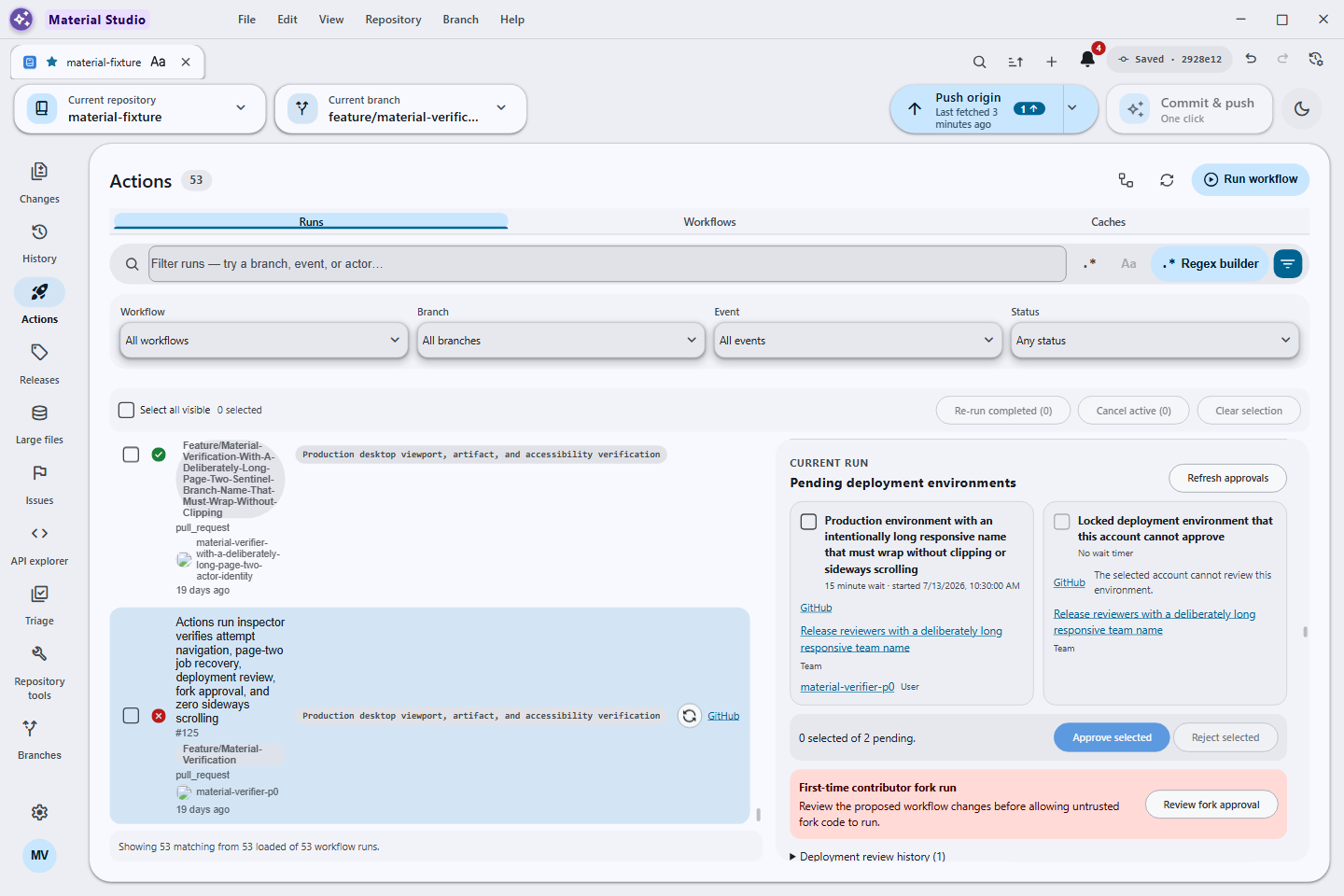
material-actions-pending-deployments.png |
Deployment environment review and history |
material-history-deepening.png |
Full-history state after a verified deepen |
material-shallow-clone.png |
Shallow-clone commit-depth controls |
material-sparse-checkout.png |
Persistent three-step sparse-checkout guide in its disabled Choose state |
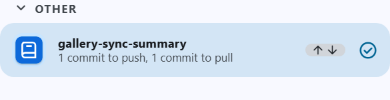
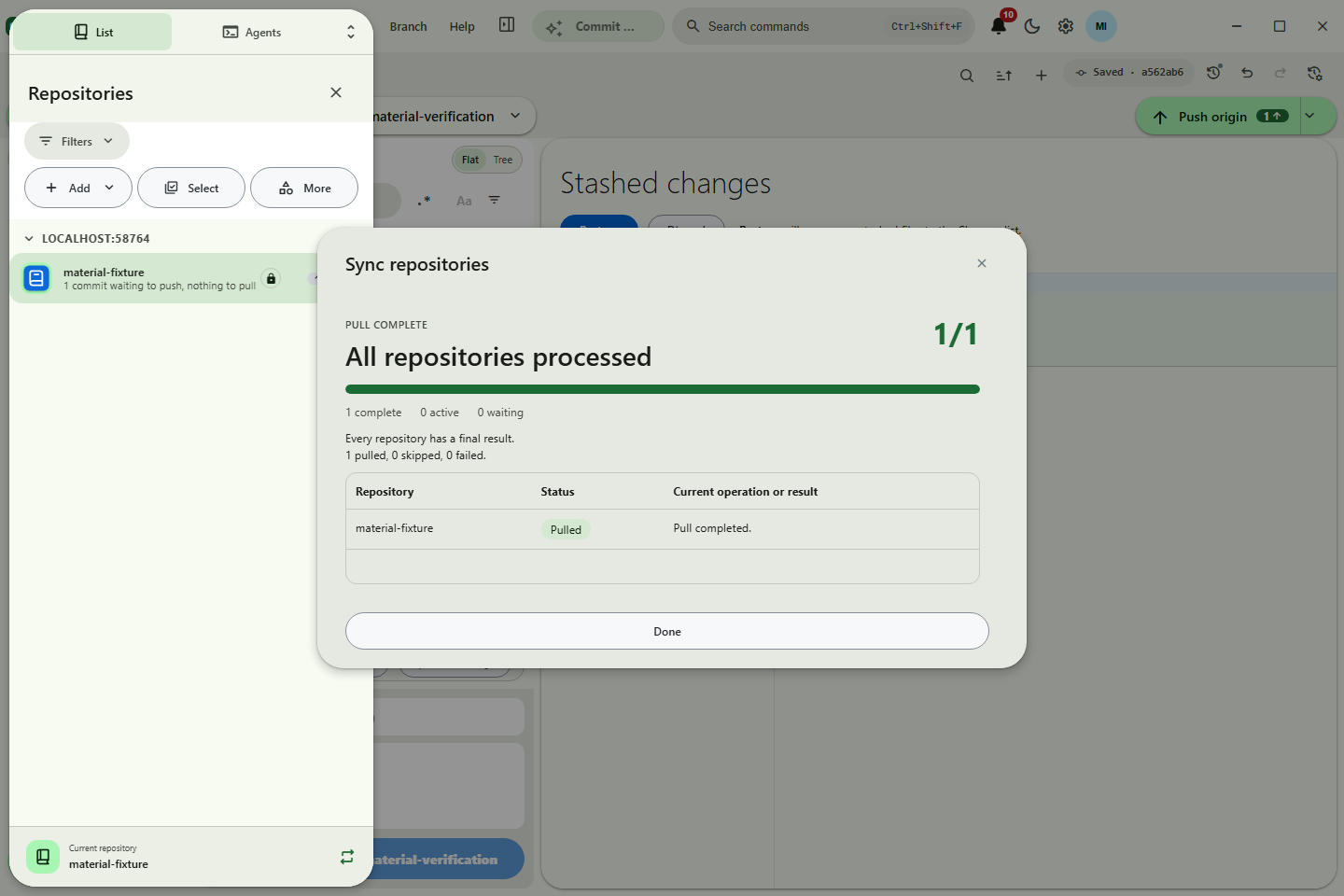
repository-list-sync-summary.png |
Repository-list sync summary naming the last known push and pull state |
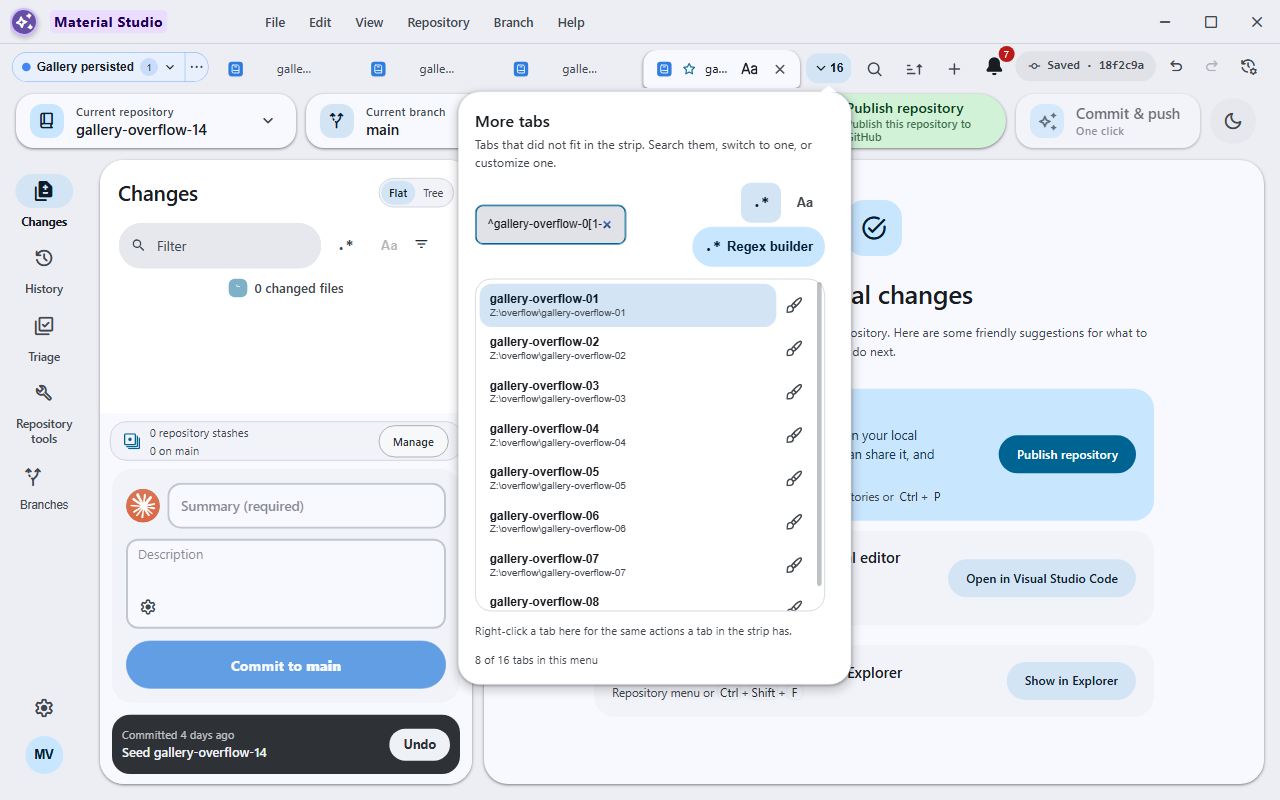
tab-overflow-search.png |
Tab overflow dropdown with its search field and regex builder |
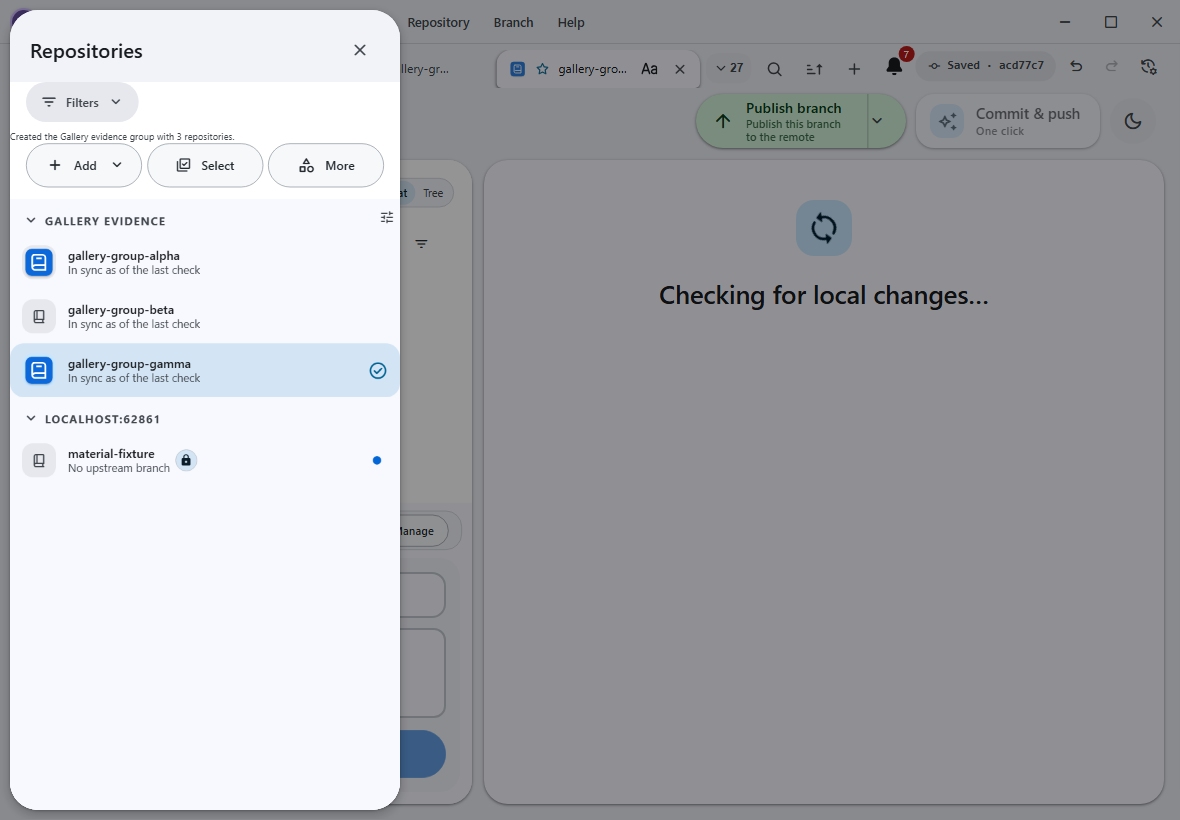
repository-groups-expanded.png |
Repository group expanded with per-row sync summaries |
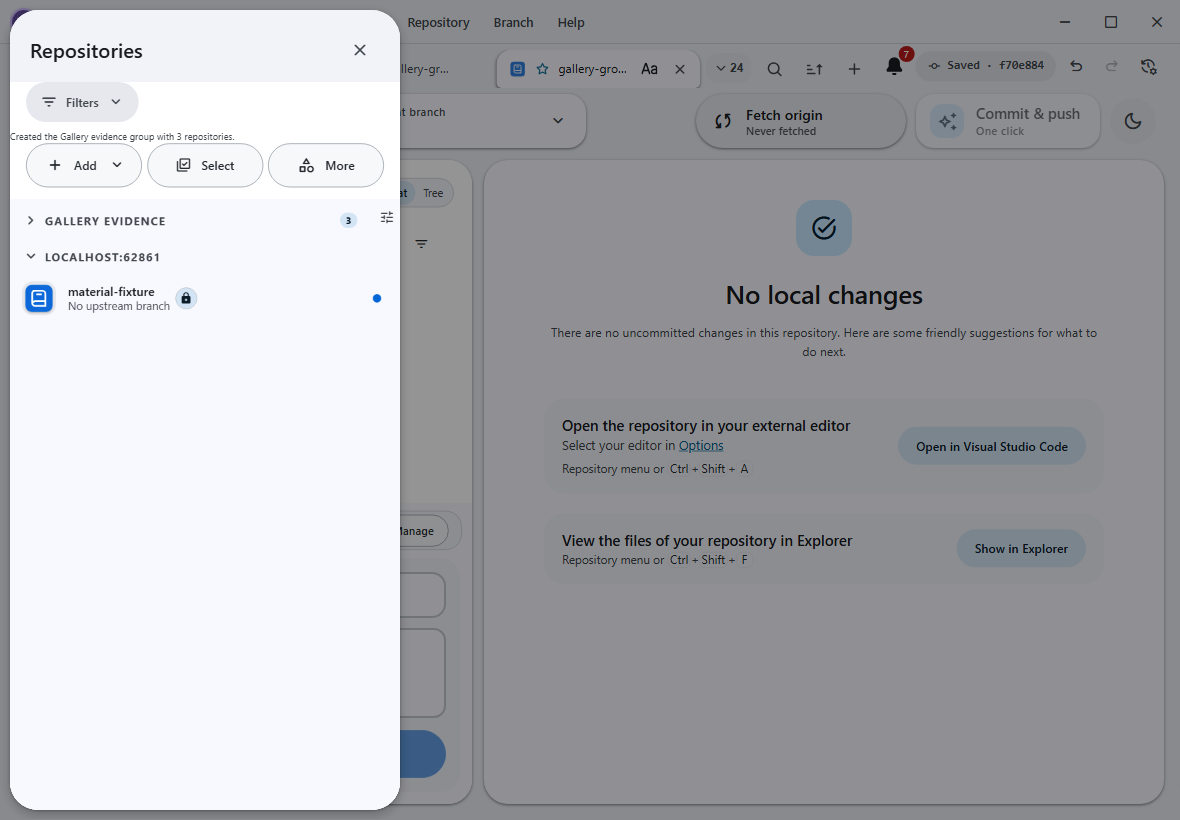
repository-groups-collapsed.png |
Repository group collapsed with its member count pill |
private-repository-lock-badge.png |
Explicit private-metadata lock retained beside the repository logo |
Dirty branch switching
When a branch is dirty, the switch dialog can leave the current worktree in place and open the existing Add worktree flow for the destination branch. The acceptance captures below come from the built Windows renderer and show the selected choice followed by the prefilled form.


App identity and portable tabs
The active profile can customize the in-app logo/name and rich name
typography, with a live preview and clear/reset actions. Favorites,
drag-to-open repository folders, current-tab session import/export, and
appropriate Shift+right-click or keyboard
customization/history context use the same profile/repository ownership
model.
Historical Linux terminal evidence (outside the current gallery)
The five original Linux terminal captures and their exact hashes remain preserved with the July 27 Debian/Xvfb run manifest. They document what was accepted at that time, but they are out of scope for the current Windows-only 88-scene target, Pages manifest, and refresh campaign. They are retained rather than relabelled or presented as current Windows evidence.
| Archived asset | Historical receipt | Current status |
|---|---|---|
linux-tui-overview.png |
July 27 Debian/Xvfb acceptance | Excluded from the current Windows gallery |
linux-tui-text-input.png |
July 27 Debian/Xvfb acceptance | Excluded from the current Windows gallery |
linux-tui-regex-builder.png |
July 27 Debian/Xvfb acceptance | Excluded from the current Windows gallery |
linux-tui-bilingual-narrow.png |
July 27 Debian/Xvfb acceptance | Excluded from the current Windows gallery |
linux-tui-cheap-lfs.png |
July 27 Debian/Xvfb acceptance | Excluded from the current Windows gallery |
Historical startup recovery evidence (outside the current gallery)
The August 6 packaged-app recovery capture proves that the first-run
surface rendered after the Copilot SDK bundle boundary was corrected. It
is retained as one-off regression evidence rather than presented as a
recurring capture-plan scene; material-welcome.png remains
the current guided welcome target.
| Archived asset | Historical receipt | Current status |
|---|---|---|
material-blank-startup-fixed-20260806.png |
August 6 packaged blank-startup recovery | Excluded from the current Windows gallery |
material-launchpad-empty-full-width-20260806.png |
August 6 Launchpad full-width acceptance | Excluded from the current Windows gallery |
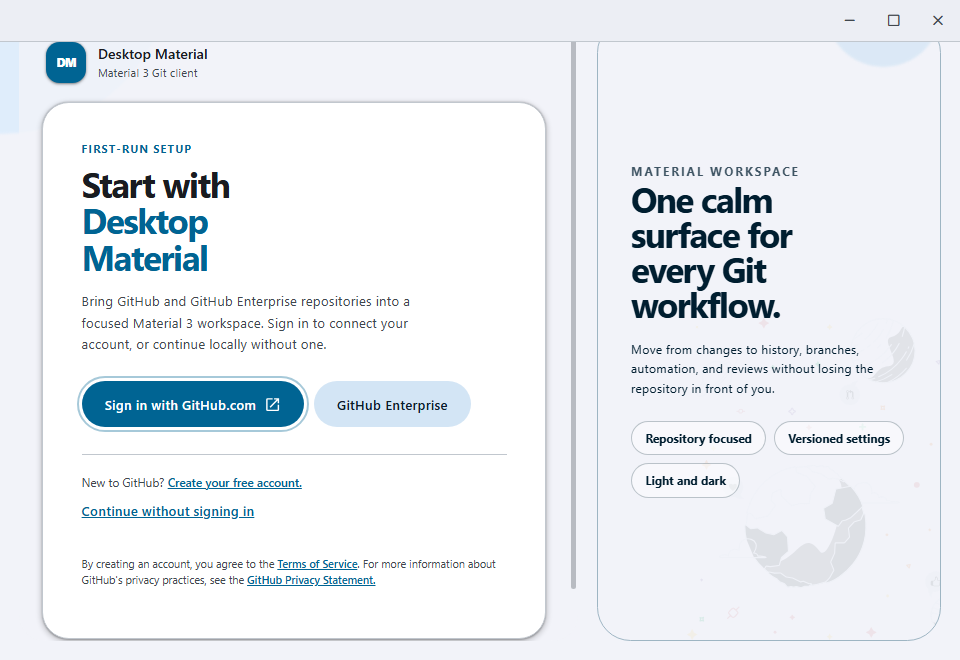
Historical OAuth callback evidence (outside the current gallery)
The August 6 production-build acceptance opened the real app-owned
browser and reached the original GitHub OAuth application's
authorization page without the reported redirect_uri
rejection. The fields are empty and the frame contains no account,
credential, token, authorization code, or private repository data. The
dated
receipt records the exact source, build, hash, hidden-desktop route,
and cleanup.
| Archived asset | Historical receipt | Current status |
|---|---|---|
material-original-github-oauth-release-20260806.png |
August 6 original-client callback acceptance | Excluded from the current Windows gallery |
Historical updater evidence (outside the current gallery)
The July 22 legacy Super Express-to-newer published-package migration
remains immutable historical evidence. Its accepted PNG, 49,195-byte
size, and
a02cffa612114be3af5e0fffcd5b602a4ba4dfd3226298e48d143a6bed76bd4d
SHA-256 stay pinned to source commit
923dbb51acad8f01f01f1c100c6945c7a2e08e23 in the published-migration
record. It is not overwritten or relabelled as current-source
evidence.
| Archived asset | Historical receipt | Current status |
|---|---|---|
auto-updater-update-ready.png |
July 22 published legacy migration | Excluded from the current Windows gallery |
Historical notification palette evidence (outside the current gallery)
The pre-fix command-palette frame is retained as before-state evidence for the notification-centre route correction. It is not presented as the fixed state.
| Archived asset | Historical receipt | Current status |
|---|---|---|
material-command-palette-notification-before.png |
2026-08-04 command-palette route correction | Excluded from the current Windows gallery |
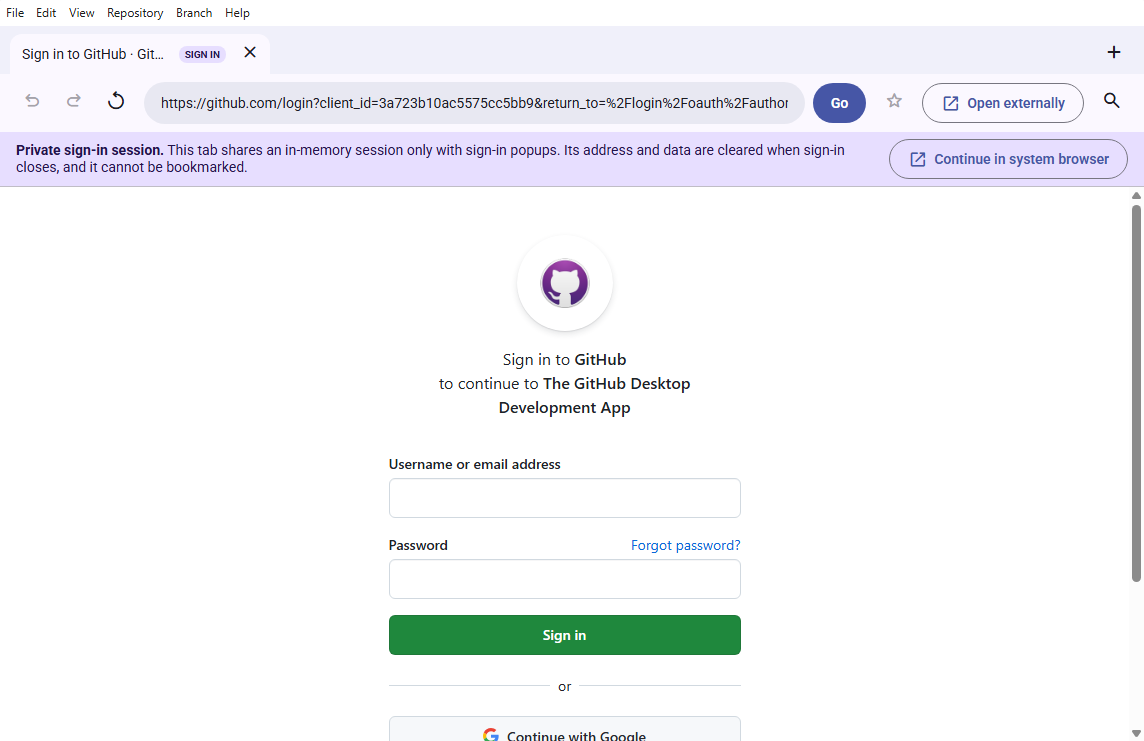
App-hosted browser
The July 27 continuation adds a dedicated Desktop Material browser
for HTTP(S) links when Settings → Advanced → Open web
links is set to internal. Its trusted chrome supplies tabs, New
tab, URL bar, Back/Forward, Refresh/Stop, Go, bookmarks, popup/redirect
capture, and an external escape. Remote pages stay in permission-denied
sandboxed WebContentsView tabs without Node, preload, or
trusted app IPC. Authentication tabs use a clearable in-memory session,
cannot be bookmarked, and always offer the system browser.
The accepted capture uses a synthetic redirect/popup fixture and no
real account or credential. It proves the private authentication notice,
explicit system-browser action, bookmark exclusion, and sandboxed tab
chrome from the real production bundle. The source and capture are
pushed through 2abccae8fd, and Pages/wiki publication and
packaged Windows E2E are verified. Installer/Release evidence remained
pending at that dated checkpoint; the archived TUI correction is outside
the Windows-only acceptance boundary. See the app-hosted
browser contract.
香港粵語速讀。
分頁、網址列、前後頁、重新整理、Go、書籤同外部逃生門 齊晒,網頁鎖喺
sandbox。呢張係真 build 喺 hidden desktop 嘅驗收相,冇用真帳戶
或者密碼;source 同相已經經 2abccae8fd 推上
main,Pages/wiki 亦 live,packaged Windows E2E 都過關。嗰陣
installer/Release 憑證未完成;舊 TUI correction 唔係而家 Windows-only
產品嘅 blocker。
Tab groups and command palette
Named, colored tab groups persist with their profile/window state and render a real chip before the first member. Collapsing hides the member tabs without closing a repository, and the chip remains keyboard reachable. The command palette covers the whole app as Material Design 3's full-screen search view: localized rich result rows, a pane naming where each feature lives, and keyboard hints. A row that is a setting renders that setting's live control inline — a switch, a text box, a stepper, or a select — so the value is read and changed without leaving the palette, and choosing a row teleports to the control that owns the feature rather than firing it. Its anchored editor still governs density, icons, group chips, and search-term visibility, and its compact aligned controls include a stable Random per repository mode, so each repository can carry a distinct row layout without changing on every open.
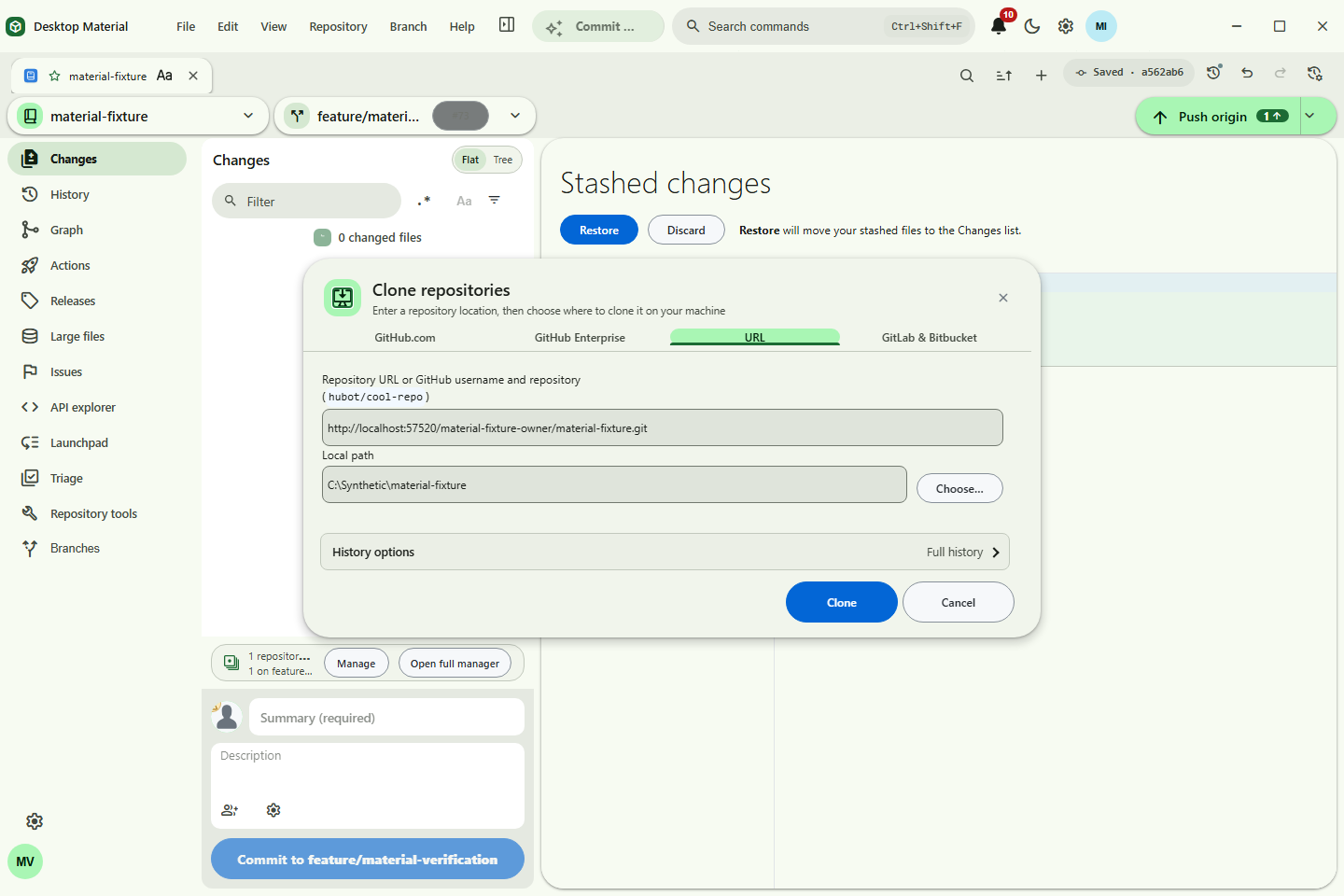
Clone, pull, and working-tree scope
The application-menu Pull action and a right click on the toolbar Pull button fetch before opening a bounded review of the exact local/upstream identities, incoming commits, changed files, and integration route. Dirty or conflicted worktrees cannot confirm. The final preflight rejects a stale identity and integrates only the reviewed upstream OID without another fetch; scheduled and local-agent automation remain noninteractive.
Large-file commit preparation
Oversized files are prepared and uploaded through release-backed
cheap LFS before Git creates the branch commit. New uploads start as raw
bytes, retain one asset when it fits the release limit, and use ordered
raw ranges when it does not. Public repositories can then cloud-compress
each Release object sequentially through a SHA-pinned Action; private
repositories require explicit opt-in. Failed and non-beneficial objects
stay raw and cloneable, while decompression and full digest verification
always happen locally in Desktop Material. The composer names hashing,
release preparation, upload progress, and verification separately, then
reserves Committing to branch for the small
pointer commit. Its compact terminal keeps three worker rows visible
while reporting active workers, queued files, selected and recommended
providers with the recommendation reason, observed elapsed time,
throughput, ETA, and honest manual handoff phases. Long recommendations
use a native keyboard-focusable disclosure. An isolated trusted GitHub
CLI exact-range transport runs first so the crash-prone Electron upload
pipe is not opened when gh is available; its bounded
reconciliation scans the full asset inventory once and then polls only
one exact asset ID. The adjacent Manual upload action
remains the explicit recovery: it stops the automatic transfer, opens
one temporary folder containing every remaining whole-file or ordered
.partNNN asset, reports throttled hash/staging progress
after a worst-case temp-space preflight, and resumes only after newly
detected browser uploads and all local sources pass SHA-256
verification.
The repository rail's direct Large files manager lists and searches the original nested pointer paths, pins reviewed files, and materializes one or all pointer files without sending users through GitHub Releases. Its cloud card shows the visibility policy and local-only decompression boundary, and each row is labeled Raw, Compressed, or Mixed.
The July 27 restore continuation gives Release restore one shared maximum-two-download coordinator. The next file or multipart part starts at the exact 90% network point, while the shared panel separates overall, current, and look-ahead lanes; file/part ordinals; logical and actual downloaded bytes; phase, queue, rate, ETA, failures, and cancellation. The scheduler, shared UI, production build, and wide English/narrow bilingual hidden-desktop receipts pass. The exact source and screenshot are now live on default-branch Pages and the wiki; packaged Windows E2E is verified. Installer/Release evidence remained pending at that dated checkpoint; archived TUI compatibility work is non-blocking.
The public Bambu exercise sent exactly 8,305 files and 14,809,588,162
bytes through four UI-created commit/push batches. Its first HTTP 408
preserved the exact pending SHA for a successful UI retry. Cloud run
30048474438 compressed 13 objects independently with 0 kept
raw and 0 failed while retaining all raw originals, leaving 26 assets.
Real-UI commit 712ad85 passed verifier
30054805137 and its immutable manifest Release. A fresh UI
clone restored all ten SHA-256 values from committed 370–514-byte
pointer blobs. The first automatic/manual overlap produced two
hash-identical CAS recovery copies and prompted repository-scoped
serialization; the corrected rerun is tracked in HANDOFF.md
rather than inferred from that initial integrity proof.
Every repository bucket is bounded to GitHub's 1,000-asset Release
limit. Whole multipart files and whole manual batches roll together from
assets to assets-2, assets-3, and
later exact pointer tags; processing assets count toward capacity but
cannot be downloaded until GitHub marks them uploaded.
Repository administration
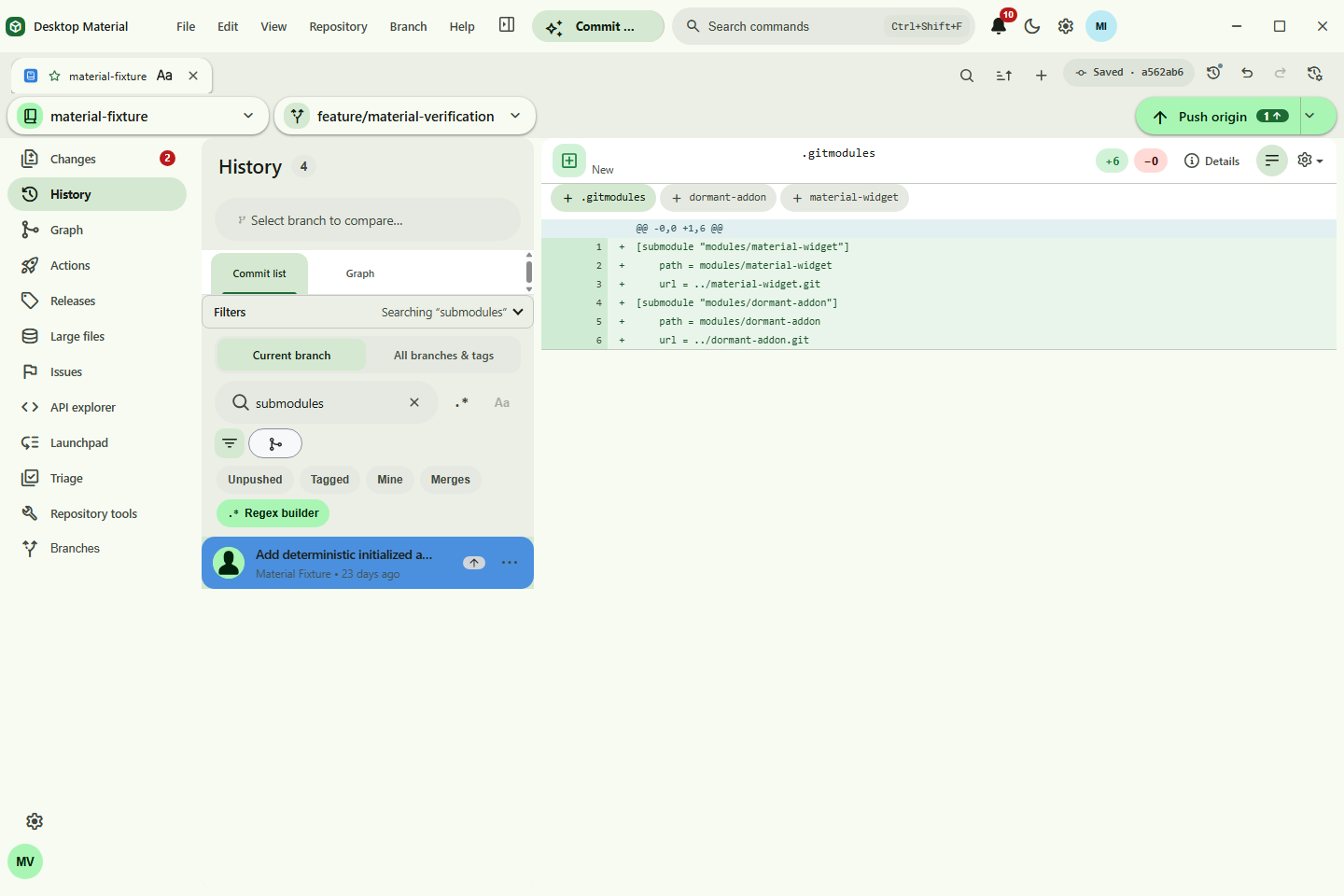
Launchpad is a full-width repository page for the grouped attention inbox. Its empty state keeps all five status groups and the omitted-item explanation visible without reserving a blank sidebar. This frame came from the exact development production build through the cheap Lowlevel hidden-desktop route; the disposable fixture had one committed file and one untracked work-in- progress file, so the zero counts are genuine.
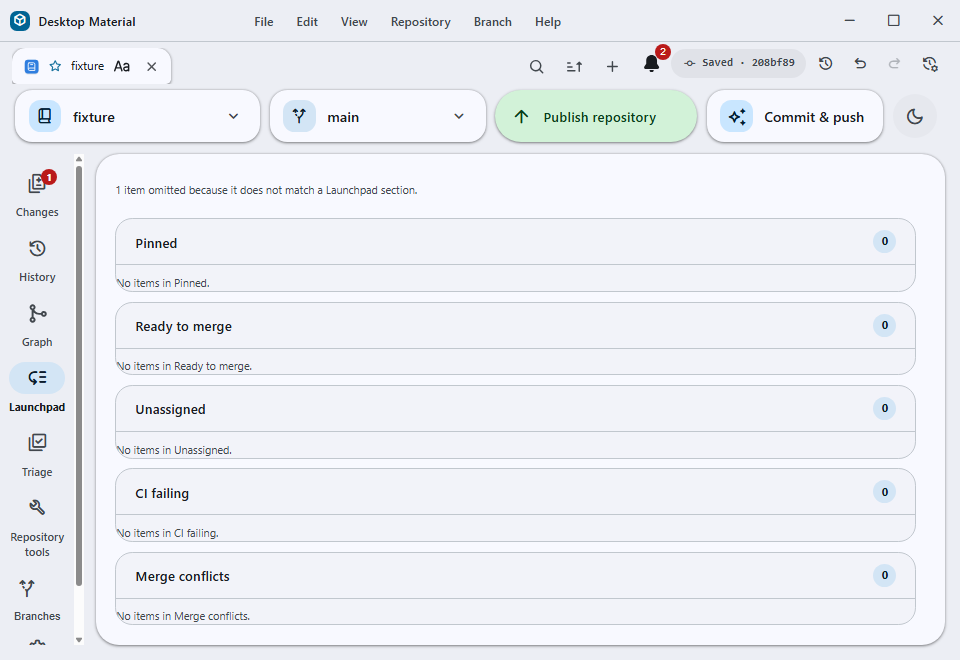
The source contract covers both sides of the layout: Launchpad's sidebar body is intentionally null, and the repository shell omits the sidebar container when that section is selected. The focused navigation suite reports 7/7 passing tests; the Launchpad model and preferences suites report 23/23, and the Launchpad view suite reports 13/13.
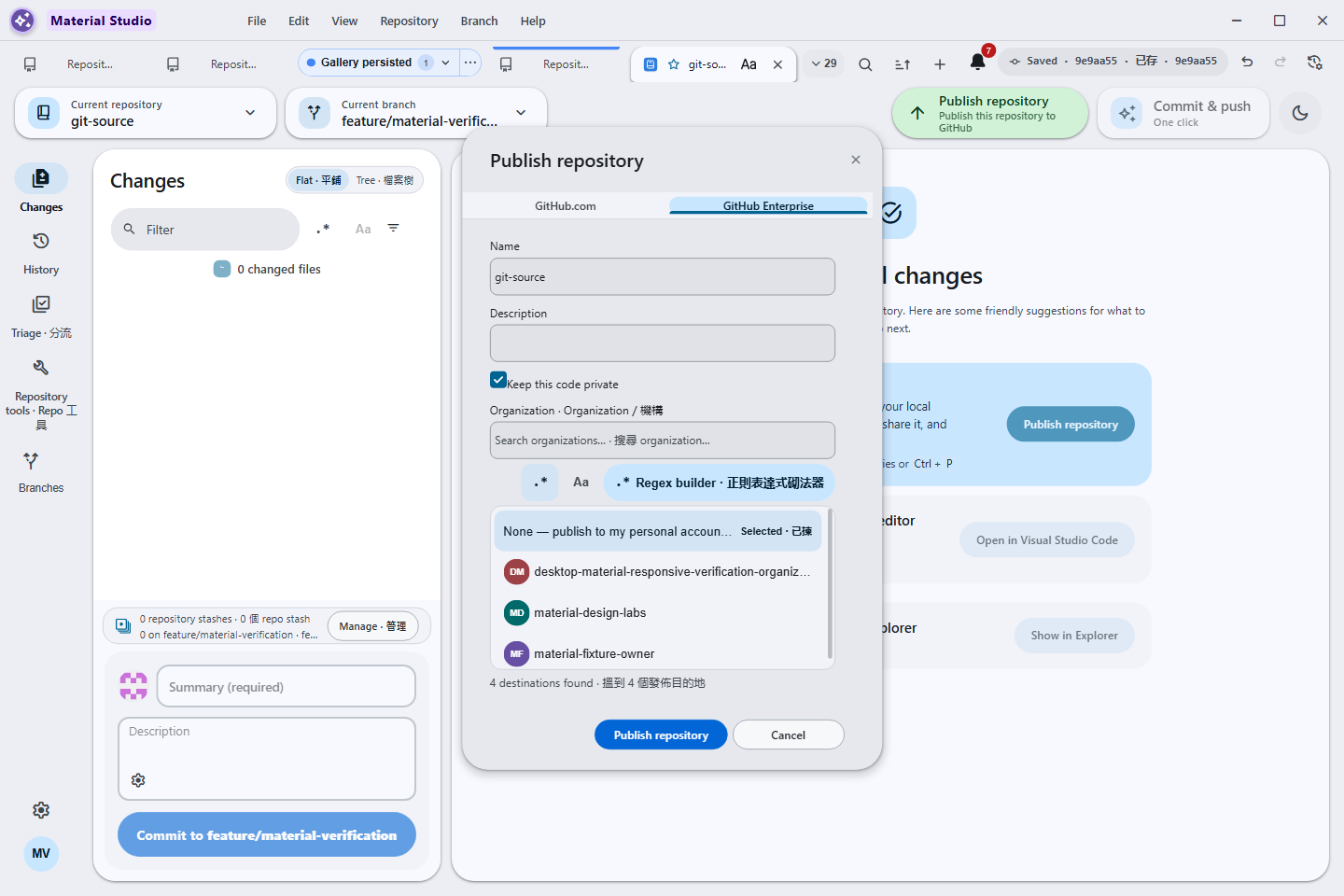
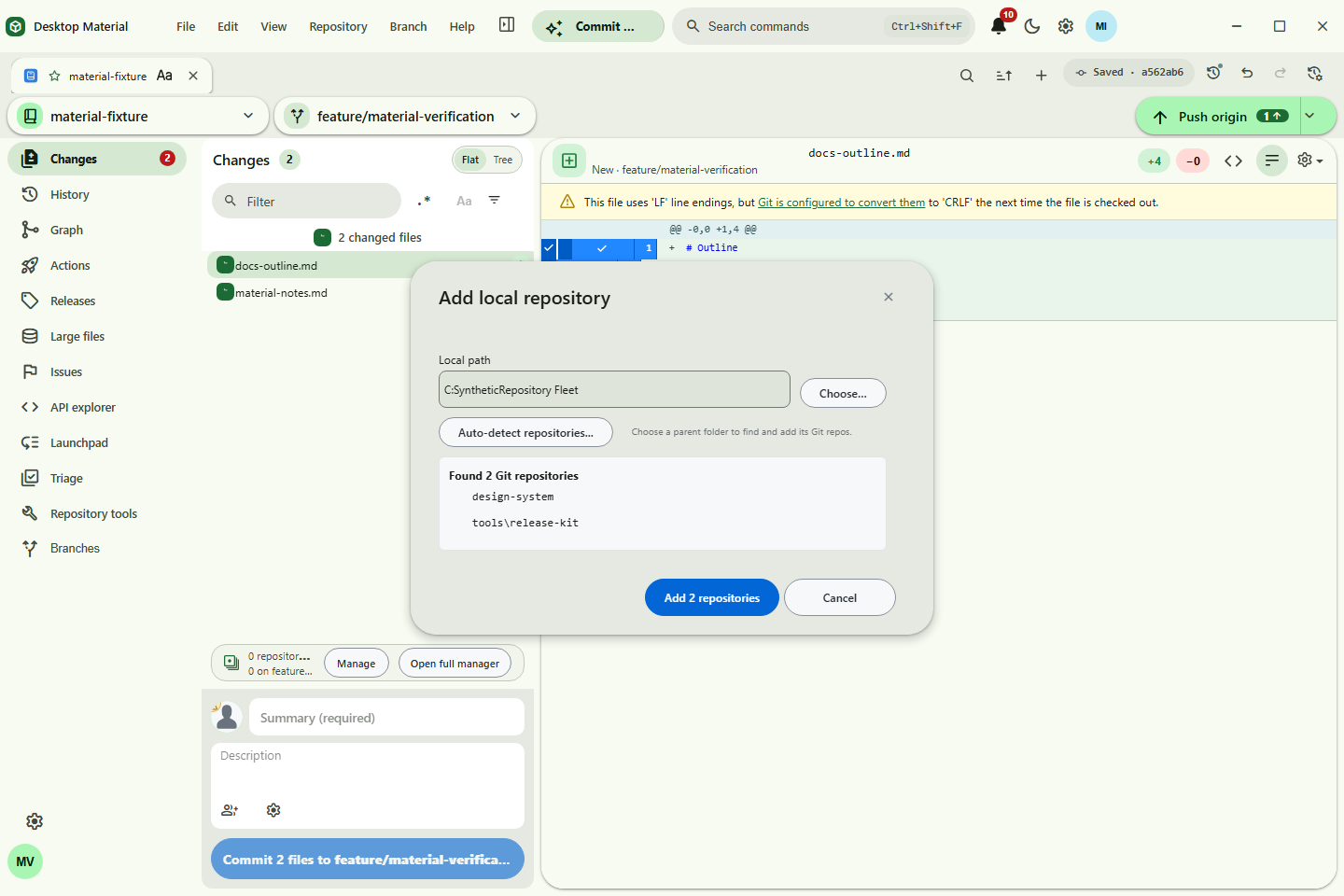
Publish Repository replaces the collapsing organization select with a searchable personal-or-organization listbox. Fuzzy and substring filtering, bounded regex, and the full Regex Builder share one persisted mode; invalid regex keeps the prior results visible instead of emptying the owner list. Arrow, Home, End, Enter, and Space selection reaches every organization and the explicit None option. The accepted bilingual run proved positive list height and scroll travel, final-row reachability, long-name ellipsis, and contained controls at a physical 390×844 auto-fit window before restoring the reviewed 1440×960 frame.
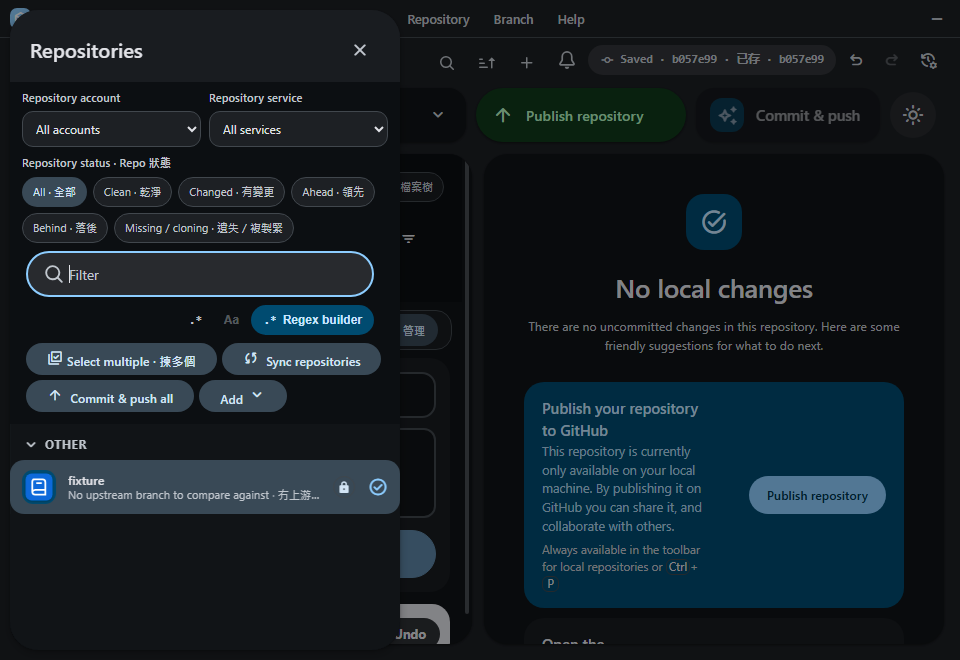
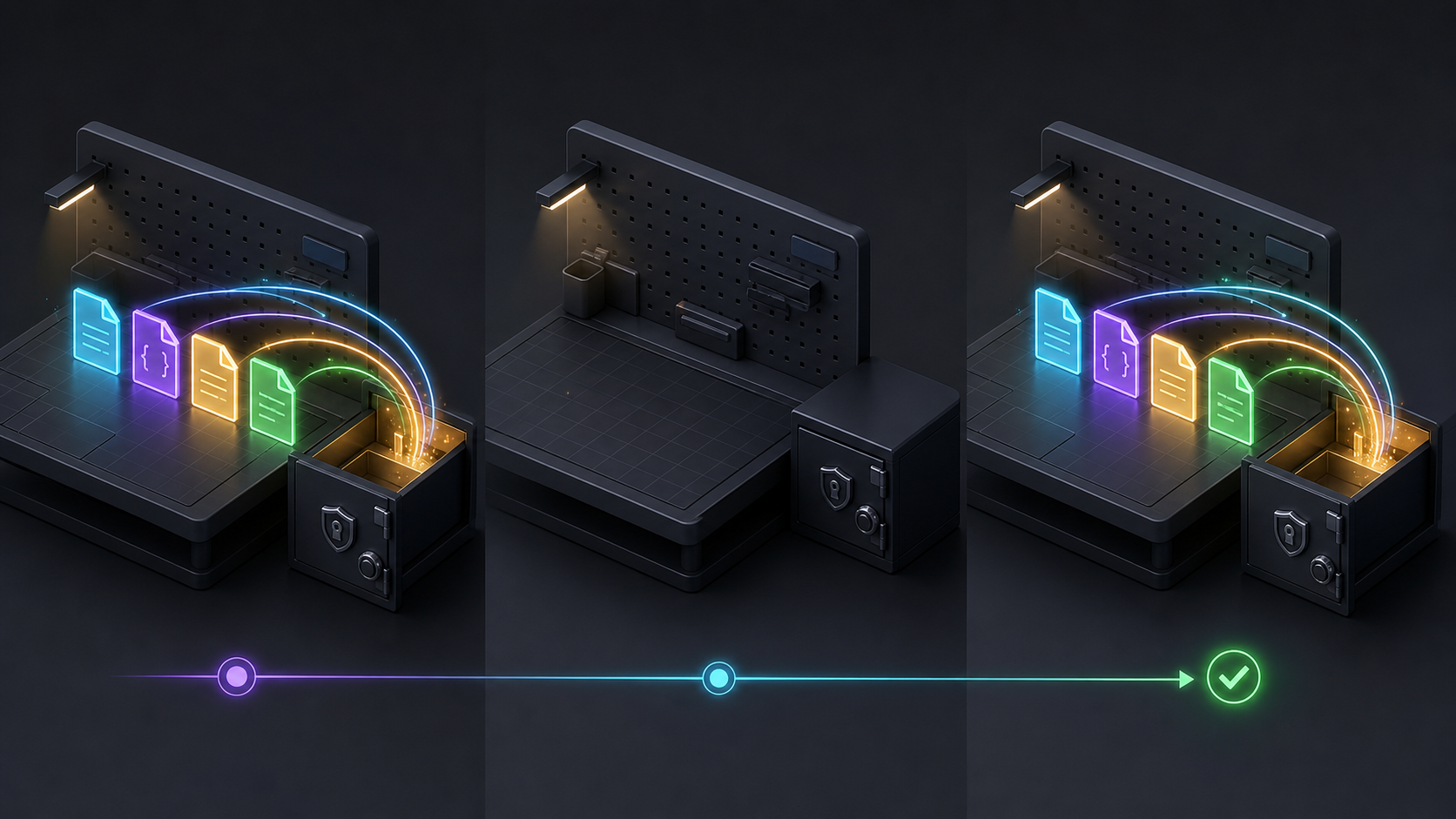
The repository picker shows a separate filled lock only for exact
isPrivate === true provider metadata. The lock remains
visible beside the ordinary, fork, or custom repository logo, is
keyboard-focusable, and joins the row's localized accessible name.
Public and unknown metadata make no privacy claim.
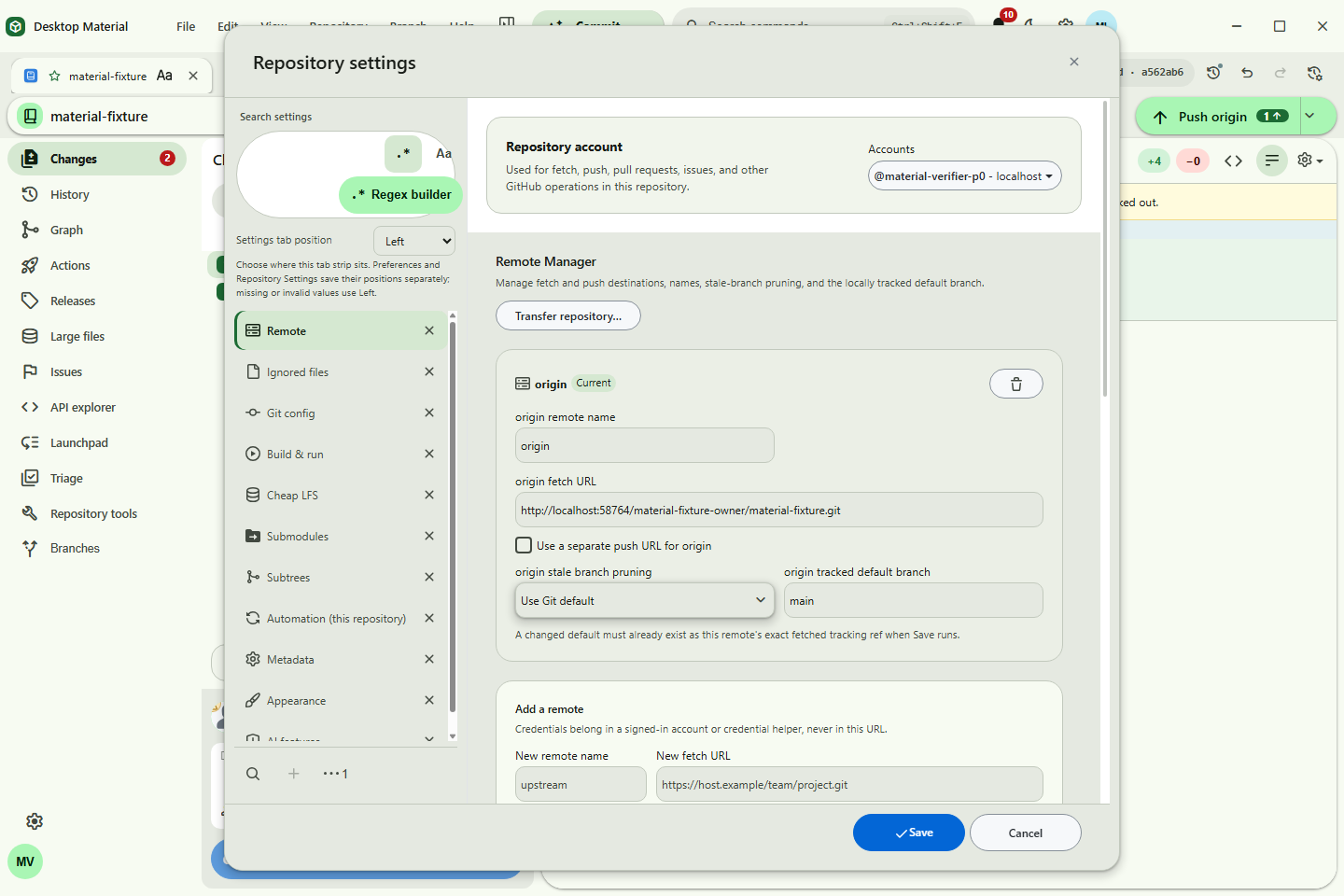
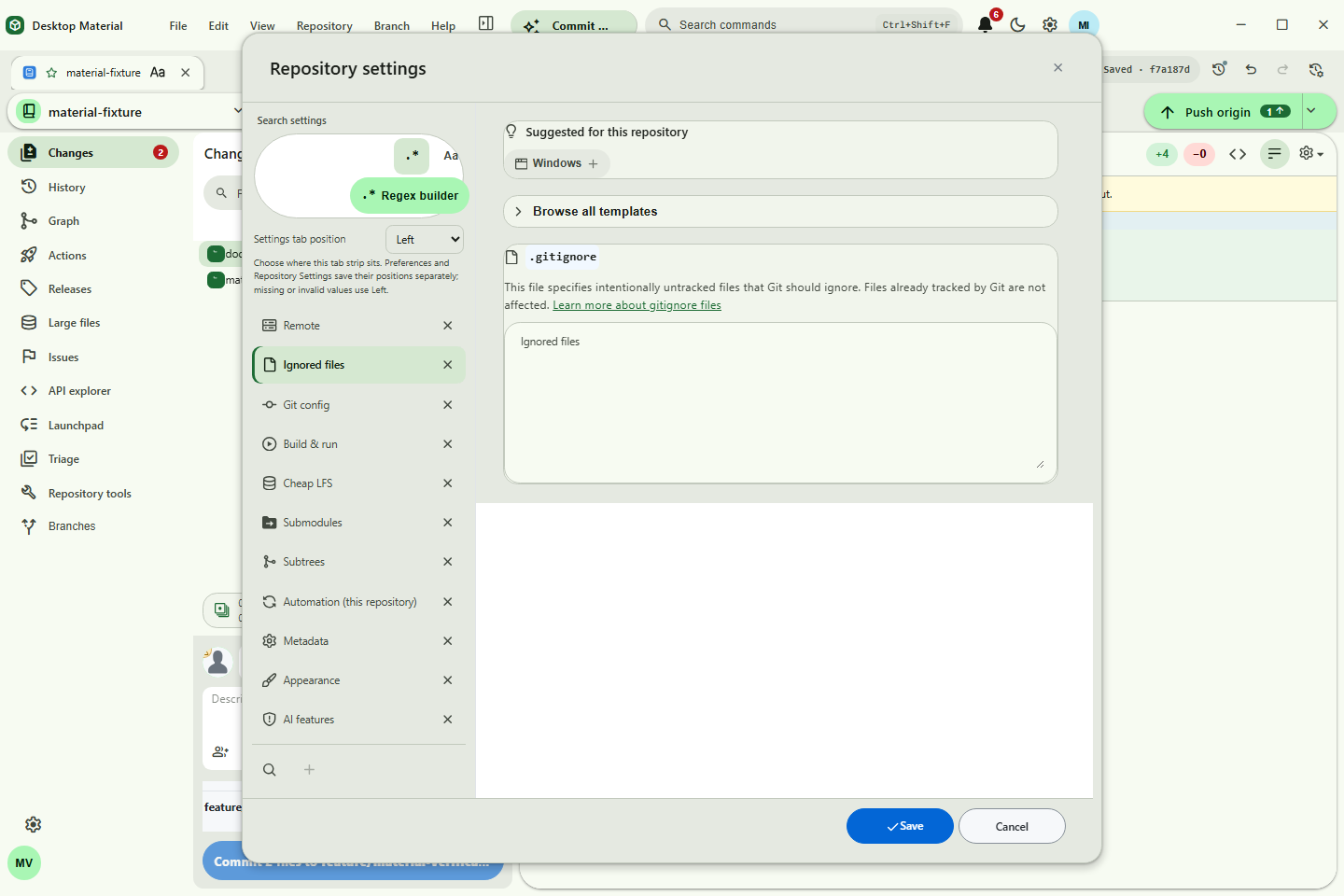
The current Remote Manager layout preserves readable semantic columns
and stacks a row before its name, fetch/push URLs, or controls collapse.
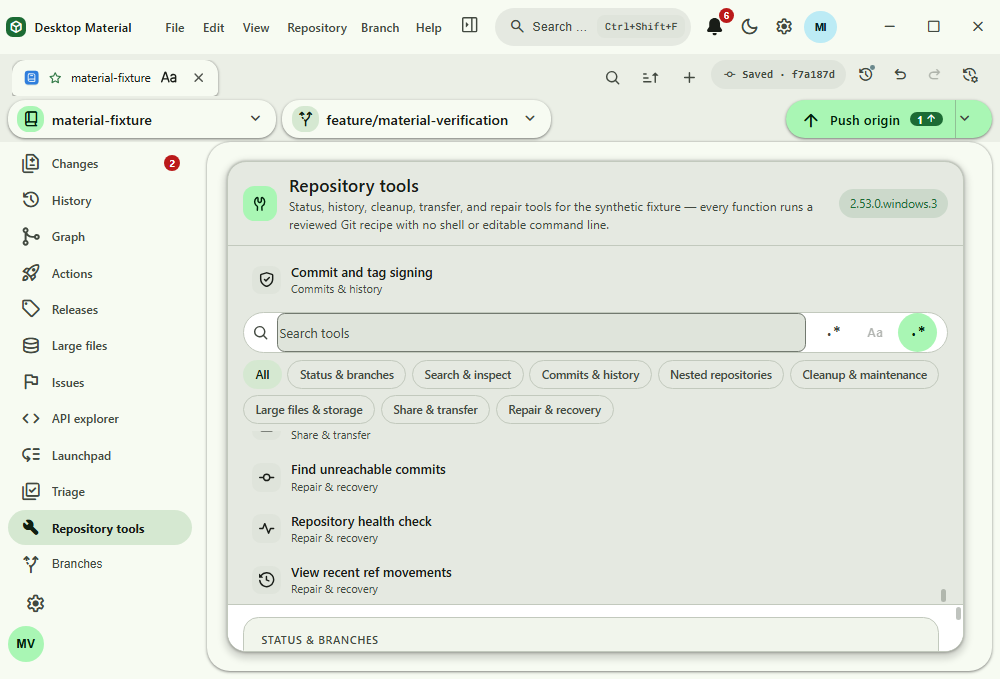
Repository Tools owns short-window vertical scrolling so Diagnostics and
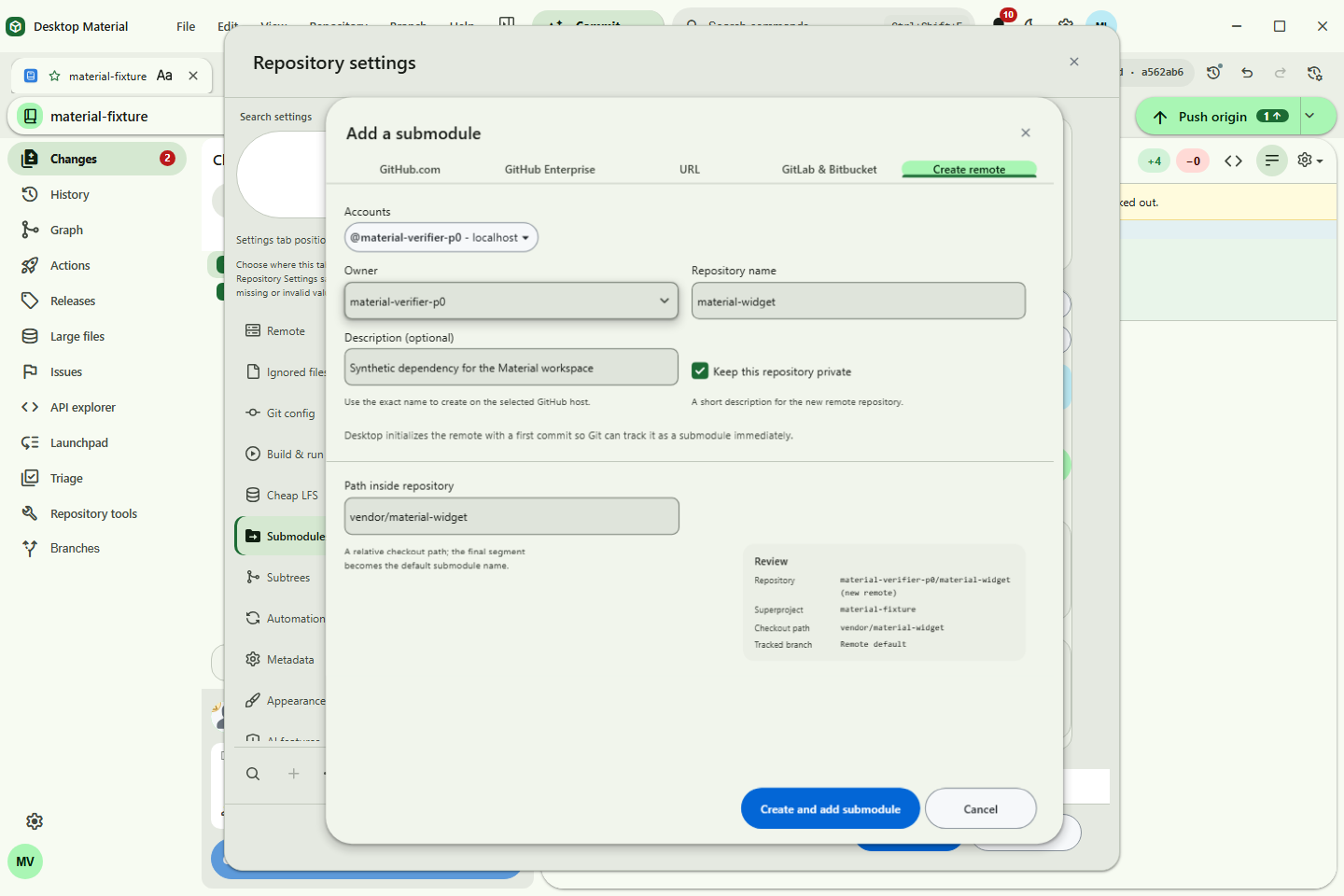
later results stay reachable. Repository settings → Submodules →
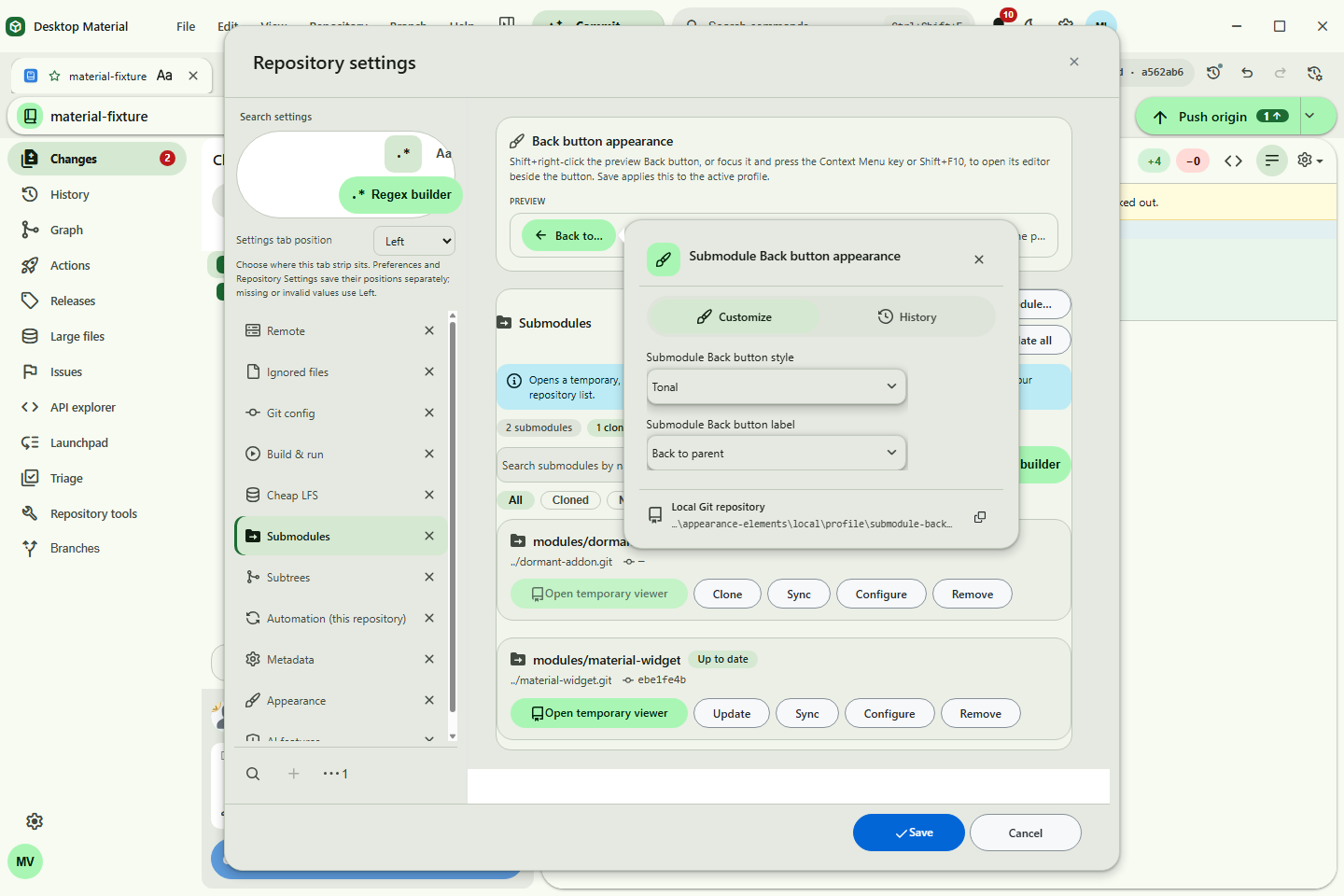
Add submodule… opens the same provider/URL chooser as Clone,
then reviews the safe relative destination and optional tracked branch
before Git starts. The wider settings surface also shows the
profile-wide Back preview; Shift+right-clicking it (or
focusing it and using the Context Menu key / Shift+F10)
opens that element's editor beside it, with edits staged until the
settings dialog is saved. An initialized row or changed/new submodule
commit card's Open temporary viewer action opens that
child read-only without adding it to the repository list. The context
bar's visible Close viewer action clears the temporary
state and returns to the parent, while the adjacent
Subtrees tab embeds add, pull, push, and split
management; stale, invalid, or escaping targets fail closed. The
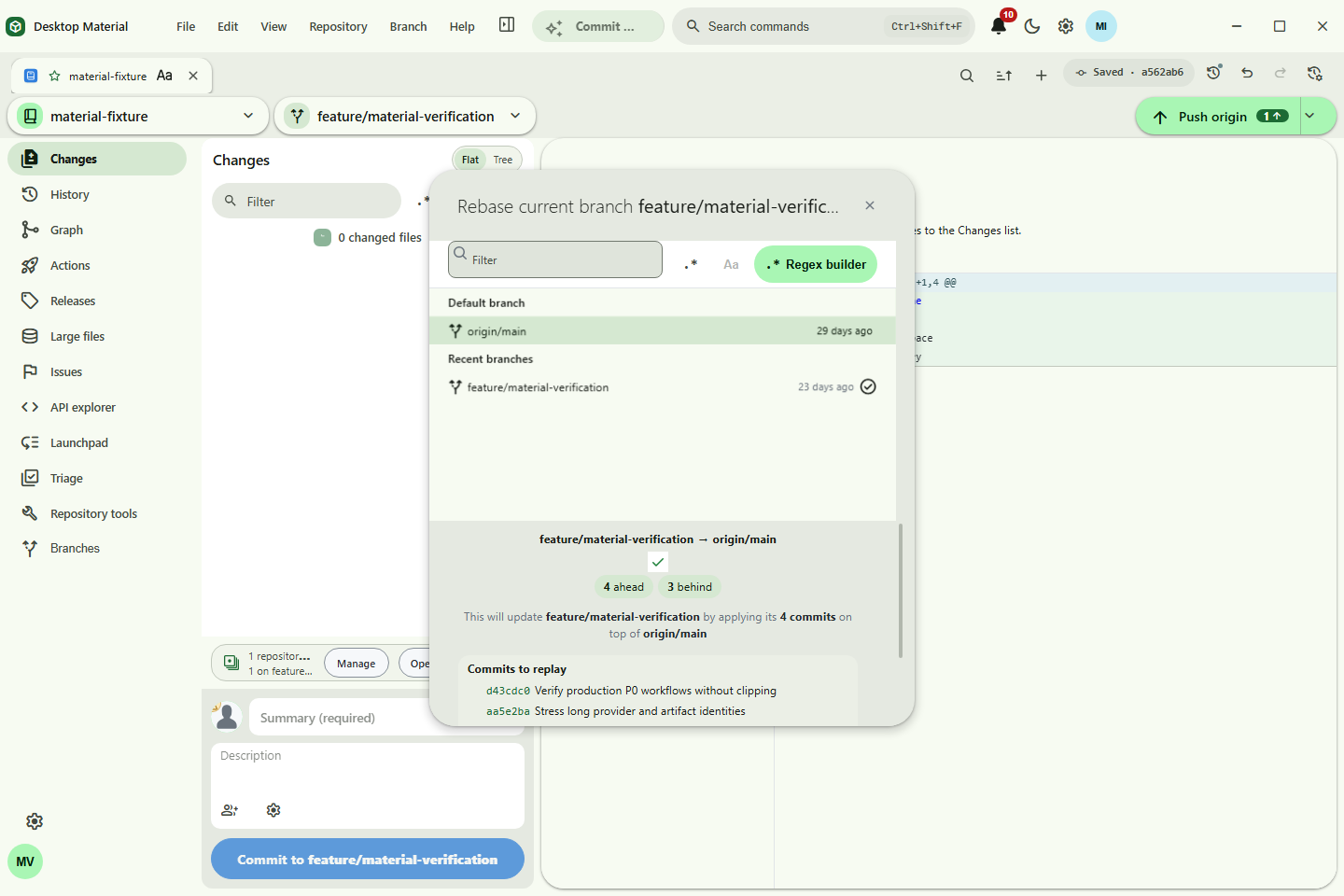
reviewed current-branch rebase uses searched target selection,
ahead/behind context, a bounded commit preview, fresh safety/ref checks,
and the existing conflict continue/abort path; it never force-pushes
automatically.
GitHub lifecycle
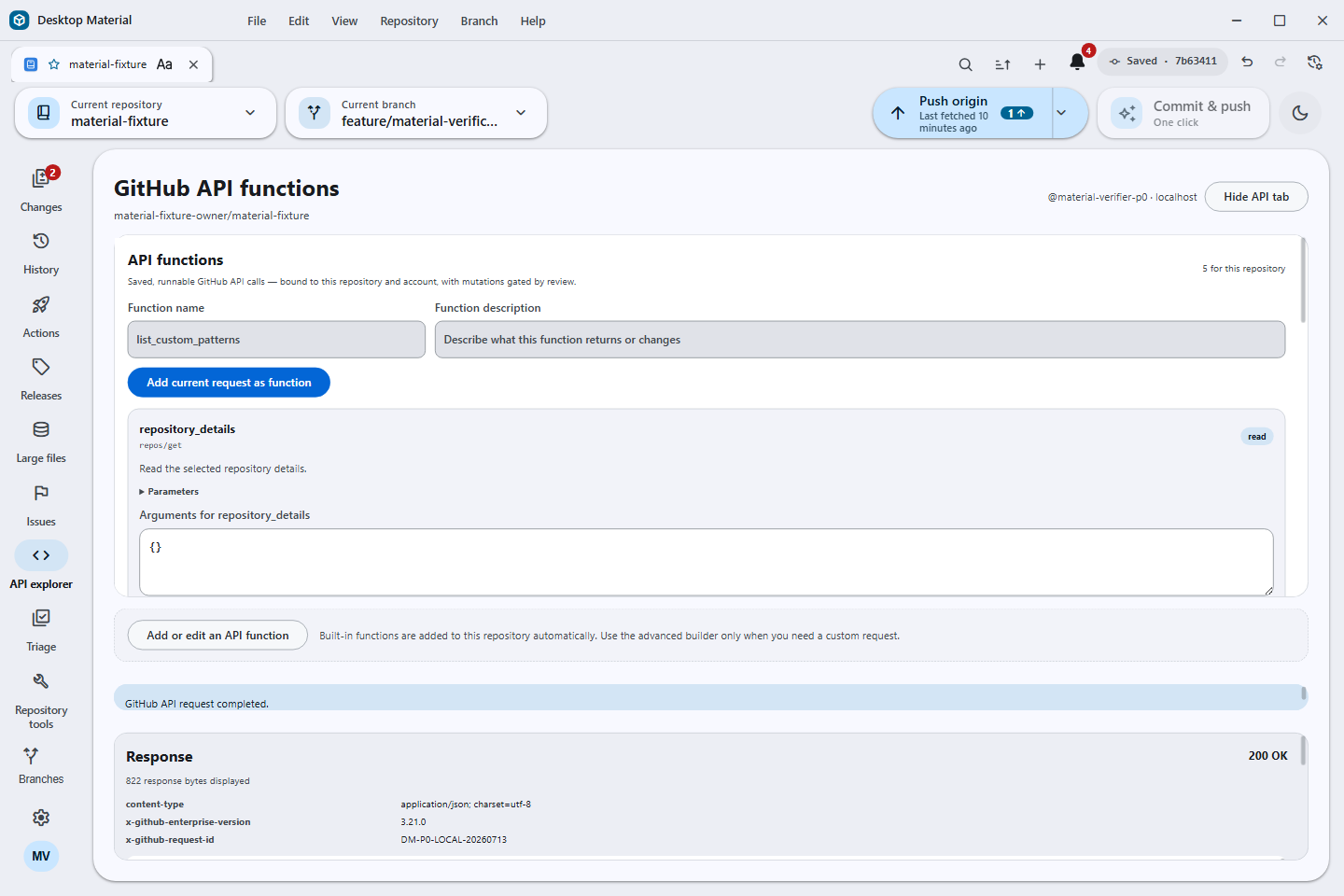
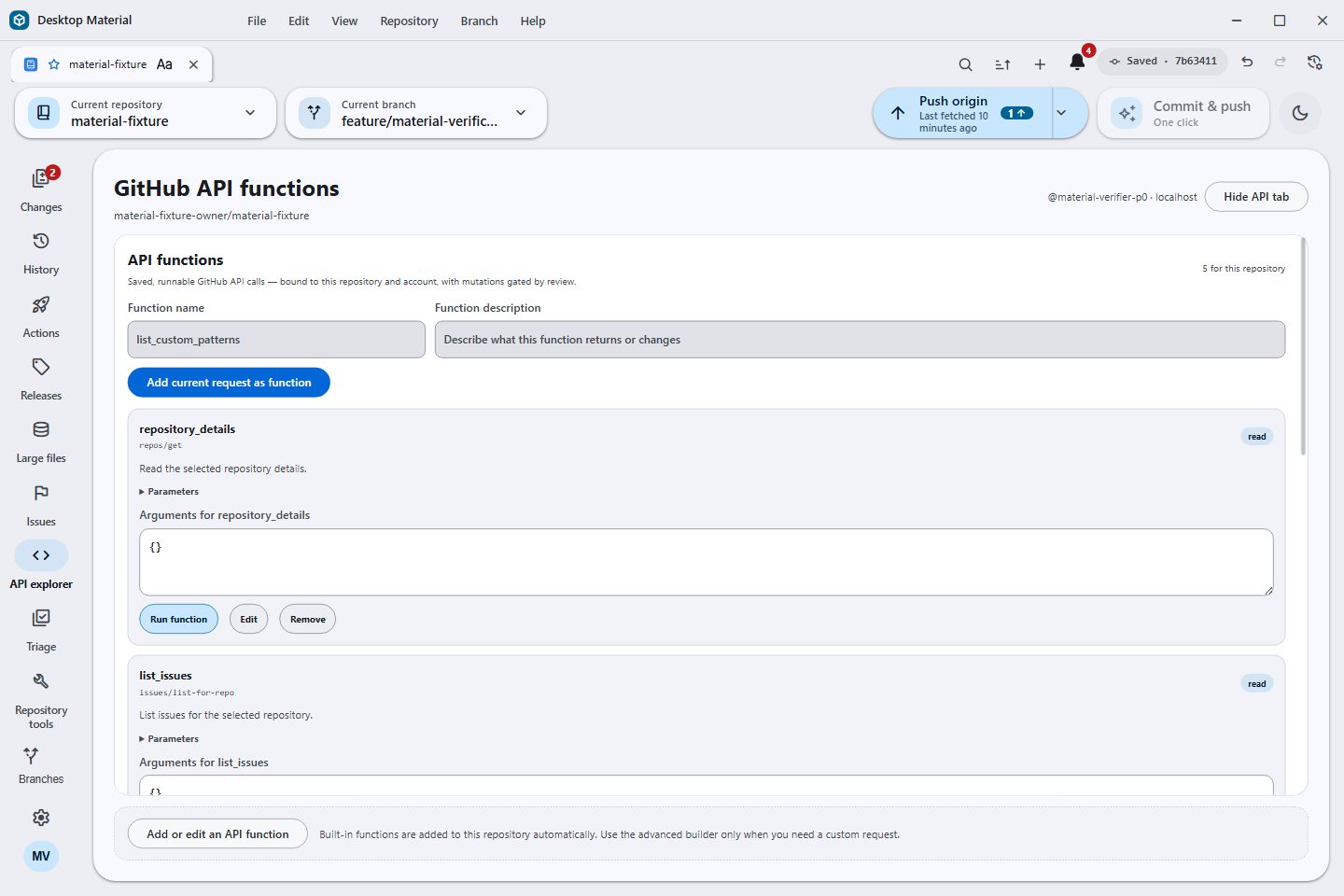
The repository rail now includes a hideable, functions-first GitHub API surface for expert integration work. Eligible repositories receive safe, repository-bound read functions automatically, and Repository tools → API functions provides the same actions as runnable buttons. The complete REST and GraphQL operation catalog remains available through the explicit advanced builder for custom functions. Requests use only the account and provider host bound to the selected repository; every mutation stops for exact-request review, while returned headers and bodies are bounded and credential-redacted before display.
Named API functions turn a reviewed REST or GraphQL definition into a reusable app extension. Each function is versioned in the active profile, fingerprinted, bound to the exact repository/provider/account context, and revalidated before execution; malformed definitions and credential-bearing inputs fail closed.
For queued, running, waiting, or pending workflow runs, the current Actions surface adds an exact-run cancellation review with available ref/actor/commit context. Repository/account/run identity and live status are revalidated before one normal cancel request, duplicate submission is suppressed, and polling continues to a terminal state with explicit authentication, SSO, and conflict recovery.
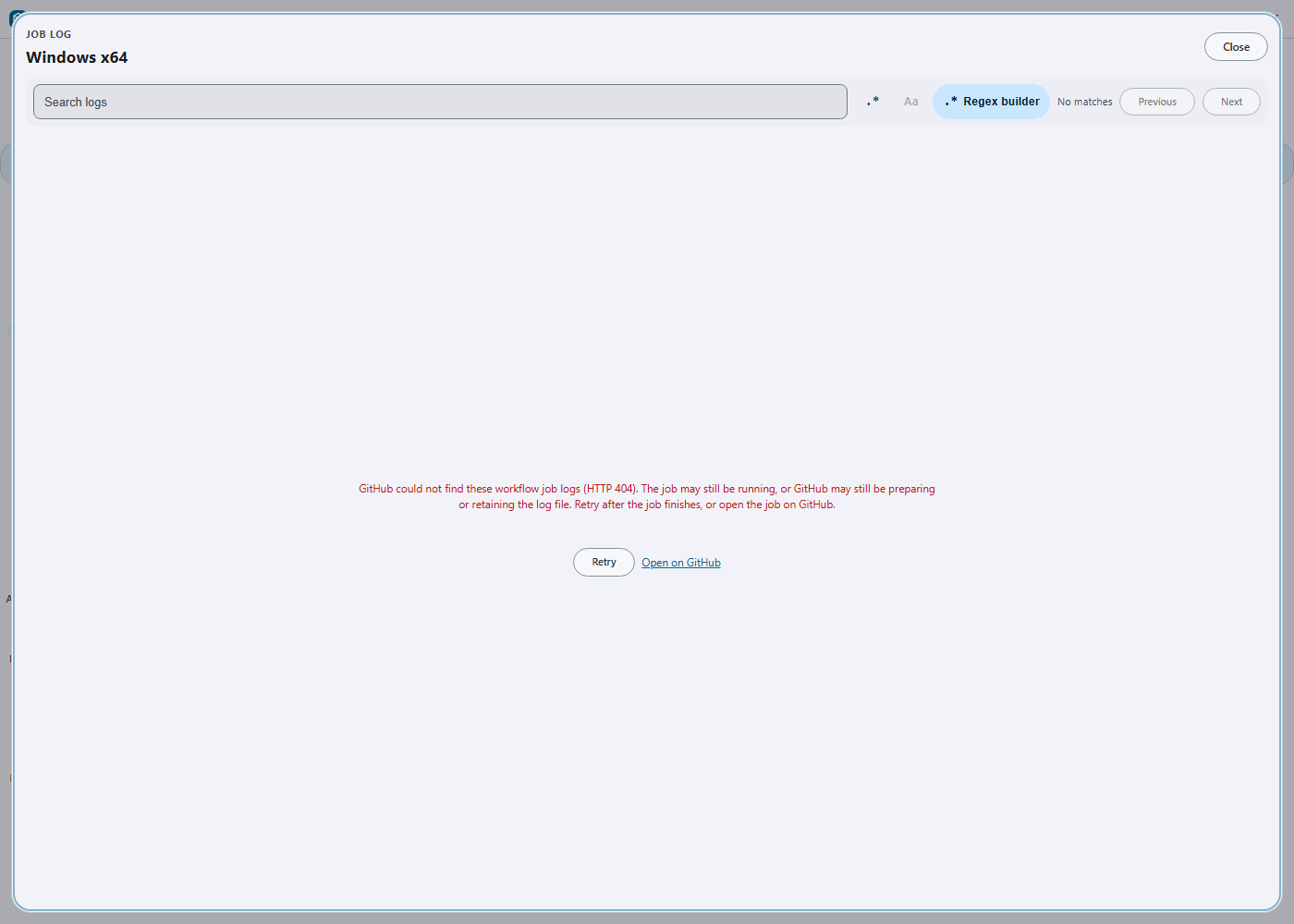
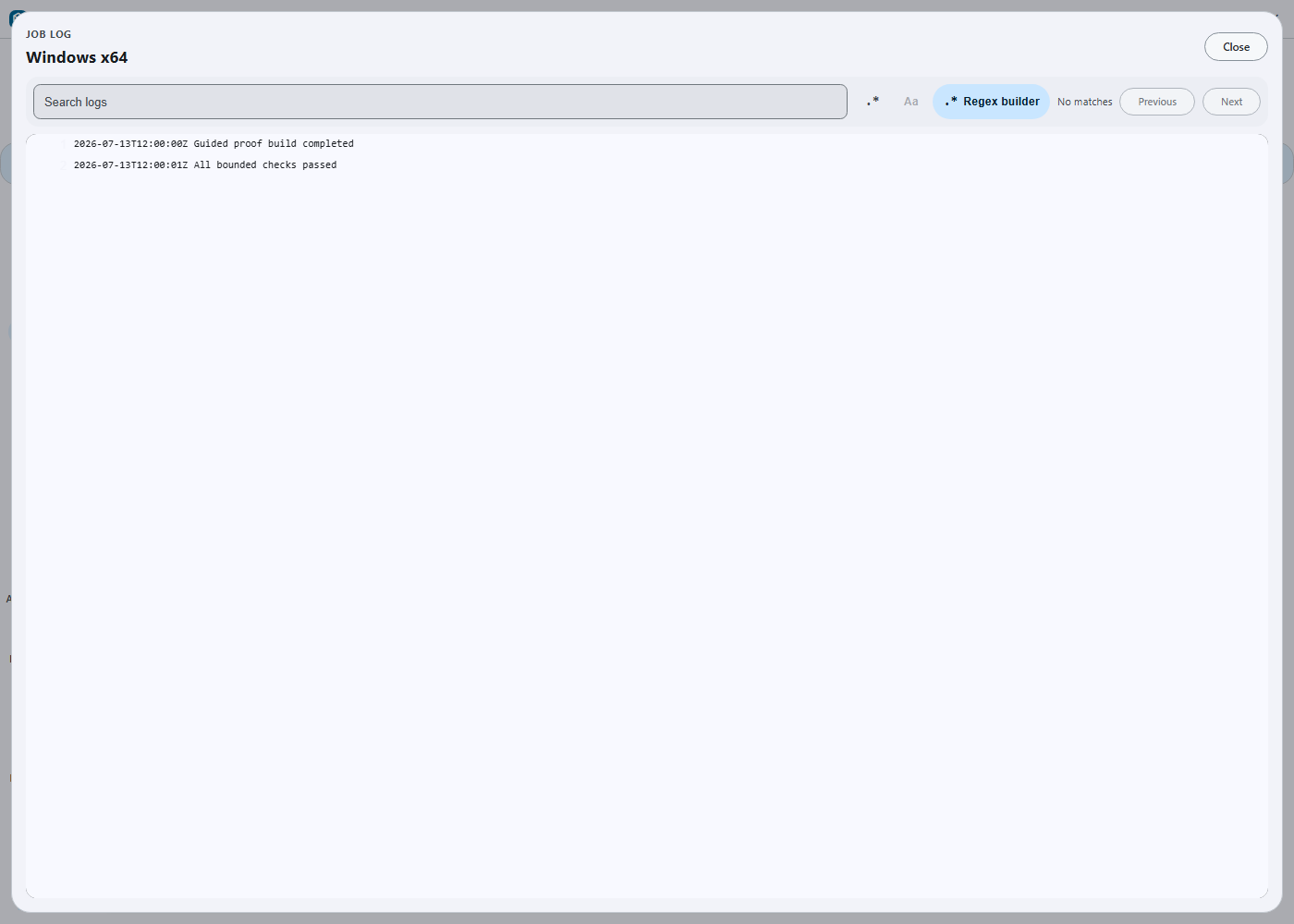
Historical Actions job-log recovery evidence (outside the current gallery)
The transient job-log recovery frames are retained as historical
evidence for the provider's short-lived HTTP 404 response
while a completed log archive is being prepared. They show the honest
recovery state and the later successful load; neither is part of the
current 91-frame guided gallery plan.
| Archived asset | Historical receipt | Current status |
|---|---|---|
material-actions-job-log-404-recovery.png |
Actions job-log 404 recovery fix | Excluded from the current Windows gallery |
material-actions-job-log-404-recovered.png |
Actions job-log 404 recovery fix | Excluded from the current Windows gallery |
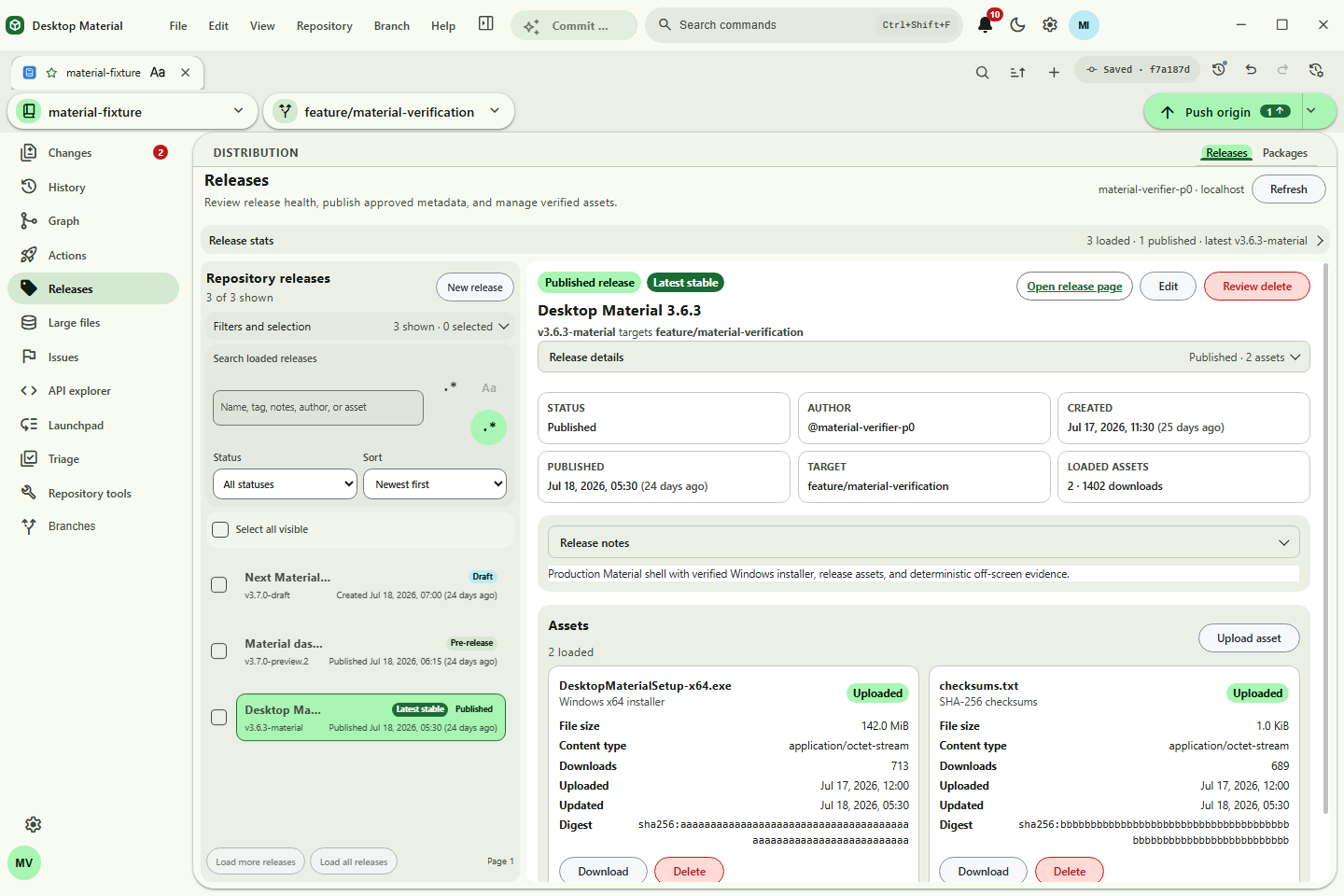
At the combined small-width and short-height gate, Repository
Releases compacts its header and metrics, moves the list ahead of
overview/detail content, and keeps one complete release row visible. The
accepted physical 960×660 capture maps to a CSS 480×330 viewport at 200%
scale. Filters and selection becomes a native
keyboard-operable disclosure; release rows use 24-hour
HH:mm timestamps; a verified download offers Open
file beside Show in folder; and clearing a
selection after a zero-result filter returns focus to an enabled
fallback instead of a disabled select-all control.
The same repository Distribution surface now switches to a Packages explorer. It filters all six GitHub package ecosystems by the freshly fetched numeric repository ID, gives package and version searches the full Regex Builder, and limits native transfer to digest-verified Desktop Material single-file artifacts in GitHub.com GHCR. The detailed behavior and security contract is in the GitHub Packages explorer guide.
The accepted accessibility correction keeps the same list-first structure and widens the combined gate to 800×560, covering 125% at 768×528 CSS as well as 150% and 200%. It holds a 176 px tools panel, raises compact text to 9–16 px, controls to 30–34 px, and release rows to at least 52 px. Its three-column metrics and localized wrapping disclosure prevent true small-screen and bilingual layouts from buying space with unreadable copy. The image below is the corrected exact-source frame promoted after the four-scale proof.
Local Ollama model lifecycle
Settings → Copilot → Providers → Manage models opens a bounded workspace for one configured Ollama endpoint. Health/version, installed inventory, running state, search/filter, and model details stay separately refreshable; a visible Clear search action removes an active query without resetting its filter mode. Pull shows streamed progress and supports cancellation; copy and copy-then-delete rename, load/unload, and exact-name confirmed deletion keep partial and failure states visible. Successful inventory changes synchronize installed names back to the provider's selectable Copilot models.
Management accepts only an exact loopback /v1 provider
base. The manager derives that loopback origin and appends fixed native
/api/* routes; every remote HTTP or HTTPS host, arbitrary
prefix, saved /api base, credential-bearing URL, query, and
fragment fails validation. The complete surface follows English, playful
Hong Kong Cantonese, and bilingual language modes, with keyboard access
and live status announcements.
The accepted 1452×1001 synthetic-only capture passed original-resolution privacy review. Its geometry receipt reports the manager, Preferences shell, and lifecycle controls contained above the footer, with zero overlaps and no horizontal overflow.
Provider triage
Provider Triage now consumes the canonical repository-account key
saved by Repository Settings and reacts to binding changes without
reopening the repository. Unique exact matches may bind only an
unassigned repository; multiple matches require Use this
account, and signed-out, permission, or organization-SSO states
do not masquerade as unbound. GitHub browser sign-in uses the bounded
repo user workflow notifications read:org feature scopes
and excludes unrelated destructive/admin families.
Customization, welcome, and adaptive toolbar
The Word-style per-tab appearance surface combines typography, alignment, and independent text/background palettes. The original regex close action remains; the inverse literal close flow adds live counts/preview and cannot confirm empty or zero-match input. Pinned/manual/keyboard arrangement plus stable one-shot label/opened/status sorts persist without continuously reacting to later status changes. Every visual editor is anchored beside its actual owner and opens that owner's independent local Git history; ordinary Appearance preferences remain separate. Feature entry points own independent highlight settings rather than a global body switch. The custom repository-logo studio composes bounded mark and text layers, transforms and colors in a live preview with undo/redo and safe JSON transfer; a repository can inherit or edit its profile default without accepting executable SVG. Measured toolbar overflow remains unchanged.
High-frequency visual controls now collapse each synchronous burst
into the latest normalized owner value before one durable write and
notification. Queued get() reads, flushes, and History
remain ordering barriers, so the responsive path does not weaken the
dedicated audit timeline.
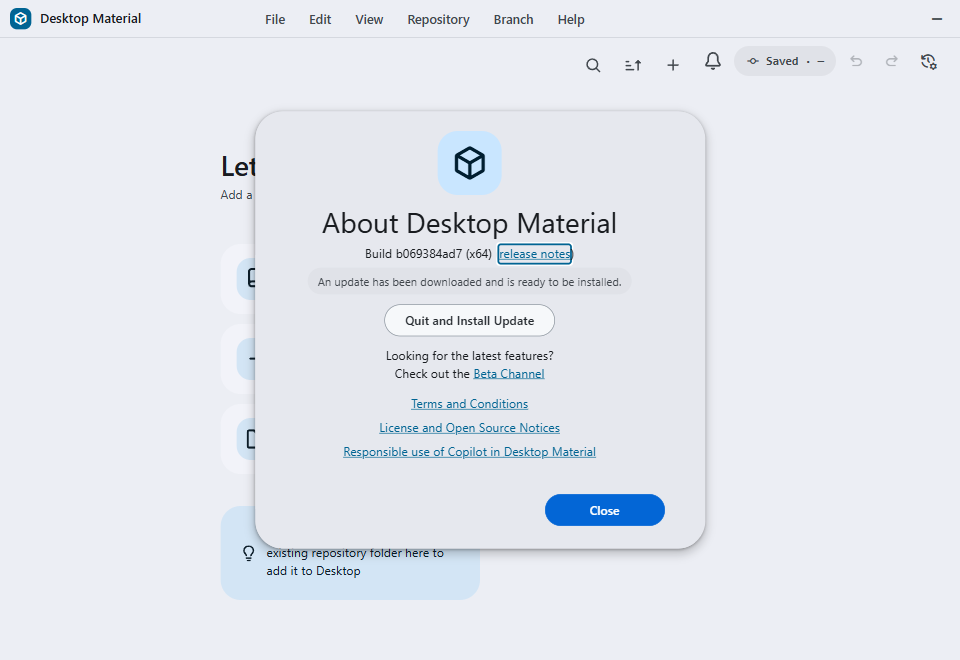
Accepted current-source development proof: runtime
b069384ad7d8a65d1192ee06859a705fe484c9c8, promoted by
e3967f1b81ec039624500797dca40a1ab6d98598. The
verifier-owned payload is inert and disclosed; this frame does not claim
a published updater payload.
目前原始碼開發版證明已驗收:真
Electron/Squirrel 路徑用驗證器自有、已披露嘅無害
payload;呢張相唔代表嗰個 payload 已經發佈。
Material shell and accessibility
The Settings rail now includes Clone queue as a first-class destination. Each signed-in account owns a readable card with a folder picker, parallel/sequential selector, enabled switch, live status, and a bounded safety note; empty-account and invalid-directory states remain explicit. Agent access keeps its Mobile connection card discoverable in every mode, then enables one action only when Paired LAN mode is running. That action replaces the old pairing code and opens a fresh one-use fragment link in the default browser. Both surfaces supply English, playful Hong Kong-style Cantonese, and compact bilingual copy and remain vertically reachable in the Settings scroll owner.
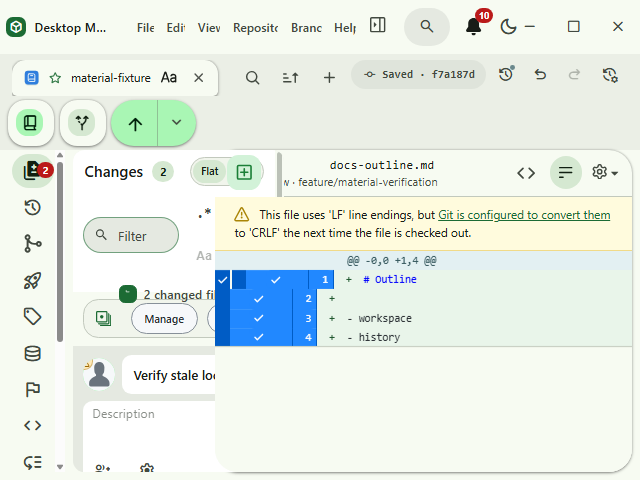
Search, history, accounts, and automation
At compact and zoomed sizes, Regex Builder reflows the category/token layout, scrolls its body vertically, and keeps its live tester and footer actions reachable without page-level horizontal clipping.
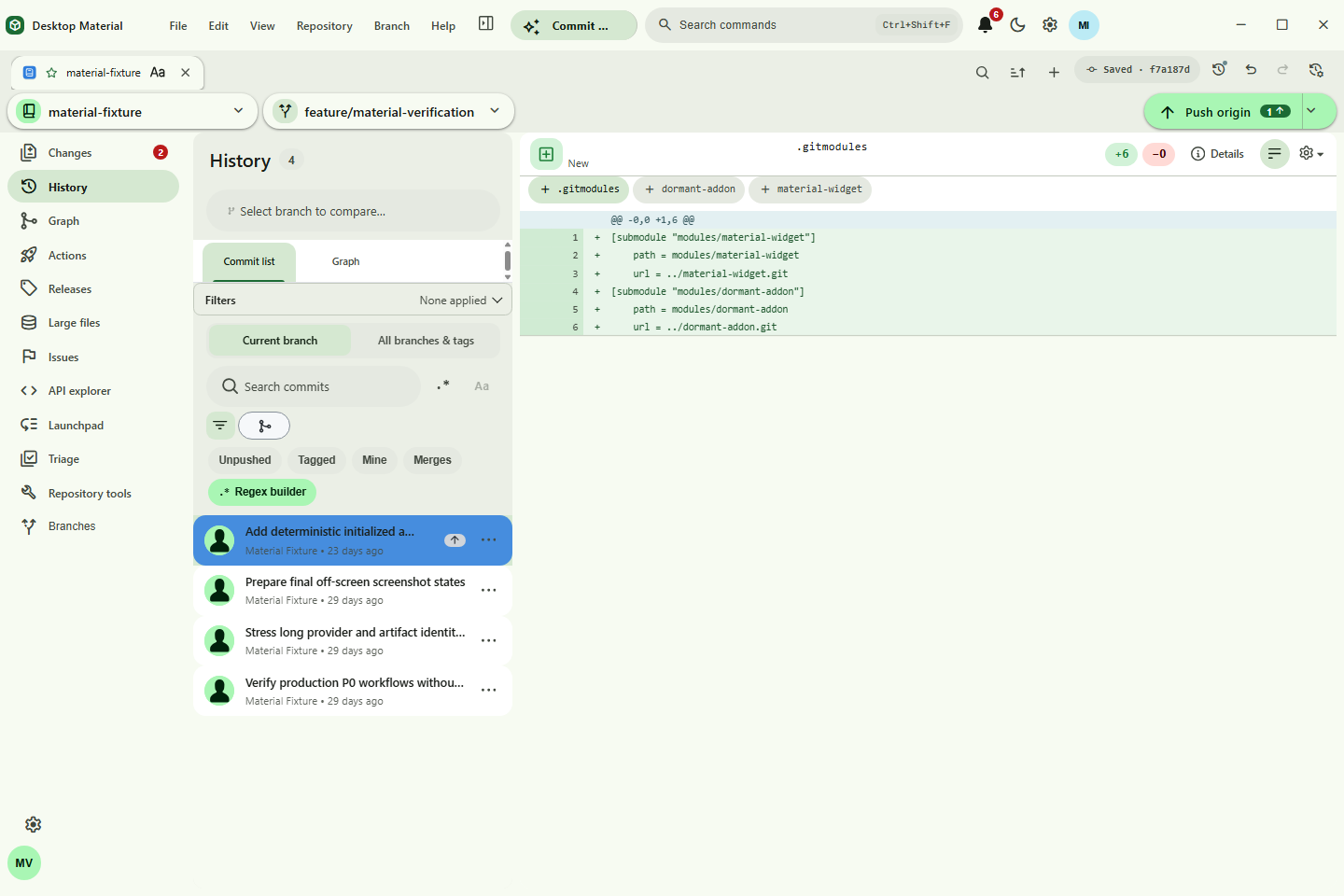
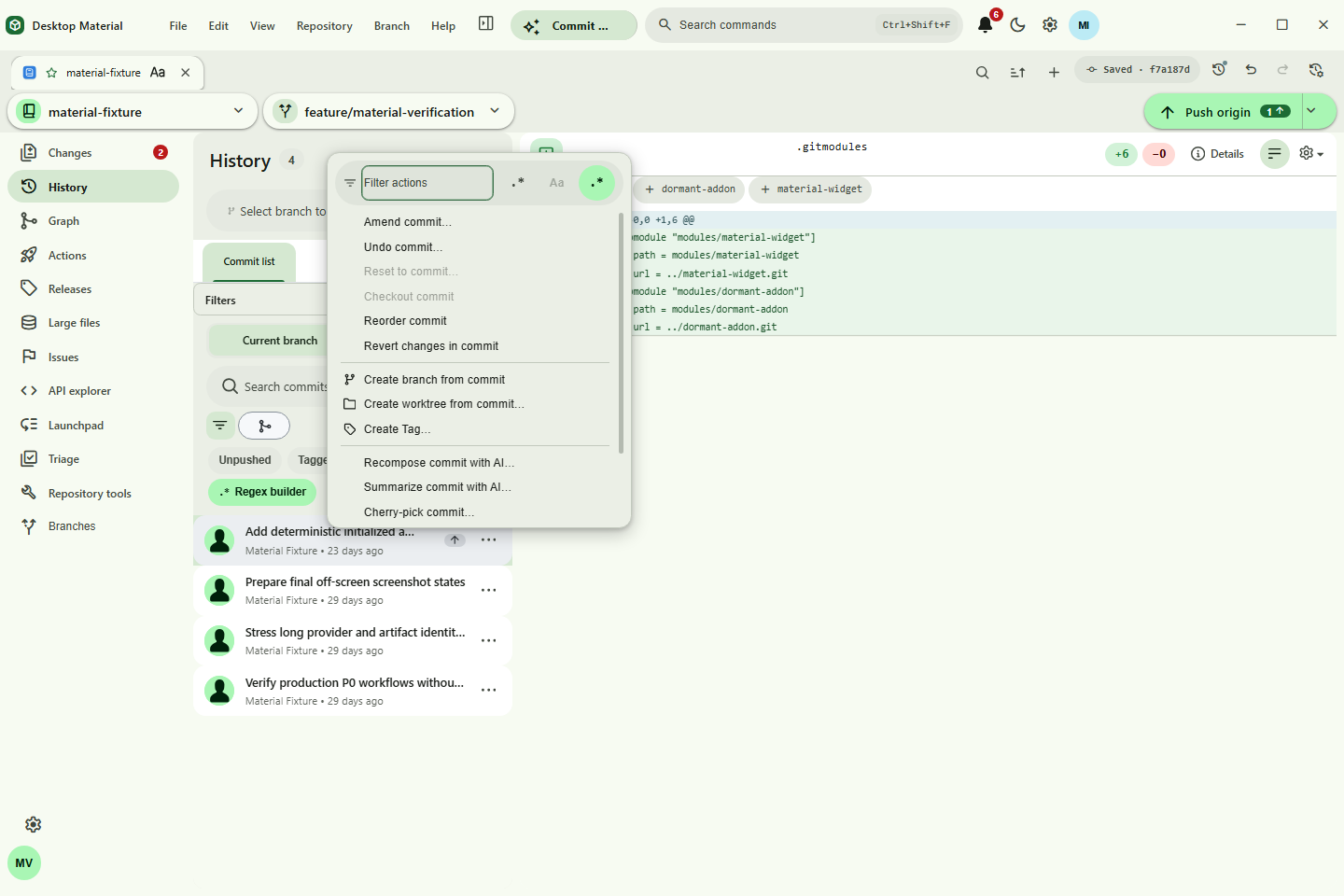
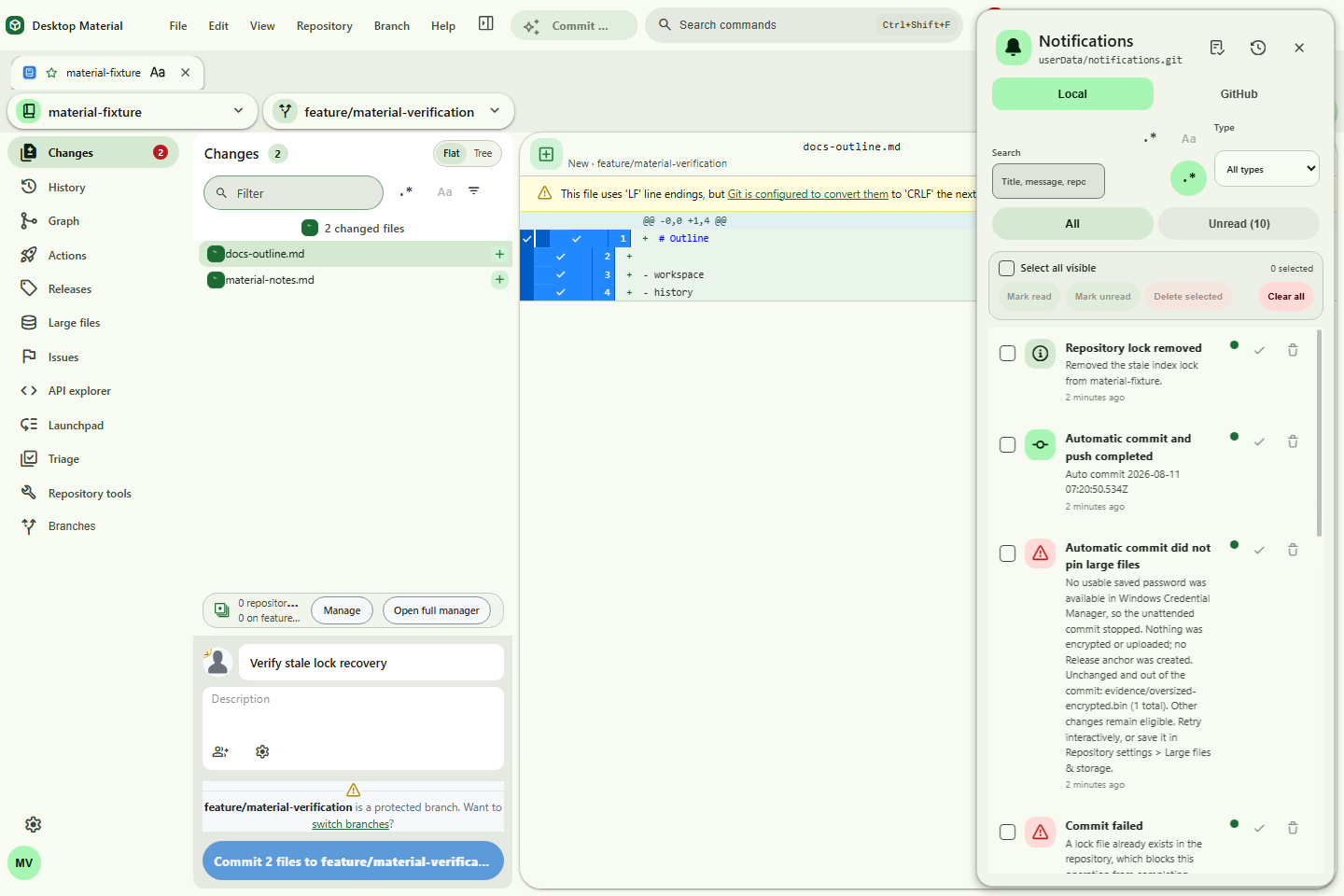
Local notifications can be searched and filtered by type, selected as the currently visible result set, and triaged with one history-backed mark-read, mark-unread, or delete operation. Clear all requires an inline confirmation and leaves the Git-backed history available for restoration. Acknowledgement-only errors use the profile's selected presentation: a dismissible red bottom-right notice by default, or the legacy blocking dialog. Errors that require a retry, authentication choice, or remediation remain decision dialogs.